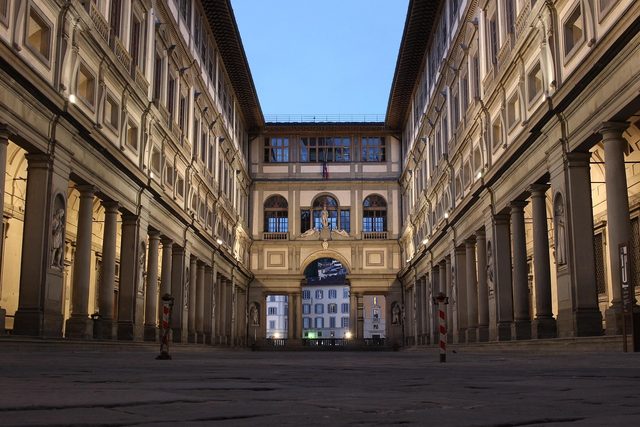
A private after-hours hour at the Uffizi, Florence
The Uffizi closed to the public, walked at dusk with a Renaissance historian who has the keys — access that exists because of advisor relationships, not online booking.

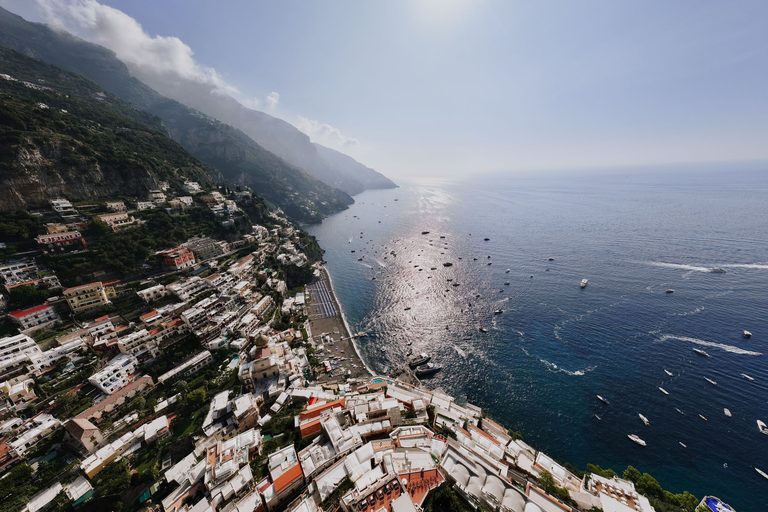
From a private terrace above Positano to a Renaissance palazzo opened after hours — the most storied country in Europe, arranged entirely in private.
Forest Travel shapes fully private luxury Italy tours featuring privileged access unavailable through online travel agencies: after-hours entry to the Uffizi Gallery and Vatican Museums, family-hosted dinners in Brunello wine cellars, crewed yacht charters along the Amalfi Coast, and staffed Renaissance palazzi closed to the public. With 40 years of advisor expertise across Rome, Florence, Venice, Lake Como, Puglia, Sicily, Milan, and the Amalfi Coast, each private journey is orchestrated around your rhythm, interests, and occasion—delivering the relationships, timing, and invisible logistics that algorithms cannot replicate.
What a luxury travel advisor can open that an algorithm cannot. Each of these private Italy experiences is staged on your terms — the access, the timing, the people.

The Uffizi closed to the public, walked at dusk with a Renaissance historian who has the keys — access that exists because of advisor relationships, not online booking.

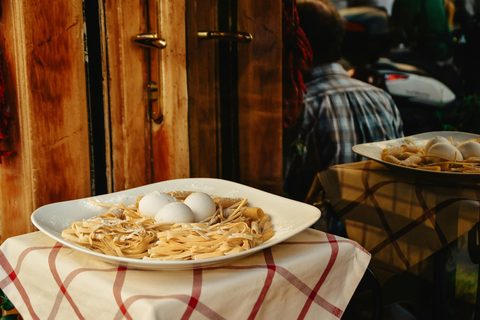
A long-table dinner inside a private Brunello cellar in Montalcino, hosted by the family that has farmed those vines for six generations.

Into the Umbrian oak woods near Norcia with a truffle hunter and his dogs — then lunch built around the morning's find at a working estate. Orchestrated timing and private access your advisor arranges, not a group tour.
Not packages — points of departure. Find the luxury Italy journey that already feels like yours; your advisor reshapes it entirely around you, from Rome to Sicily.
Each opens onto a private chapter — its rhythm, its access, the hours only a relationship can hold open.

The Eternal City let open after hours — the Sistine Chapel in near-silence, a rooftop above the Forum at dusk.
Explore the Region
More masterpieces per cobblestone than anywhere on earth — seen the way the Medici saw them, before the public arrives.
Explore the Region
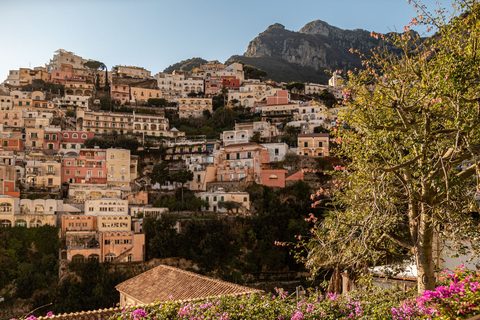
Lemon groves above a sea that changes colour by the hour, a cliffside villa, and long boat days to Capri.
Explore the Region
Whitewashed towns, ancient olive groves and a masseria of your own in Italy's sun-warmed heel.
Explore the Region
Fashion, design and a night at La Scala — the most cosmopolitan table in Italy.
Explore the Region
Greek temples, Baroque towns and Etna's vineyards — an island that is a world unto itself.
Explore the Region
The floating city by private water taxi, with palazzo doors and after-hours basilicas held open for you.
Explore the Region
Belle Époque villas, cypress gardens and slow days on the water beneath the Alps.
Explore the Region
Emerald-coast villas and a yacht along a pristine, glamorous shoreline.
Explore the RegionPrivate luxury Italy tours include after-hours access to the Uffizi and Vatican Museums arranged through curator relationships, family-hosted winery dinners in Montalcino and Tuscany, crewed yachts along the Amalfi Coast, and private truffle hunts in Umbria — experiences that exist because of advisor access, not online inventory.
Top luxury Italy regions include Rome, Florence, the Amalfi Coast, Lake Como, Puglia, Sicily, Venice, Tuscany, and Umbria. Expert advisors shape journeys based on your interests — art and after-hours museum access in Florence and Rome, culinary immersion in Montalcino and Umbria, coastal villas along the Amalfi Coast, or yacht journeys to the Aeolian Islands.
Italy's most exclusive experiences are not places but access: after-hours Uffizi viewings with Renaissance historians, family-hosted dinners in Montalcino wine cellars, private truffle hunts in Umbria, and staffed palazzi in Venice arranged through advisor relationships.
Custom luxury Italy journeys reflect the level of access, orchestration, and personalization—not rigid packages. Forest Travel advisors design fully private experiences from 8 to 14 days, with invisible logistics and privileged access unavailable through search.
In private, staffed residences and the suites that rarely list publicly. Your advisor places you where the service, setting and privacy fit your trip — often in properties held through relationships built over four decades.
Through personal relationships, not a booking engine — the table that doesn't take reservations, the guide everyone wants, doors opened after hours. In Italy, it's access, not availability.
Enough to travel unhurried. Rather than a fixed package, your advisor shapes the length around your pace and the moments that matter — a few unforgettable days or a slower, immersive stay.
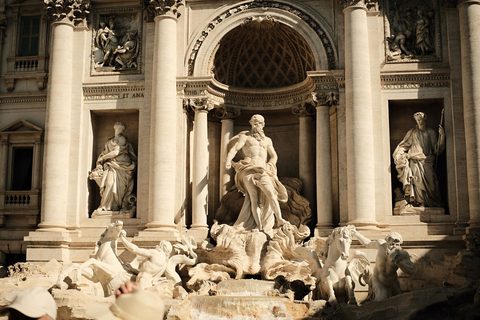
Italy now runs on timed entry, so more must be booked ahead than most travellers expect. The Colosseum sells nominative tickets, checks ID at the gate and opens sales thirty days out. Leonardo's Last Supper admits forty people per fifteen-minute slot. The Uffizi requires a nominative, non-transferable reservation, St Mark's Basilica sells nothing at the door, and the Trevi Fountain basin has cost €2 since 2 February 2026. Sardinia's La Pelosa caps 1,500 people a day.
Choose northern Italy if the trip is about art, opera, lakes and food; choose the south if it is about water, where the calendar governs. Rome, Florence and Venice work almost year-round. The Amalfi Coast closes in early November and reopens for Easter. Sicily and Puglia offer a longer coastal season and shorter queues, at the price of longer drives.
In Montalcino, the Brunello dinner is a long-table meal inside a private wine cellar, hosted by the family that has farmed those vines for six generations. It is a signature moment of a private Italy journey and fits the Private Culinary Italy archetype, alongside truffle hunts in Umbria and the family kitchens that define Italian cooking.
The Umbrian truffle hunt begins at first light in the oak woods near Norcia, walking with a truffle hunter and his dogs. Afterwards comes lunch built around the morning's find at a working estate. Your advisor arranges it privately, with orchestrated timing rather than as a group tour, and it pairs naturally with Brunello cellars in Tuscany on a culinary journey.
Yes. A Forest Travel advisor arranges private tours of Italy around access rather than a fixed package: after-hours visits to the Uffizi and the Vatican Museums, a Brunello dinner in a family wine cellar in Montalcino, a crewed yacht along the Amalfi Coast and a truffle hunt at first light near Norcia in Umbria. Timed-entry sites such as the Colosseum and Leonardo's Last Supper are booked before you leave.
The one whose access begins where public booking ends: a gallery walked after closing, a cellar opened by the family that owns it, a party moved between cities without losing a day. At Forest Travel, Josseline Alvarenga, Candela Gonzalez, Viviana Comune and Juan David Gutierrez plan Italy and Europe. Forest Travel is a Virtuoso member, and the planning fee is US$250 per itinerary.
Three stops, three or four nights each: Rome, then Florence, then the Amalfi Coast. Rome and Florence carry the art, with after-hours visits to the Vatican Museums and the Uffizi; the coast carries the rest, from a villa above the sea. First-class rail links the cities and a private car meets you at each station. The coast is open from Easter to early November, and the Colosseum opens ticket sales thirty days out.
Yes. A private car and driver handle every transfer between cities and stations, and a private guide meets you at each site, chosen as the authority on the place: in Florence you walk the Uffizi with an art historian. Access is arranged privately too, from after-hours visits to the Uffizi and the Vatican Museums to a family-hosted Brunello dinner in Montalcino.
Seven days is enough for two bases, not for Italy as a whole. We plan ten to fourteen nights across no more than three bases, with three nights minimum in each, because every move costs a half-day at either end. A week works as Rome and Florence, about ninety minutes apart by fast train, or Rome and the Amalfi Coast via Naples, just over an hour by train. Four cities in seven nights becomes a tour.
At Forest Travel's level, US$10,000 covers roughly eight nights for one traveler or four for two, since a fully private Italy journey starts from around US$1,200 per person per night. That benchmark covers staffed residences and suites, private drivers rather than transfers, art-historian guides and after-hours access, and it moves with the season and the house. Forest Travel's planning fee is US$250 per itinerary.
Avoid mid-August, and July and August in general if the cities are the point. Italy remained Europe's most visited country in 2026, with roughly 171.8 million arrivals forecast for July and August alone, and Ferragosto in mid-August empties city kitchens and fills the coast. The Amalfi Coast closes in early November and reopens for Easter. April to June and September to October give you the Italy you came for.
When to go, how long to stay and what it starts from — the questions our advisors answer most for this destination.

Naples is the quieter, more characterful counterpart to Rome: a UNESCO-listed historic centre, Pompeii and Herculaneum at the foot of Vesuvius, and the islands and the Amalfi Coast within a boat ride. How to use it as a base, privately.

Italy works almost all year, but not all of it works at once. The coast closes in winter, the lakes shutter their gardens, and August belongs to everyone — so the month decides which Italy you get.

The headline figure is the easy part. What moves an Italy budget is the style of trip — a staffed villa, a crewed yacht, a palazzo in Venice — the month you travel, and how far ahead the access is booked.
Every journey here is a starting point a private advisor reshapes entirely around you — your pace, your people, the version of Italy only you would recognise.
A real person answers: an in-house luxury travel advisor, in English or Spanish. The first conversation is complimentary.