01
The Alhambra, in silence
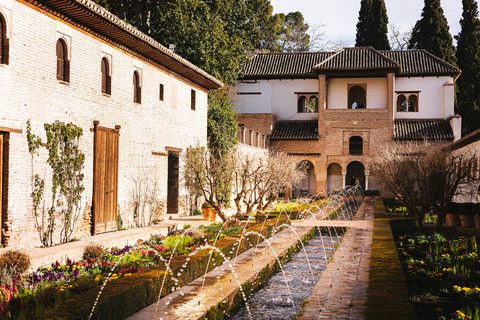
The Nasrid Palaces opened privately before the gates — your party alone in courtyards intended for kings.
Andalusian palaces, a yacht through the Balearics, and tables that reinvented how the world eats.
Spain is too often reduced to a single city or a single beach. Let it unfold — from the Prado's quiet halls to a Balearic cove reachable only by sea.
What an advisor can open that an algorithm cannot. Each of these is staged on your terms — the access, the timing, the people.
The Nasrid Palaces opened privately before the gates — your party alone in courtyards intended for kings.
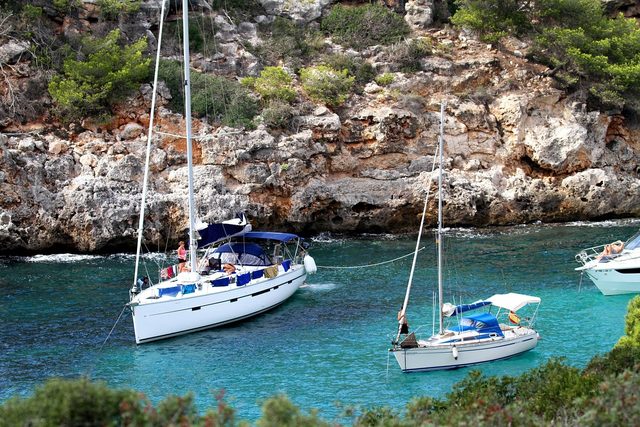
A captained vessel through Balearic coves with a chef who plates the morning's catch as you swim.

An afternoon in a Sevillian tablao closed to the public — a master guitarist and a singer who never tours.
Not packages — points of departure. Find the journey that already feels like yours; your advisor reshapes it entirely around you.

Cliffside fincas, sunset sailings and the Balearics at their golden best.

A crewed yacht through Mallorca, Menorca and Formentera's quiet coves.

Palaces, flamenco and a private cortijo in Spain's sunlit south.

The kitchens that reinvented gastronomy, pintxos and the cellars of Rioja.

A rooftop in Madrid, a villa in Mallorca — a stage for the moments that matter.
Each opens onto a private chapter — its rhythm, its access, the hours only a relationship can hold open.

The Prado and the Thyssen privately, rooftop dinners and a city that dines after dark.
Explore the Region
Gaudí after hours, a Michelin constellation and the Mediterranean at the city's edge.
Explore the Region
Tramuntana villas, hidden calas and a yacht to the island's quietest coves.
Explore the Region
The serene Balearic — turquoise bays, dry-stone country and unhurried elegance.
Explore the Region
Beyond the clubs: cliffside fincas, sunset sailings and a quietly exclusive north.
Explore the Region
The Caribbean of the Mediterranean — white sand reached by private launch.
Explore the Region
The Alhambra at dawn, Seville's courtyards and Jerez's sherry bodegas.
Explore the RegionEntirely. The five Spanish journeys here — a Balearic yacht week, an Andalusian villa stay, Culinary Spain, a summer escape, a celebration — are starting points rather than packages, and they combine: the Alhambra in silence one morning, lunch on a yacht no port knows the next. Your advisor rebuilds the route, the pace and the party around you, timed to Spain's strongest windows in May–June and September–October.
Spain works best built around two anchors rather than five cities: one inland pairing and one coastal one, such as Madrid with Andalucía or Barcelona with the Balearics. Ten to fourteen days is the honest minimum to cover both halves. With fewer than ten days, choose one half and travel it slowly; otherwise you face three hours of transfer for every four hours of Spain.
Alhambra tickets are nominative and non-transferable, and an original passport or ID is checked at the gate. Only 300 people enter the Nasrid Palaces per half hour, with part of the allocation released twelve months ahead, so the visit is fixed before the rest of the route. The Nasrid Palaces can also be opened privately before the gates, leaving your party alone in courtyards intended for kings.
Usually, but not at the journey times published before 2026. After the Adamuz derailment of 18 January 2026, Spain's network runs under speed restrictions: 25 minutes are added to Madrid–Barcelona schedules at least until 13 December 2026, and the Andalusian line reopened on 17 February with delays of up to 40 minutes. The timetable is confirmed at booking, with a chauffeured car held for legs where rail no longer wins.
It is the wrong moment to expect one in Spain's two big cities. Madrid's Plan Reside bars tourist flats in buildings where residents live, and Barcelona will not renew its 10,101 tourist licences after 24 November 2028. Instead, stays are placed in private, staffed residences and suites where the service, setting and privacy fit the trip.
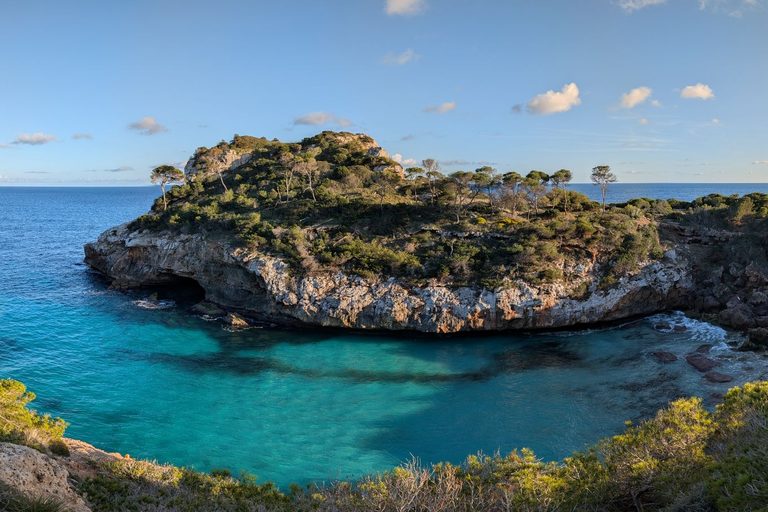
A captained vessel takes you through quiet Balearic coves around Mallorca, Menorca and Formentera, with a chef who plates the morning's catch while you swim. It is lunch on a yacht no port knows, and it can stand alone or anchor the Balearic Yacht Journey, a crewed sailing through those islands' coves, combined with sunset sailings and cliffside fincas.
The best time to travel to Spain is May to June and September to October. July and August are a different trip inland: the first half of summer 2026 was Spain's hottest since national records began in 1961, and July maxima passed 44°C (111°F) in Córdoba. August also closes family-run kitchens in Madrid and Barcelona for weeks at a stretch, so the south is best avoided if summer is your only window.
Spain is ideal for travelers who want more than a single city or a single beach: those drawn to Andalusian palaces, a yacht through the Balearics, the kitchens that reinvented gastronomy, or a milestone celebration. It suits a route built around two anchors. It is the wrong choice for anyone wanting one bed for ten nights and no movement, or whose only window is July and August with the south as the goal.
Spain combines best within itself, built around two anchors rather than five cities: one inland pairing and one coastal one, such as Madrid with Andalucía or Barcelona with the Balearics. Ten to fourteen days is the honest minimum for both halves. The journeys also combine, from a Balearic yacht week to an Andalusian villa stay, with a chauffeured car held for legs where the high-speed train no longer wins.
Stays in Spain follow the journey: cliffside fincas on the Balearic summer escape, a private cortijo in the sunlit south on the Andalusian villa stay, a crewed yacht through Mallorca, Menorca and Formentera, or a villa in Mallorca and a rooftop in Madrid for celebrations. Serviced apartments are not the answer in Madrid or Barcelona, where Plan Reside and Barcelona's licence limits restrict tourist flats.
In Spain, Forest Travel stages access on your terms: the Alhambra's Nasrid Palaces opened privately before the gates, a captained yacht through Balearic coves with a chef plating the morning's catch, and a flamenco recital in a Sevillian tablao closed to the public. Capacity-controlled monuments are fixed first, as Alhambra tickets are nominative and Park Güell and the Sagrada Família run on timed slots, then the week is built around them.
Ten to fourteen days is the honest minimum for Spain if you want both an inland and a coastal half, such as Madrid with Andalucía or Barcelona with the Balearics. Under ten days, take one half and travel it slowly; otherwise you face three hours of transfer for every four hours of Spain. The guide's journeys run from 6 days for a celebration to 9 days for Culinary Spain.
A private Spain journey with Forest Travel starts from around US$1,250 per person per night, before international flights. Ten to fourteen days is the honest minimum to cover one inland pairing and one coastal one, such as Madrid with Andalucía or Barcelona with the Balearics. Accommodation taxes sit on top: a five-star night in Barcelona is taxed at roughly €12 per person, while the Balearic tax falls by 75% from November to April. The planning fee is US$250 per itinerary.
When to go, how long to stay and what it starts from — the questions our advisors answer most for this destination.
Soft light and thinner crowds — Andalucia before the rush. A private, tailored journey of 7 Days · 6 Nights in Andalucia, Spain, designed end to end by a Forest Travel advisor — with Virtuoso privileges at the finest luxury hotels, from US$9,800 per traveler.
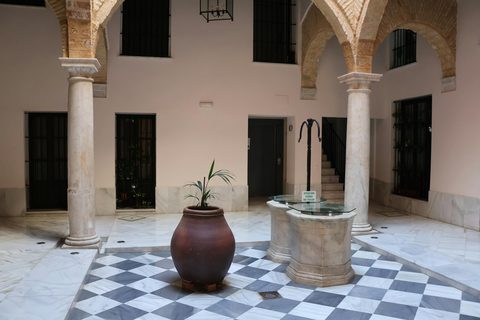
The markets, cellars and private kitchens that define Andalucia. A private, tailored journey of 7 Days · 6 Nights in Andalucia, Spain, designed end to end by a Forest Travel advisor — with Virtuoso privileges at the finest luxury hotels, from US$9,800 per traveler.
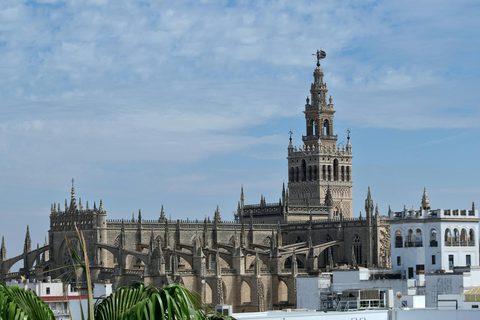
The castles, estates and living history of Andalucia, privately. A private, tailored journey of 6 Days · 5 Nights in Andalucia, Spain, designed end to end by a Forest Travel advisor — with Virtuoso privileges at the finest luxury hotels, from US$12,500 per traveler.
Every journey here is a starting point a private advisor reshapes entirely around you — your pace, your people, the version of Spain only you would recognise.
A real person answers: an in-house luxury travel advisor, in English or Spanish. The first conversation is complimentary.