How to Plan a Luxury Multi-Generational Family Trip — Destinations, Villas and Timing
A great family trip lets three generations travel together yet keep their own rhythm. The secret is the orchestration — the right villa, vetted childcare and pacing matched to every age.
- Choose the accommodation format before the destination — it eliminates half the options.
- Three generations, eight people, ten nights runs from roughly US$90,000 in land costs.
- A staffed villa beats suites on cost per head once the party passes six.
- Villa maximises togetherness; resort maximises flexibility. Pick your failure mode.
- South Africa's malaria-free reserves are why families with young children start there.
- Exclusive-use safari houses sleep 8–12 — the size of a three-generation party.
- Villa demand concentrates in July–August; the median lead time is about five months.
Choose by the ages in the party, not by the trend
The destination matters less than the fit. Under-sixes need a short flight, a shallow pool and a nap that nobody has to apologise for. Teenagers need something to do without an adult. Grandparents need a short walk to everything and a room that is not up three flights. A destination that fails any one of those fails the whole trip, however good it looks.
What a luxury family trip costs
Our destination pages publish an indicative US$1,500 per person, per night across most of the portfolio, with Turkey and India from about US$900 and the Maldives' private-island atolls from about US$3,000. Applied to real parties:
- Two adults, two children, 7 nights — from roughly US$25,000 in land costs, before international flights.
- Three generations, 8 people, 10 nights — from roughly US$90,000 and this is where a staffed villa usually beats suites on cost per head.
- Safari, family of four, 7 nights — from US$1,200 per person per night in the luxury tier; see the safari pricing breakdown.
The three cost drivers, in order: the accommodation format, the number of international flight segments, and whether guiding and childcare are private or shared. Premium experiences — a private boat day, a chef's dinner, a helicopter transfer — are usually a smaller line than families expect.
Villa, resort, or exclusive-use — the real decision
This is the choice that shapes everything else.
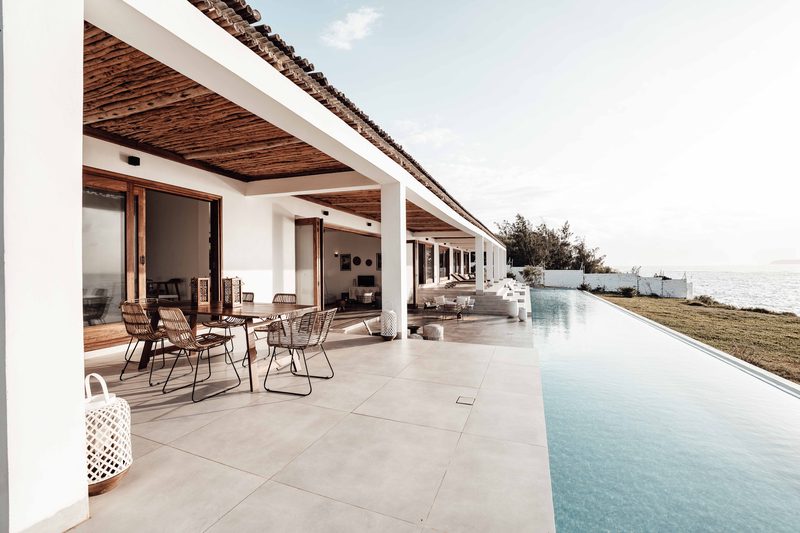
- A staffed villa gives privacy, one shared table, and a chef who cooks around a toddler's nap. It costs you coordination: someone has to decide what happens tomorrow, and there is no front desk to absorb it.
- A resort absorbs the operational load — kids' club, restaurants, medical, activities — and gives teenagers other teenagers. It costs you privacy and the shared table, and the family scatters by day three.
- Exclusive use of a small property is the expensive answer that solves both: resort service, villa privacy, nobody else. It is the format most multi-generational parties end up wanting once they have tried the other two.
How the format changes the day
A villa maximises togetherness and minimises flexibility: everyone eats when the chef serves. A resort inverts that — endless flexibility, and a family that only meets at dinner. Ask which failure mode you would rather have. For a party spanning eighty years of age, the villa with a resort next door — or a resort with two adjoining villas — is usually the honest answer.
Meals, childcare, downtime, access
Four operational details decide whether the trip is restful. Meals: a private chef briefed on allergies and on what a five-year-old will actually eat. Childcare: vetted, English-speaking, booked before arrival — not arranged on the second morning. Downtime: at least one unscheduled day in seven, or the trip becomes a logistics exercise. Access: confirm step-free routes, ground-floor bedrooms and lift access in writing; villa listings are optimistic about stairs.
Exclusive-use safari houses
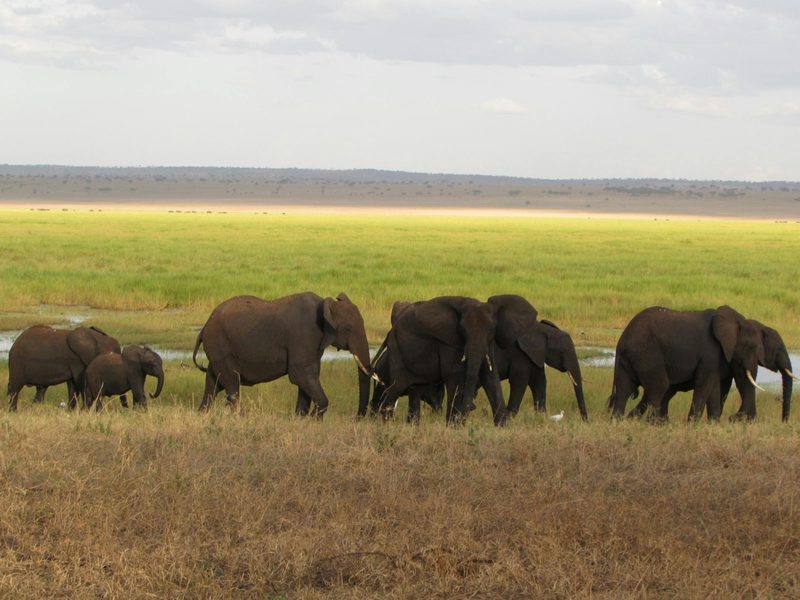
For families this is the format that changes safari from an endurance test into a holiday. A private house within a reserve gives you a dedicated guide who adjusts to a child's attention span, a private vehicle so a drive can end after ninety minutes without spoiling anyone else's, a chef cooking to your hours rather than a set dinner, and a pool and a garden for the long middle of the day. Most sleep eight to twelve, which is the size of a three-generation party.
Safari, matched to family composition and health
The health question comes first. South Africa has malaria-free Big Five reserves — the Eastern Cape and Madikwe — which is the reason most families with young children start there. It also has short flights, excellent hospitals and roads good enough to drive rather than fly. Kenya is the better trip once children are eight or nine and can sit through a long drive; the private conservancies allow walking and night drives that national parks forbid. Age minimums are real: many camps set six or eight as the floor for game drives, and exclusive-use houses are the usual way around it. The wider map is in our safari guide.
The Mediterranean, mapped to what your family actually wants
- Tuscany — younger children and a slow pace. The villa carries the week: a pool, a garden, a cook, and day trips that are optional. Easy transfers from Florence or Pisa.
- Mallorca — mixed ages and beach clubs. The best infrastructure in the western Mediterranean, short flights from anywhere in Europe, and enough for teenagers to do alone.
- Puglia — space and value. Masserie with room for everyone, quieter than the Amalfi Coast, longer transfers.
- Lake Como — grandparents and short walks. Everything close, boats instead of cars, and the most beautiful lunches. Not a beach holiday.
- Provence — culture and cooking, teenagers upward. The weakest fit for under-sixes and the strongest for a family that likes markets and tables.
Side by side: transfers, infrastructure, programming
Judge a family destination on four practical axes rather than beauty. Transfer time from the airport to the door — over ninety minutes with small children is a mistake. Medical infrastructure within a short drive. Resort style — whether the property is built for families or tolerates them. Programming — a real kids' club with qualified staff, or a room with toys. Mallorca and Tuscany score well on all four; Puglia trades transfer time for space; the Maldives scores perfectly except on transfer time.
Beach that works with children
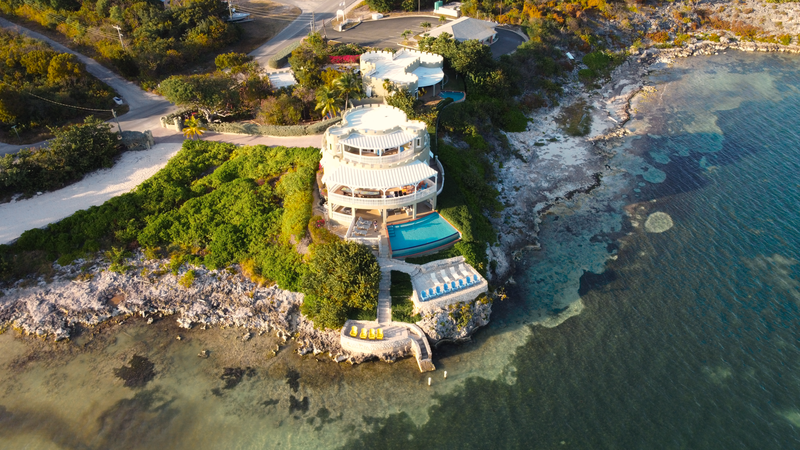
Turks & Caicos for water shallow and calm enough to stop watching, Riviera Maya for a short flight from the United States and houses built for groups, and the wider Caribbean when the priority is a staffed house on a beach rather than a resort.
Booking around school holidays
Fixed dates and a full household make this the least flexible booking of the year. Villa demand concentrates hard in July and August — over half of all summer villa bookings — and the median lead time is around five months, which means spring enquiries for summer are already normal, not early. For Christmas and Easter, add two months to that.
Each part of the decision has its own guide: a family safari, Mediterranean summers with children, the Caribbean or the Maldives for a winter beach, Italy as a family, what a staffed villa actually includes and travelling when someone in the party has mobility needs.
For the same choice on any trip, couples and groups included, see villa or hotel for a luxury trip.
What families are booking in 2026
Family travel is the biggest trend of the year and multigenerational travel the second, according to the 2026 Virtuoso Luxe Report, a survey of more than 2,400 advisors. Its ten most popular family destinations are Italy, Japan, Costa Rica, the United States, Greece, Mexico, France, Spain, Canada and the United Kingdom — a list that mixes the cultural capitals with nature trips such as Costa Rica and Canada, and keeps short-haul options from the Americas close to the top.
Building it, step by step
Fix the dates. Choose the format — villa, resort or exclusive use — before the destination, because it eliminates half the options. Hold the house. Then flights, then guiding and childcare, then the two or three set-piece days. Everything else can be decided from a sun lounger. The collection is Family & Multi-Generational.
Questions, answered.
Four formats work best. A staffed villa: Tuscany for younger children and a slow pace, Mallorca for mixed ages and short flights, Puglia for space and value. An exclusive-use safari house, which sleeps eight to twelve with a dedicated guide, a private vehicle and a chef. A malaria-free Big Five reserve in South Africa's Eastern Cape or Madikwe while the children are small, or Kenya's private conservancies once they are eight or nine. And a beach that works with children, planned around school holidays.
Three generations, eight people and ten nights start from roughly US$90,000 in land costs, before international flights, and at that size a staffed villa usually beats hotel suites on cost per head. The benchmark behind it is the roughly US$1,500 per person per night our destination pages publish, with Turkey and India from about US$900 and the Maldives' private-island atolls from about US$3,000.
Against the roughly US$1,500 per person per night our destination pages publish, two adults and two children for seven nights lands from near US$25,000 in land costs; three generations, eight people, ten nights runs from US$90,000 International flights are additional.
A villa gives privacy, one shared table and a chef who works around a nap, at the cost of coordination. A resort absorbs the logistics and gives teenagers company, at the cost of privacy and togetherness. Exclusive use of a small property solves both and costs more.
South Africa's malaria-free Big Five reserves — the Eastern Cape and Madikwe — for short flights, good hospitals and drivable distances. Many camps set a minimum age of six or eight for game drives; an exclusive-use house with a private vehicle is the usual way around it.
A dedicated guide, a private vehicle, a chef cooking to your hours, and usually a pool and garden for the middle of the day. Most sleep eight to twelve, which is why they suit three-generation parties.
Tuscany for younger children and a slow pace; Mallorca for mixed ages, beach clubs and short flights; Puglia for space and value with longer transfers; Lake Como for grandparents and short walks; Provence for teenagers upward and families who like markets.
Villa demand concentrates in July and August, with a median lead time of about five months, so a spring enquiry for summer is normal rather than early. For Christmas and Easter, add roughly two months.
Choose by the ages first: under-sixes need a short flight, a shallow pool and an unhurried nap, and grandparents need a short walk to everything and a room that is not up three flights. A villa with a resort next door, or a resort with two adjoining villas, usually works best. Brief the chef on allergies, book vetted childcare before arrival, and confirm step-free routes and ground-floor bedrooms in writing.
Give each age its own reason to be there. Teenagers need something to do without an adult, which is why a resort, with other teenagers, often suits them; young children need a short flight, a shallow pool and a kids' club or vetted childcare. For a party spanning several generations, a villa with a resort next door gives the family one table while letting the teenagers go off on their own.
A luxury travel advisor who plans the whole trip: matching the destination to the ages in the party, choosing between villa, resort or exclusive-use, briefing the chef and booking childcare, and confirming access and transfers before you travel. Forest Travel plans multi-generational trips this way as a Virtuoso member, with a planning fee of US$250 per itinerary.
Choose by the ages in the party rather than the trend. In the Mediterranean: Tuscany for younger children and a slow pace, Mallorca for mixed ages and short flights, Puglia for space and value, Lake Como for grandparents and short walks, and Provence for teenagers upward. For safari: South Africa's malaria-free Big Five reserves in the Eastern Cape and Madikwe while the children are small, and Kenya's private conservancies once they are eight or nine, ideally in an exclusive-use house that sleeps eight to twelve. For a beach: Turks & Caicos for shallow, calm water, and the Riviera Maya for a short flight from the United States.
A multi-generational family trip is best built in a fixed order. Fix the dates first, then choose the format (villa, resort or exclusive use) before the destination, because the format eliminates half the options. Hold the house next, then book flights, then guiding and childcare, then the two or three set-piece days. Everything else can be decided from a sun lounger once you arrive.
Judge a family destination on four practical axes rather than beauty. The first is transfer time from the airport to the door, where over ninety minutes with small children is a mistake. The others are medical infrastructure within a short drive, whether the property is built for families or merely tolerates them, and whether the kids' club has qualified staff. Mallorca and Tuscany score well on all four, Puglia trades transfer time for space, and the Maldives scores perfectly except on transfer time.
Kenya is the better family safari once children are eight or nine and can sit through a long drive. Its private conservancies allow walking safaris and night drives that national parks forbid. South Africa remains the usual starting point for younger children because its Eastern Cape and Madikwe reserves are malaria-free Big Five country, with short flights, excellent hospitals and roads good enough to drive.
A three-generation family trip should keep at least one unscheduled day in every seven, or it becomes a logistics exercise. Downtime sits alongside three other details that decide whether the trip is restful: a private chef briefed on allergies, vetted childcare booked before arrival, and step-free access confirmed in writing. Beyond the flights, guiding, childcare and two or three set-piece days, the rest can stay open.
Italy, Japan, Costa Rica, the United States, Greece, Mexico, France, Spain, Canada and the United Kingdom, according to the 2026 Virtuoso Luxe Report. Family travel is the year's biggest trend and multigenerational travel the second, so villas, exclusive-use houses and the school-holiday weeks are the first things to secure.
No. The Family-Focused Planner is among the traveler types least likely to cut back despite higher prices, according to Skift Research's State of Travel 2026, and family travel is the biggest trend of the year in the 2026 Virtuoso Luxe Report. What families protect is the format: a staffed villa or an exclusive-use house that keeps three generations at one table, booked around five months ahead for the summer holidays.
Family & Multi-Generational
See the collection →Tell a private advisor how you like to travel — no quotes, no obligation.
Speak With a Luxury Travel AdvisorA real person answers: an in-house luxury travel advisor, in English or Spanish. The first conversation is complimentary.