Taking a Villa Whole: What Staffed Actually Means
A villa listing and a staffed house are two different products sold under one word. The difference shows up on the afternoon you arrive, and by then it cannot be fixed.
- “Villa” is not a category. The same word covers a house with a full resident team, a house with a cook who arrives at eight and leaves after lunch, and an apartment in a compound with a shared pool. All three are photographed identically.
- A full team is normally a chef, a butler or house manager, housekeeping and a driver — with a nanny engaged separately for a household with small children. What is included varies house to house; what is not included is where budgets go wrong.
- Bedrooms are not beds. A house advertised as sleeping sixteen may reach that number with sofa beds and a staff room. The figure to ask for is en-suite doubles, and then how many of them a child can actually be put in.
- A celebration is a separate arrangement from the stay. Numbers above the house's own capacity mean hired staff, hired kitchen capacity, sometimes a generator and, in several jurisdictions, a permit and a noise curfew that ends the evening whether or not you are finished.
- Peak windows lengthen the minimum stay. Over the turn of the year, Caribbean houses are let by the fortnight rather than the week, so ten nights and fourteen often come to the same figure. Our planning fee is US$250 and is charged in every case, before anything is held.
One word, three products
Almost every problem with a private house begins with the word on the listing. A villa can be a house with a resident team who have worked there for a decade. It can be a house with no staff at all beyond a cleaner between guests. It can be a unit in a development where the pool in the photograph is shared with eleven other units and the beach is a five-minute walk that is never mentioned. The photography is indistinguishable. The experience is not.
So the first question is never how many bedrooms. It is: who is in the house, when are they there, and what do they do?
What a full team actually is
A properly staffed house runs on four functions, and it is worth knowing them separately because they are priced separately. A chef, which is not the same as catering — a chef shops, cooks around the household's day and adapts; catering delivers at an agreed hour. A butler or house manager, who is the person who actually makes the house work and the one whose absence you feel most. Housekeeping, daily rather than on turnover. And a driver, which on a small island matters more than it sounds, because parking and roads decide how often anyone actually leaves.
Two things are almost always separate. A nanny is engaged for the household rather than provided by the house, and should be interviewed rather than assigned. And a chef's food budget is usually not in the rental figure — it is settled at cost, in advance, on a provisioning list.
Bedrooms are not beds
Capacity is the most reliably misleading number in the category. A house described as sleeping sixteen frequently gets there by counting a study with a sofa bed, a bunk room and a staff bedroom that is only free if you are not using staff. For a multigenerational party the number that governs everything is en-suite doubles — how many adults can be housed with their own bathroom and their own door — followed by how many of those rooms are on the same floor. Grandparents on the third floor of a hillside house is a booking that looked fine on paper.
The celebration is not the stay
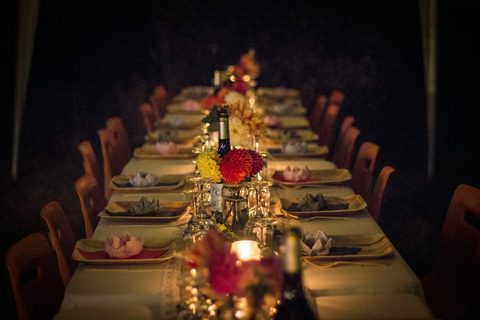
This is the part that surprises people. Renting a house for a week and holding a party in it are two arrangements, not one. Once the guest list exceeds what the house is staffed and equipped for, everything scales at once: additional staff hired in for the evening, kitchen capacity that the house's own kitchen cannot supply, hire of glass, linen and furniture, and often a generator, because a domestic supply was not built for a marquee, a band and a kitchen at the same time.
And then the constraint nobody asks about until it bites: local rules. In several island jurisdictions a private house hosting an event above a certain number needs a permit, and a noise curfew applies at a fixed hour regardless of whether the evening has finished. That hour has to be designed into the running order — the speeches before it, the music after it moved indoors — rather than discovered at midnight.
What the listing does not say
Four things, consistently. Whether service charge and tax are inside or outside the quoted figure. Whether an arrival or departure fee applies. What the gratuity convention is for the team — it varies by island and by house, is best agreed in advance rather than improvised on the last morning, and is sometimes already covered by the service charge, in which case tipping again is simply a second payment. And what the minimum stay is in the window you want, which in peak weeks is the clause that decides whether the house is available to you at all.
Where these houses actually are
The Caribbean does staffed houses better than anywhere, and does them by the fortnight over the turn of the year — Turks & Caicos for space and calm water, St Barth for the houses that close first. In Europe the equivalent is the Mediterranean summer, where a house taken whole is the difference between a family holiday and a hotel corridor. In the Alps the model changes: chalets are let by the week, staffed like small hotels, and priced with the peak week apart from the rest of the season.
If the question is still whether to take a house at all, see villa or hotel for a luxury trip.
Lead times
For a specific house in a peak window, the spring before — nine to twelve months, and a year for the turn of the year. For a celebration with a fixed date and a guest list, earlier again, because the house has to be chosen for what the evening needs rather than the evening designed around whatever house was left. Outside peak, three to four months is usually comfortable.
Questions, answered.
That the house and its grounds are yours and no other guests are placed in them — which is less than most people assume. It says nothing about staff, meals, the pool being private, or whether a service charge sits inside the figure. Ask for the staffing schedule and what is excluded, in writing, before anything else.
For a household that wants to be together, yes, and for a party with a fixed guest list, often not. A house gives you privacy, one table and no corridors. A hotel gives you back-of-house capacity, a licence, and someone else's problem when two hundred people need feeding at once. The honest answer depends on the number.
Fewer than the listing says. Count en-suite doubles rather than beds, discount any room that is only available if you go without staff, and check how many of the good rooms are on one floor. For a party rather than a stay, capacity is set by the kitchen and the staff, not the bedrooms.
Usually, but it becomes a separate arrangement: staff hired in, kitchen capacity brought in, glass and furniture hired, often a generator, and in several jurisdictions a permit. There is also likely to be a noise curfew at a fixed hour, which has to shape the running order rather than end it.
Conventions vary by island and by house, and in some cases the service charge already covers it — in which case an additional gratuity is a second payment rather than a courtesy. It is a question to settle when the house is booked, not on the last morning.
It depends entirely on the window. Outside peak, a week or less. In the Alps, chalets are let by the week. Across the turn of the year in the Caribbean, the fortnight is standard, which is why ten nights and fourteen often cost the same.
Frequently yes, and for a nanny it is usually the better arrangement — someone the children already know, interviewed rather than assigned. Some houses require their own chef to be used, or charge a kitchen fee if an outside chef works in it. It is worth asking before the house is chosen.
Nine to twelve months for a specific house in a peak window, and a year for the turn of the year. For a celebration with a fixed date, earlier still, so the house can be chosen for what the evening needs. Outside peak, three to four months is comfortable.
A villa listing can describe three different products: a house with a resident team who have worked there for a decade, a house with no staff beyond a cleaner between guests, or a unit in a development with a shared pool and an unmentioned five-minute walk to the beach. The photography looks the same. So the first question is not how many bedrooms, but who is in the house, when they are there, and what they do.
A properly staffed villa runs on four functions, each usually priced separately: a chef, who shops, cooks around the household's day and adapts, unlike catering, which delivers at an agreed hour; a butler or house manager, who makes the house work; daily housekeeping rather than cleaning on turnover; and a driver, which matters on a small island because parking and roads decide how often anyone leaves. A nanny is almost always engaged separately.
Usually not. In a staffed villa, the chef's food budget generally sits outside the rental figure and is settled at cost, in advance, against a provisioning list. It is one of two things almost always arranged separately from the house, the other being a nanny, who is engaged for the household and should be interviewed rather than assigned.
The Caribbean does staffed houses better than anywhere, typically by the fortnight over the turn of the year, with Turks & Caicos chosen for space and calm water and St Barth for the houses that close first. In Europe the equivalent is the Mediterranean summer. In the Alps the model changes: chalets are let by the week, staffed like small hotels, and priced with the peak week apart from the rest of the season.

Tell a private advisor how you like to travel — no quotes, no obligation.
Speak With a Luxury Travel AdvisorA real person answers: an in-house luxury travel advisor, in English or Spanish. The first conversation is complimentary.