Conservancy or the national reserve — which one are you paying for?
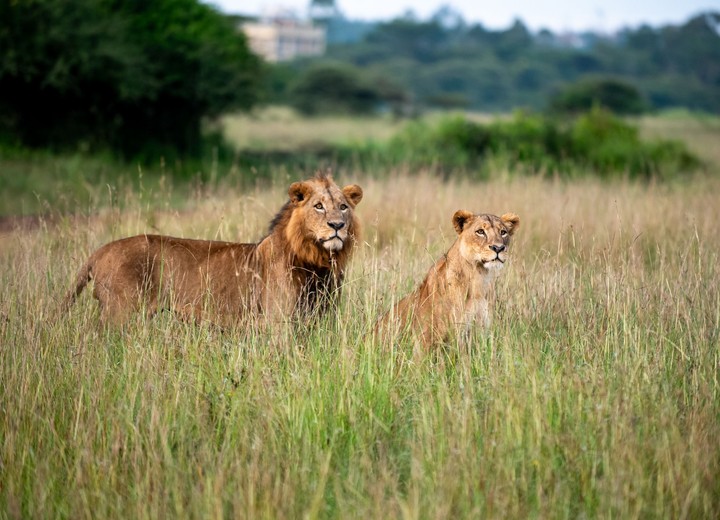
The conservancy, almost always, and the arithmetic explains why. The Maasai Mara National Reserve charges US$100 per person per day from January to June and US$200 from July to December, and a reserve ticket is not valid in the conservancies. The conservancies charge a conservation fee of US$80–150 per person per night instead, usually inside your camp rate — and what it buys is bed density. Olare Motorogi holds roughly 33,000 acres against about 95 beds; Naboisho keeps under one bed per 350 acres. Both cap sightings at four vehicles.
Which weeks actually hold the river crossings?
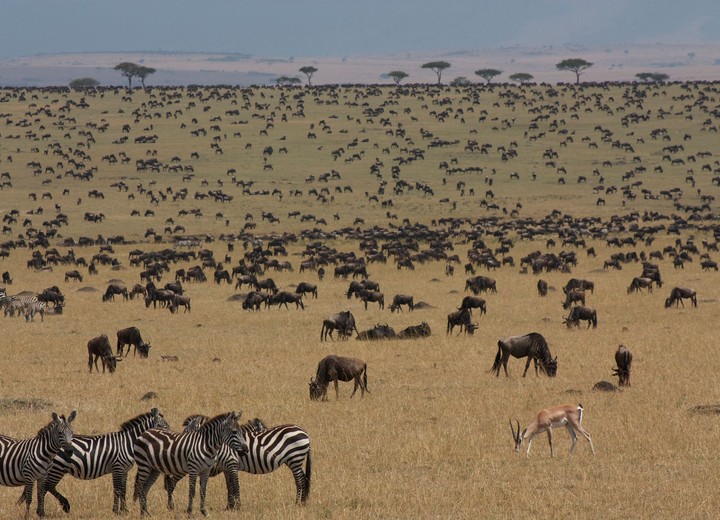
Late July into September, with the peak in August. The herds reach the Mara from the Serengeti around July and stay into October, the Mara and Talek crossings are most reliable from late July, and the southbound return runs in late October — but the exact dates move each year with the rains. Nobody can sell you a crossing on a Tuesday. For newborn calves and the predators that follow them you want the southern Serengeti in January and February instead, which is why we often build a two-country route with Tanzania.
What does the flight between camps cost you in luggage?
About 20 kg per person, including hand luggage and every piece of camera gear, in soft bags no larger than 25 × 30 × 62 cm; some operators hold the line at 15 kg. Movements between bush airstrips are by scheduled or private light aircraft, which is faster and far kinder than a long road transfer. Camps do same-day laundry, so the number works for clothes; it does not work for a second body and a 600mm, which is what a photographic safari is built around, or for a private charter.
What is the entry paperwork, and when does it need doing?
Kenya abolished visas in January 2024 and replaced them with an electronic travel authorisation: US$30, valid 90 days, applied for before departure, with a five-year multiple-entry option at US$185 for US passports. There is no visa on arrival to fall back on. It is quick, so it goes last — after the camps, which for July to October need ten to twelve months, because the best conservancy camps hold eight to twenty guests in total.
Which second ecosystem earns the extra flight?
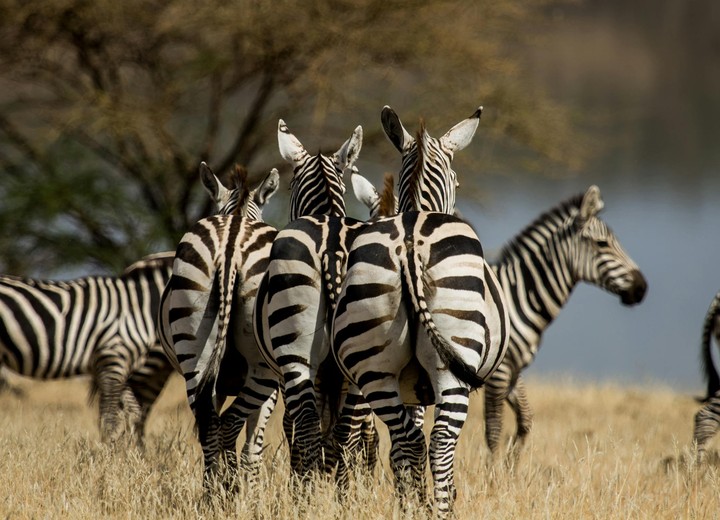
Laikipia, for most people. Its private ranches and conservancies hold serious rhino populations and permit horseback and camel safaris that are rare elsewhere. Amboseli gives you large elephant herds against Kilimanjaro; Samburu, in the arid north, gives you Grévy's zebra and reticulated giraffe that do not occur in the south. Two or three regions across eight to ten nights is the classic shape, and three to five nights on the coast at Lamu or Diani afterwards is how a Kenyan safari normally ends.
Who should not come in August?
Anyone who cannot afford to be disappointed. August is the most expensive month, the reserve fee doubles from 1 July, camps are at capacity, and the thing you came for is a probability. If you can travel in late September the crossings are still running, the rates have not yet dropped but the pressure has, and the light is better. If you can only travel in August, we will book it — but we will tell you first that we are buying you the best odds, not a guarantee, and our safari guide says the same in more detail.