Kenya in Migration Season
The great herds and the river crossings, from a private conservancy. A private, tailored journey of 8 Days · 7 Nights in Kenya, Safaris, designed end to end by a Forest Travel advisor — with Virtuoso privileges at the finest luxury hotels, from US$18,500 per traveler.
- Ideal length: 8 Days · 7 Nights
- Best time: From June to October, the best window for Kenya.
- Private guiding, access and transfers throughout
- From US$18,500 per traveler — a starting point, tailored to you
- Designed one-to-one by a Forest Travel advisor
- Virtuoso privileges at the finest luxury hotels
The great herds and the river crossings, from a private conservancy. A private, tailored journey of 8 Days · 7 Nights in Kenya, Safaris, designed end to end by a Forest Travel advisor — with Virtuoso privileges at the finest luxury hotels, from US$18,500 per traveler.
Africa rewards those who travel privately, trading crowds for the quiet company of a guide who knows the land intimately.
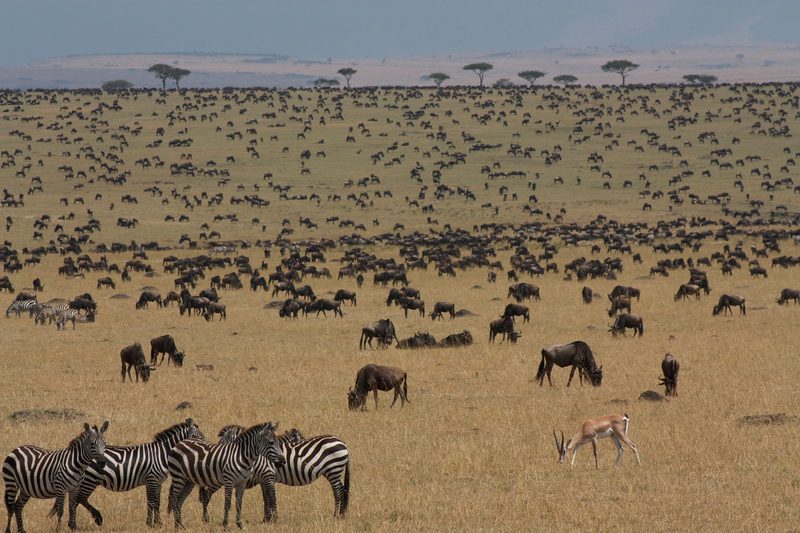
When to go
From June to October is the best window for Kenya. Your advisor times it to the light, the crowds and your own calendar.
The experiences
A sense of what this journey can hold — each one arranged privately and shaped to you:
- A private crossing point on the Mara River, accessed exclusively through a conservancy partnership, where your guide positions the vehicle before the herd commits to the water.
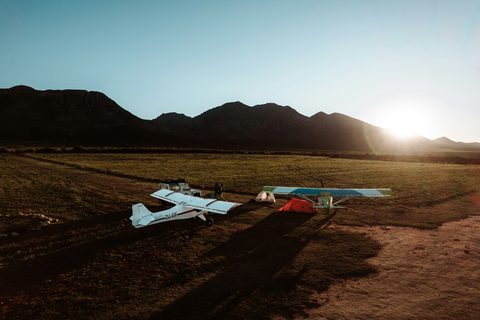
- A fly-camp night on the open plains during peak migration, falling asleep to the sounds of the Serengeti ecosystem moving north across the Tanzanian border.
- A predator-focused dawn drive timed to the chaos that follows a crossing, when lion, leopard and crocodile are all in motion along the same riverine corridor.
- A private naturalist debrief each evening mapping herd movement data from that day's sightings onto aerial charts of the greater Mara ecosystem.
A sense of the rhythm
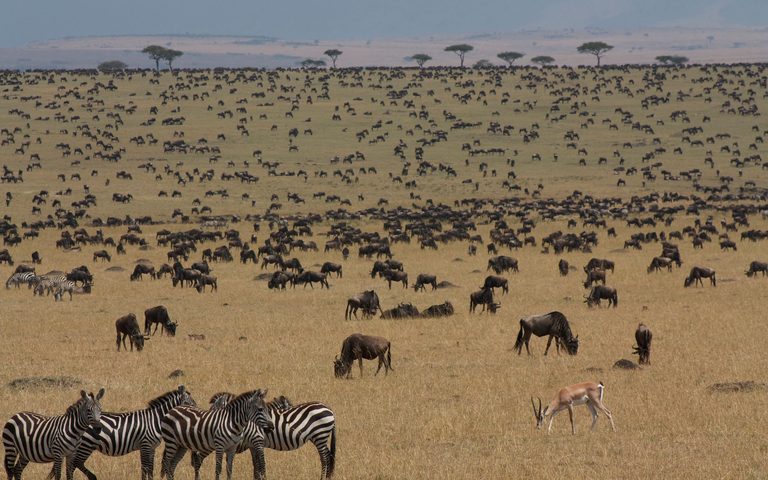
Days begin before first light and are built entirely around herd intelligence gathered overnight — your guide adjusts the morning route based on where scouts have tracked the leading columns. The pace is patient and purposeful: long waits at the river rewarded by crossings that can involve tens of thousands of animals in a single afternoon. Evenings slow to candlelight, field notes and the particular quiet of a camp that sits inside the migration corridor itself.
Whether to base in the Maasai Mara National Reserve or in a private conservancy bordering it
The National Reserve guarantees proximity to the most famous crossing points and the densest concentration of vehicles at peak moments; a bordering conservancy — Olare Motorogi, Naboisho or Mara North among them — limits vehicle numbers by covenant, meaning you may wait at a crossing with no other game drive in sight. Conservancy access typically requires staying within that conservancy's own camps, which shapes your entire accommodation choice for the week. For a journey defined by the crossing itself, we nearly always counsel the conservancy for the quality of the stillness around the moment, while building in at least one morning inside the reserve boundary.
How to do it well
The counsel our advisors give travelers planning this journey:
- Book by January for a July–October migration window; the best conservancy camps release a fixed allocation of dates annually and the peak-season calendar fills months before the rains confirm herd timing.
- The Mara River crossings concentrate between late July and late October, with August and September historically the most reliable weeks — plan the core of your eight days around that window rather than the shoulder ends.
- A private vehicle and a guide with specific migration-tracking experience are non-negotiable for this archetype; shared game drives cannot be repositioned quickly when a crossing begins, and the difference in outcome is significant.
- Factor a charter flight between Nairobi's Wilson Airport and a Mara-area airstrip into your logistics from the outset — the overland drive from Nairobi consumes the better part of a day each way and compresses your time on the plains.
What only your advisor can open
The difference between a good trip and an unrepeatable one is access — and access is a relationship, not a booking. Every guide, room and moment is chosen and sequenced for you.
Who it's for
Travelers who value privacy, time and doing it once — beautifully — and who would rather have one trusted advisor orchestrate every detail than assemble it themselves.
Estimated investment
From US$18,500 per traveler, based on double occupancy — scaled to your dates, party size and level of privacy. A starting point, not a final quote; confirmed once your advisor tailors the itinerary.
Designed entirely around you
Nothing here is a package. A Forest Travel advisor shapes the whole journey and stays one message away before and throughout your trip.
Your Virtuoso privileges
As a Virtuoso member, Forest Travel includes benefits reserved for Virtuoso guests at the finest luxury hotels, at no added cost: a room upgrade on arrival when available, daily breakfast for two, a property credit toward dining or spa, and early check-in with late check-out when the hotel allows.
Continue exploring Kenya
Part of our Kenya travel guide. Related private journeys:
Begin the conversation
Tell a Forest Travel advisor how you like to travel and they will design Kenya in Migration Season around you — privately, every Virtuoso privilege included. Request your private consultation →
Questions, answered.
The National Reserve guarantees proximity to the most famous crossing points and the densest concentration of vehicles at peak moments; a bordering conservancy — Olare Motorogi, Naboisho or Mara North among them — limits vehicle numbers by covenant, meaning you may wait at a crossing with no other game drive in sight. Conservancy access typically requires staying within that conservancy's own camps, which shapes your entire accommodation choice for the week. For a journey defined by the crossing itself, we nearly always counsel the conservancy for the quality of the stillness around the moment, while building in at least one morning inside the reserve boundary.
Book by January for a July–October migration window. The best conservancy camps release a fixed allocation of dates each year, and the peak-season calendar fills months before the rains confirm herd timing. Because conservancy access typically requires staying in that conservancy's own camps, securing those dates early shapes your entire week, so it is worth settling the plan well before the season begins.
Yes. For this journey, a private vehicle and a guide with specific migration-tracking experience are non-negotiable. Shared game drives cannot be repositioned quickly when a crossing begins, and the difference in outcome is significant. With your own vehicle, your guide can position you before the herd commits to the water, then follow the predator activity along the riverine corridor that comes after.
Fly. Plan a charter flight between Nairobi's Wilson Airport and a Mara-area airstrip into your logistics from the outset. The overland drive from Nairobi consumes the better part of a day each way, which compresses your time on the plains. On an eight-day journey built around the river crossings, those recovered hours belong at the Mara River.
Kenya in Migration Season is designed as 8 Days · 7 Nights. Each day begins before first light, with your guide adjusting the morning route to where scouts have tracked the leading columns overnight. The pace is patient: long waits at the Mara River, rewarded by crossings that can involve tens of thousands of animals in a single afternoon. Evenings slow to candlelight, field notes and a private naturalist debrief. A charter flight from Nairobi's Wilson Airport keeps the days on the plains rather than on the road.
As a private, tailored journey it starts from roughly US$18,500 per traveler (double occupancy) and scales with your dates, party and level of privacy — a starting point, never a fixed package price. Your advisor confirms the figure once the itinerary is tailored.
June through October is the dry season, when thinning bush and gathering herds make wildlife easiest to find across the great plains. For the river crossings themselves, the window narrows: they concentrate between late July and late October, with August and September historically the most reliable weeks. Plan the core of your eight days around that period rather than the shoulder ends, and book by January, as the best conservancy camps fill months ahead.
On Kenya in Migration Season, a private crossing point on the Mara River is accessed exclusively through a conservancy partnership. Your guide positions the vehicle before the herd commits to the water. Because bordering conservancies such as Olare Motorogi, Naboisho or Mara North limit vehicle numbers by covenant, you may wait at a crossing with no other game drive in sight, which gives the moment a rare stillness.
A fly-camp night on Kenya's open plains is arranged during peak migration, so you fall asleep to the sounds of the Serengeti ecosystem moving north across the Tanzanian border. It sits within a journey whose evenings slow to candlelight, field notes and the particular quiet of a camp inside the migration corridor itself, keeping you close to the herds through the night.
After a Mara River crossing comes a burst of predator activity, and a dawn drive on Kenya in Migration Season is timed to that chaos. Lion, leopard and crocodile are all in motion along the same riverine corridor. With a private vehicle, your guide can follow that activity rather than being held to a shared schedule, which makes the morning after a crossing one of the most absorbing of the week.
On Kenya in Migration Season, a private naturalist debrief each evening maps the herd movement data from that day's sightings onto aerial charts of the greater Mara ecosystem. It connects what you saw at the river to the wider migration. That same herd intelligence, added to what scouts track overnight, shapes the next morning, when your guide adjusts the route to where the leading columns have moved.
In Kenya, the Great Migration is in the Maasai Mara broadly from July to October. The Mara River crossings concentrate between late July and late October, with August and September historically the most reliable weeks. For the rest of the year the herds are in Tanzania's Serengeti, where calving falls roughly January to March. For a July to October stay in a private conservancy camp, book by January, as the best camps release a fixed allocation of dates each year.
It depends mainly on when you travel. Kenya is the choice from July to October, when the herds are in the Maasai Mara for the river crossings, and its private conservancies limit vehicles and allow walking safaris and night drives. Tanzania holds the herds in the Serengeti for most of the year, including the January to March calving, and adds the Ngorongoro Crater and a greater sense of scale. Kenya is also the simpler of the two logistically, with short light-aircraft hops.
Safaris
See the collection →Tell a private advisor how you like to travel — no quotes, no obligation.
Speak With a Luxury Travel AdvisorA real person answers: an in-house luxury travel advisor, in English or Spanish. The first conversation is complimentary.