
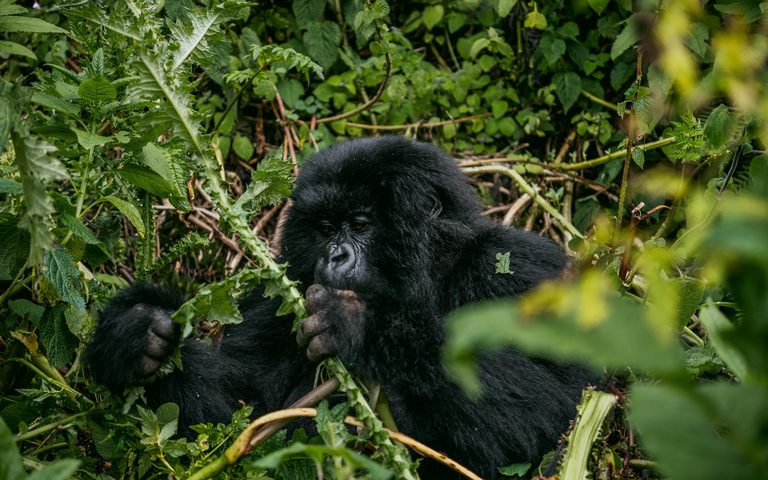
Rwanda
Mountain gorillas an hour's walk above the tea, and the shortest journey in Africa between an international flight and a great wildlife encounter.
- When to Go
- June – September, December – February
- Estimated From
- ~US$2,000 per person, per night — permits separate
Rwanda is the easiest of the great wildlife countries to reach and the hardest to forget. Volcanoes National Park is two to three hours by road from Kigali, or twenty-five minutes by helicopter, which means a guest can land in the afternoon and be with a gorilla family the following morning.
It is also a country that decided, deliberately, to be expensive. Permits are capped and priced high, visitor numbers are limited to eight per gorilla family per day, and the money goes back into the forest. The result is a safari with almost no crowd and a conservation record that is the strongest on the continent.
Keep exploring Safaris
Each a starting point — our advisors weave them into a single, seamless journey.
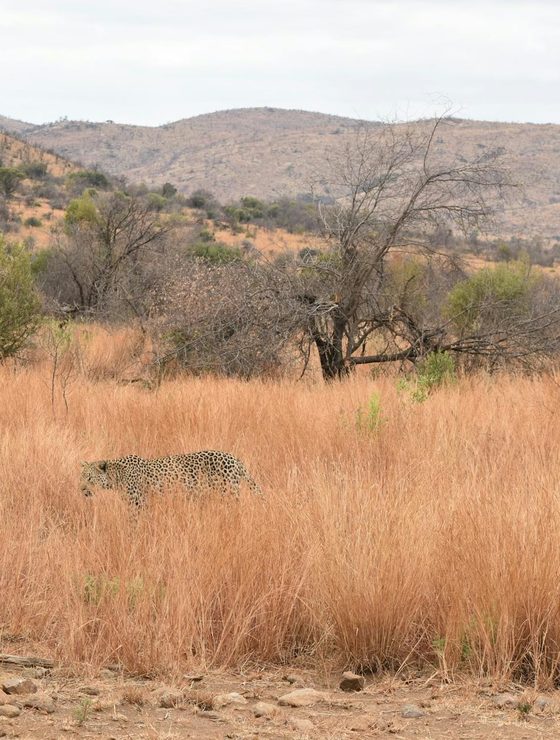
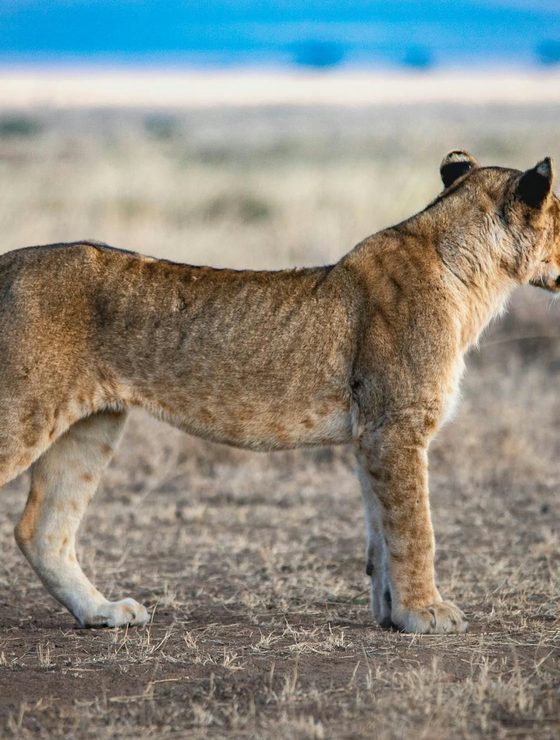
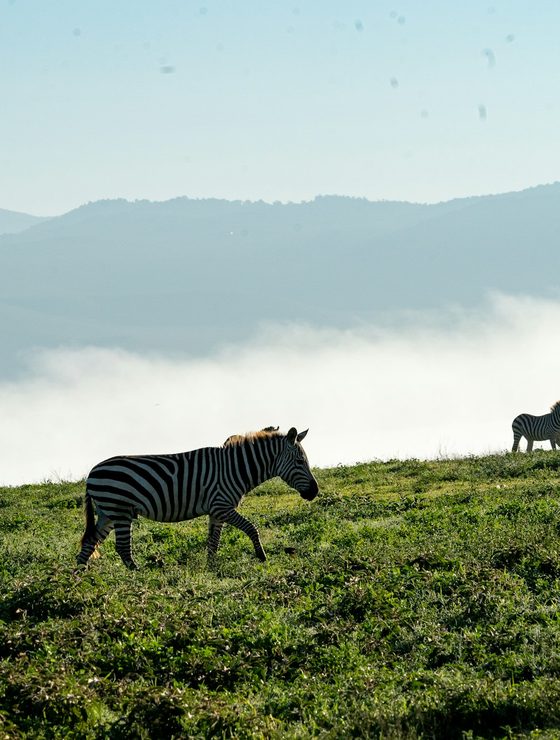
Questions, answered.
It is the most common question and the answer is consistent: guests who have done both describe the hour with a gorilla family as the single strongest wildlife experience of their lives, savannah safaris included. The price is high because the access is capped, and the cap is the reason there is no crowd.
Rwanda for the shorter journey and the finest lodges on the park boundary. Uganda for a lower permit price and a wilder, denser forest, at the cost of a light flight or a long drive. With limited days, Rwanda wins on logistics alone.
Not under fifteen, enforced without exception. Younger children can travel with the party and stay at the lodge, and Akagera's savannah safari has no age restriction — which is how most family itineraries here are built.
Fitter than a savannah safari asks, and less than people fear. Porters carry your bag and help on the climbs. The limiting factors are altitude and knees rather than distance, and guests in their seventies do it regularly.
Four nights is the minimum that makes the flights worth it — two treks and a day either side. Eight to ten nights adds Nyungwe's chimpanzees and Akagera's plains, which is the version most guests wish they had booked. Two permits on consecutive days is the single best upgrade available: the second trek is the one you actually watch, because the first is spent absorbing that it is happening.
The drier months — June to September and December to February — make the walking easier and the photographs cleaner. Trekking runs year round and the gorillas do not move seasonally, so the green season trades mud for a quieter park and better lodge availability.
Easily, and it is the classic shape: the forest first while the legs are fresh, then the Mara or the Serengeti for the seated, slower half. Kigali connects well to Nairobi. Ten to twelve nights carries both without either feeling rushed.
Waterproof boots already broken in, gaiters, a light waterproof layer, gardening-weight gloves for the nettles, and long sleeves regardless of temperature. Lodges lend most of it. The one thing to bring yourself is the boots.
Volcanoes National Park is two to three hours by road from Kigali, about two and a half hours on good road, or twenty-five minutes by helicopter. That means a guest can land in Rwanda in the afternoon and be with a gorilla family the following morning. In Uganda, the equivalent journey is a light aircraft or a day in a vehicle.
In Volcanoes National Park you are assigned a gorilla family, briefed at dawn, then walk for forty minutes on a generous day or up to six hours on a hard one, at 2,300 to 3,000 metres on steep, usually wet ground. Trackers have been with the family since first light, so the walk has a destination. When you arrive you have one hour, shared by no more than eight visitors.
Volcanoes National Park, Rwanda's share of the Virunga massif it shares with Uganda and the Democratic Republic of Congo, also holds golden monkeys and the trail up to Karisoke, where Dian Fossey worked and is buried. The massif is home to one of only two mountain gorilla populations on earth.
Yes. Akagera in eastern Rwanda is the savannah half: lions returned in 2015 and rhino in 2017, making Rwanda the only country where the Big Five and the gorillas sit three hours apart. Nyungwe Forest in the south adds chimpanzees and a canopy walk suspended over an older, wetter rainforest. Eight to ten nights carries the forest, the chimpanzees and the plains without a single internal flight.
Singita Kwitonda and One&Only Gorilla's Nest sit against the Volcanoes National Park boundary. Bisate Lodge is built into an eroded volcanic cone, with a reforestation programme guests plant into, and Virunga Lodge looks across two lakes. All are within reach of the 5am briefing, and the finest lodges sit within twenty minutes of the briefing point, which matters when the encounter itself lasts one hour.
A private Rwanda safari is estimated from around US$2,000 per person per night, with gorilla permits on top at US$1,500 per person per trek. Four nights is the minimum that makes the flights worth it, with two treks, so it starts from around US$11,000 per person. Eight to ten nights adds Nyungwe's chimpanzees and Akagera's Big Five without a single internal flight. Permits are secured before flights.
None of this is fixed.
Every journey here is a starting point a private advisor reshapes entirely around you — your pace, your people, the Rwanda only you would recognise.
A real person answers: an in-house luxury travel advisor, in English or Spanish. The first conversation is complimentary.