Private Conservancy vs National Park: What the Extra Rate Actually Buys
Off-road driving, night drives and walking are permitted in Kenya's conservancies, Botswana's concessions and Sabi Sand. Tanzania's national parks permit none of the three.
- A private conservancy lets you leave the road; a national park does not.
- Off-road driving, night drives and guided walking are permitted inside private conservancies.
- Tanzania's national parks permit none of the three.
- Kenya's conservancies charge US$80–150 per person per night, usually inside the camp rate.
- The Maasai Mara National Reserve charges US$100–200 per person per day at a gate instead.
- Conservancies cap beds against the acreage, which is what keeps the vehicle count down.
- The national park is still right when what you came for exists only there.
The short answer
A private conservancy lets you leave the road; a national park does not. Off-road driving to reach a sighting, night drives and guided walking are permitted inside Kenya's private conservancies, Botswana's private concessions and South Africa's Sabi Sand and Timbavati. Tanzania's national parks permit none of the three. That single distinction decides more of the experience than the camp does.
| Private conservancy or concession | National park | |
|---|---|---|
| Off-road to a sighting | Permitted | Not permitted |
| Night drives | Permitted | Not permitted |
| Guided walking | Permitted | Only ranger-led, in some parks |
| Vehicles per sighting | Capped | Uncapped |
| How you pay for access | A conservation fee per person per night, usually inside the camp rate — US$80–150 in Kenya | A gate fee per person per day, charged separately — US$100–200 in the Maasai Mara, US$70.80 plus 18% VAT in the Serengeti |
| Bed density | Low, by design | Set by the park, not the camp |
What you are actually buying
Four things decide whether one safari is better than another, and none of them is the room: land per bed, how many vehicles reach a sighting, whether you have a private vehicle and guide, and whether the camp sits where off-road and night driving are allowed. A conservancy is a way of buying all four at once.
The mechanism is land. Conservancies lease from the communities who own the land and cap the number of beds against the acreage, so the fee per person per night is what keeps the vehicle count down. A Maasai Mara reserve ticket is not valid in the conservancies bordering it, and that is the point: Mara North, Olare Motorogi and Naboisho have markedly lower vehicle density than the reserve.
Where the line falls, country by country
- Kenya. The clearest split. The National Reserve is a national park in practice; the conservancies around it are not, and permit all three activities.
- South Africa. Sabi Sand and Timbavati share unfenced traffic with Kruger but permit off-road driving and a guest-to-guide ratio the national park does not; Kruger runs night drives and walks only with its own rangers.
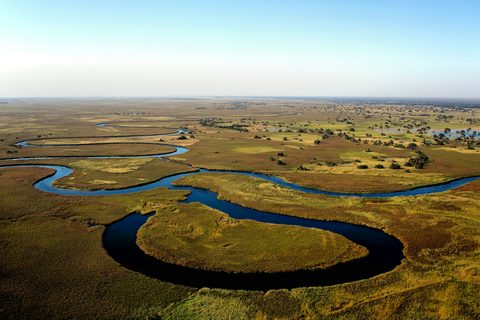
- Botswana. The private concessions carry the same permissions; the choice inside the country is water camp against land camp rather than park against concession.
- Tanzania. The Serengeti and Ngorongoro are national parks, with the rules that follow. The scale and the migration are the reason to accept them.
When the national park is still the right answer
Bed density, in numbers
The camps that price highest are usually the smallest: eight to twenty guests in total is common in the Mara conservancies and in the Serengeti's mobile migration camps. That is the mechanism the conservation fee pays for — beds capped against acreage, so the number of vehicles that can reach any one sighting is capped with them. A national park sets its bed count centrally, and a camp inside it cannot cap what arrives at a sighting no matter how few rooms it holds.
The private vehicle on top
Permission to leave the road is worth most when you also control the car. A private vehicle costs from about US$250 per vehicle per day on top of the rate and buys the departure time and the right to stay with a sighting, which is exactly what off-road driving and night drives are for. Booked with a shared vehicle, a conservancy delivers a fraction of what it charges for.
What this decides in practice
Choose the land status first and the camp second. Two camps of identical standard on opposite sides of that line are not selling the same holiday — see which country for where the line falls, and what it costs for what the fees add.
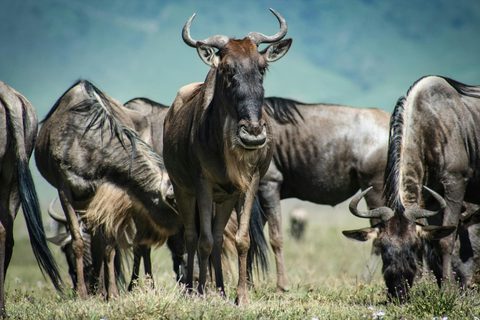
When the thing you came for is only there. The Serengeti's scale, the Great Migration's river crossings and the Ngorongoro crater floor are not replicable in a conservancy, and no amount of off-road permission substitutes for them. The usual resolution is not to choose but to sequence: a conservancy for the guiding and the walking, a national park for the spectacle. See which country and how many nights.
Questions, answered.
A private conservancy lets you leave the road; a national park does not. Off-road driving to reach a sighting, night drives and guided walking are permitted in Kenya's private conservancies, Botswana's concessions and South Africa's Sabi Sand and Timbavati, while Tanzania's national parks allow neither off-road driving nor night drives, and walking only ranger-led. Conservancies also cap vehicles per sighting and bed numbers against the acreage, which national parks do not.
For most travellers, yes, because what it buys is the experience rather than the room: fewer vehicles at a sighting, the right to drive off-road and at night, and walking with a guide. It is also less of a premium than it looks — Kenya's conservancy fee of US$80–150 per person per night is usually already inside the camp rate, and it replaces rather than adds to the US$100–200 per person per day the Maasai Mara reserve charges at a gate.
Only on the park's own terms: Kruger runs night drives and walks led by SANParks rangers, though never off-road or self-drive after dark. Tanzania's national parks permit neither night drives nor off-road driving, and walking safaris only with an armed ranger in parks such as Tarangire and the Serengeti. The private conservancies and concessions in Kenya, Botswana and South Africa permit all three. If a night drive matters to you, it decides where the camp has to be.
Because the number of beds is capped against the acreage and the fee per person per night is what funds the cap. Kenya's Mara North, Olare Motorogi and Naboisho lease from the communities who own the land, and limit vehicles per sighting as a rule rather than as a courtesy. A reserve ticket is not valid inside them.
Usually both, in sequence, rather than one. A conservancy gives the guiding, the walking and the low vehicle count; a national park gives what only it has — the Serengeti's scale, the migration's river crossings, the Ngorongoro crater floor. Most itineraries we build put a conservancy either side of the park nights.
A private vehicle is what makes a Kenya conservancy such as Mara North, Olare Motorogi or Naboisho fully worth its rate. It costs from about US$250 per vehicle per day on top of the camp rate and buys your departure time and the right to stay with a sighting, which is exactly what off-road driving and night drives are for. Booked with a shared vehicle, a conservancy delivers a fraction of what it charges for.
Sabi Sand and Timbavati share unfenced traffic with Kruger, so the wildlife moves freely between them, but the rules differ. The private reserves permit off-road driving to a sighting and a guest-to-guide ratio that Kruger National Park does not, and their night drives leave from your own lodge, whereas Kruger offers them only as SANParks ranger-led drives. Guided walking is also permitted there, and vehicles per sighting are capped, which the national park side does not do.
In Botswana the park-versus-concession question matters less than elsewhere, because the private concessions carry the same permissions as Kenya's conservancies: off-road driving, night drives and guided walking. The real choice inside Botswana is between a water camp and a land camp. That decision, rather than land status, is what shapes a Botswana safari once you are in a private concession.
The Serengeti is a national park and Ngorongoro a conservation area, so off-road driving and night drives are not permitted and walking is ranger-led only, and their scale and the migration are the reason to accept those rules. The Serengeti's size, the Great Migration's river crossings and the Ngorongoro crater floor cannot be replicated in a conservancy. The Serengeti's mobile migration camps commonly hold just eight to twenty guests, though no camp inside a park can cap vehicles at a sighting.
For sheer scale, Tanzania's Serengeti and the Ngorongoro crater floor, where the Great Migration's river crossings cannot be replicated in any conservancy. Kenya's Maasai Mara National Reserve and South Africa's Kruger National Park are the other two this guide weighs. The trade-off is the rules: in the parks, vehicles stay on the road and sightings are not capped. Most travelers sequence a park for the spectacle and a private conservancy for the guiding and the walking.
Safaris
See the collection →Tell a private advisor how you like to travel — no quotes, no obligation.
Speak With a Luxury Travel AdvisorA real person answers: an in-house luxury travel advisor, in English or Spanish. The first conversation is complimentary.