Where the Best Rooms in Tokyo and Kyoto Actually Are
Choosing the hotel is the easy half. At this level the houses are small — six rooms to a floor at Aman Tokyo, eighteen in all of Tawaraya, nine suites at The Shinmonzen — and the gap between two rooms in the same category is wider than the gap between two hotels.
- The room is the decision, not the hotel. Aman Tokyo puts only six rooms on each of its six floors; Hoshinoya Kyoto has twenty-five, all facing the river; Tawaraya has eighteen; The Shinmonzen has nine suites. A category tells you almost nothing about which of those you are getting.
- Tokyo is decided by orientation and floor. The asset is what the window faces — the Imperial Palace from Otemachi, Tokyo Tower from Azabudai, the bay from Yaesu — and two rooms sold as the same category can face opposite directions.
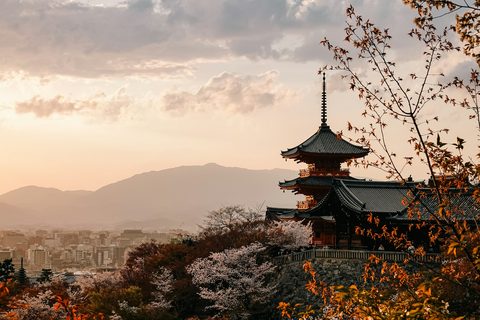
- Kyoto is decided by enclosure, not view. What you are buying is a garden, a machiya courtyard or a stretch of river: the Shakusuien pond garden at Four Seasons is eight hundred years old, and the rooms that overlook it are a small subset of the hotel.
- A ryokan rate is per person and includes kaiseki dinner and breakfast, so it cannot be compared with a hotel's room rate. The rooms with a private open-air bath are a separate tier again, and in the oldest houses the room is assigned rather than chosen.
- The rooms that define both cities are taken nine to twelve months out, and in cherry-blossom and autumn weeks a whole city's top inventory goes at once. At that end the constraint is the calendar, not the budget.
Why the room matters more than the hotel here
In most cities the hotel is the decision and the room is a detail. Japan inverts it. The houses that matter are tiny — Aman Tokyo occupies the top six floors of Otemachi Tower and puts six rooms on each floor; Tawaraya has eighteen rooms in total; The Shinmonzen has nine suites — so a property's best rooms are not a wing, they are a handful of keys. Two rooms sold in the same category can be a different trip.
Which means the useful question is never "which hotel". It is: in this house, which room, facing what, on which floor, and is it the one with the bath.
Tokyo: orientation and floor decide it
Tokyo's luxury is vertical and the asset is the window. Get the side wrong and you have paid for a view of the next tower.
Otemachi and Marunouchi — the Imperial Palace side. Aman Tokyo, 84 rooms across levels 33 to 38 of Otemachi Tower, six to a floor, connecting down into the station beneath it. Hoshinoya Tokyo is the interesting one: a ryokan built as a tower, two levels below ground and seventeen above, only six guest floors, each with its own ochanoma lounge where guests sit in yukata, and a hot spring on the seventeenth drawn from 1,500 metres below the street. It is a small building pretending to be a house, and it works.
Yaesu and Nihonbashi — Bulgari Hotel Tokyo, 98 rooms on floors 40 to 45, walking distance to Ginza and the Palace. High, bright, and the most obviously luxurious of the group.
Azabudai and Toranomon — Janu Tokyo, Aman's second brand, 122 rooms starting at 55 square metres and topping out at the 284-square-metre Janu Suite, with Tokyo Tower in the frame. Larger, younger and considerably more social than Aman itself, which for some parties is the point and for others is the reason not to.
The practical rule: in Tokyo, ask which direction the room faces and on which floor, and ask before the category. A high floor facing the Palace and a low floor facing the service side are the same line on a rate sheet.
Kyoto: you are buying an enclosure, not a view
Kyoto is low, and almost nothing is worth looking at across a rooftop. What you are buying is what the room is wrapped around.
Four Seasons Kyoto is built around Shakusuien, a pond garden roughly eight hundred years old, and the rooms that give onto it are a minority of the house. Book the hotel without naming the garden and you may well be facing away from the only reason to be there.
Hoshinoya Kyoto has twenty-five rooms in a gorge in Arashiyama, all of them facing the Oi River, and it is reached only by the property's own boat — about fifteen minutes upstream from the Togetsukyo bridge. That is either the best thing about it or a logistical fact you should know before you book; it is not a hotel you step out of at nine at night.
Aman Kyoto sits in a hidden moss garden at the foot of Hidari Daimonji with roughly twenty-six rooms and pavilions — the quietest of the group and the furthest from dinner. Park Hyatt Kyoto has seventy rooms and nine suites on Ninenzaka, in among the lanes, with the Yasaka pagoda in view; the Ninenzaka House is a separate bedroom and living room at about 68 square metres. The Shinmonzen, nine suites by Tadao Ando on the Shirakawa canal, is the smallest serious address in the city. Hotel The Mitsui Kyoto is the largest at 161 rooms and the only one of these with its own hot spring — including two Onsen Suites with a private outdoor bath, which is the combination most people are actually imagining when they say they want a ryokan.
The ryokan rule, and why the numbers look wrong
A ryokan rate is quoted per person and includes kaiseki dinner and breakfast. A hotel rate is quoted per room and includes neither. Set them side by side and the ryokan looks like theft; add two dinners at that standard to the hotel and it usually is not. We take this apart in what a luxury trip to Japan actually costs.
Three more things about the old houses. The room with a private open-air bath is a tier of its own and is the first thing to sell out. In Tawaraya and Hiiragiya the room is generally assigned by the house rather than chosen by the guest — you are trusted to it, and arguing is not the move. And the annexes are not the main houses: Hiiragiya's Bekkan is fourteen rooms and a different, more modest proposition.
When these rooms are actually available
Nine to twelve months for the top of both cities, and in the two peak seasons — cherry blossom at the end of March into early April, and the autumn colour from mid-November — an entire city's best inventory moves in the same few weeks. It is the same pattern as Japan's cruise trains, and it is why a Japan conversation that starts six weeks out is a conversation about a different Japan.
The order also matters. Fix the dates, then the rooms. Parties who choose the room first and then look for dates around it usually end up with neither.
What a request should actually say
"A nice room" buys you a category. What a house can act on is specific: which side of the building, which floor band, garden-facing or lane-facing, private bath or shared, connecting or separated, and what you would take instead if the first choice is gone. Put the alternative in writing — it is the single thing that most often turns a waitlist into a reservation, because it lets the house solve the puzzle without coming back to ask.
Forest Travel places these requests by name and holds them on your file, so the same preferences apply the next time without being restated. We cannot invent a room that does not exist — nobody can, and be wary of anyone who says otherwise — but we can make sure the request reaches the person who allocates, in the form they can act on, early enough to matter. The planning fee is US$250 and every trip carries it.
Questions, answered.
It depends on what the window faces more than on the property. Aman Tokyo has 84 rooms on levels 33 to 38 of Otemachi Tower with only six to a floor, on the Imperial Palace side. Hoshinoya Tokyo is a ryokan built as a seventeen-floor tower with just six guest floors, each with its own tea lounge and a hot spring on the top floor fed from 1,500 metres down. Bulgari Hotel Tokyo has 98 rooms on floors 40 to 45 in Yaesu. Janu Tokyo has 122 rooms from 55 square metres up to the 284-square-metre Janu Suite, facing Tokyo Tower. In every one of them, ask for the direction and the floor before you discuss the category.
The ones wrapped around something. At Four Seasons Kyoto that is the Shakusuien pond garden, about eight hundred years old, which only a minority of the rooms overlook. Hoshinoya Kyoto has twenty-five rooms in a gorge in Arashiyama, all facing the Oi River and reached only by the property's own boat, roughly fifteen minutes upstream. Aman Kyoto has about twenty-six rooms and pavilions in a hidden moss garden. Park Hyatt Kyoto has seventy rooms and nine suites in the Ninenzaka lanes. The Shinmonzen is nine Tadao Ando suites on the canal. Hotel The Mitsui is the largest at 161 rooms and the only one with its own hot spring, including two Onsen Suites with a private outdoor bath.
Nine to twelve months for the top rooms in either city, and that is not a sales line. Tawaraya, Hiiragiya and Hoshinoya Kyoto fill that far out, and in cherry-blossom season at the end of March and the autumn colour from mid-November an entire city's best inventory goes in the same few weeks. Six weeks out you are choosing from what is left, which in Japan is a genuinely different trip.
They are not the same product and it is worth doing both. A ryokan gives you the room, the kaiseki dinner, the breakfast and the rhythm of the house as one thing — which is why the rate is per person rather than per room. A hotel gives you the freedom to eat elsewhere, which in Kyoto matters more than people expect, because some of the best tables in the country are a ten-minute walk from your door. Most itineraries we build put one or two nights in a ryokan inside a longer hotel stay.
It means the Shakusuien pond garden, which predates the hotel by roughly eight hundred years and is the reason the property exists on that plot. But only some of the rooms give onto it, so the phrase on a booking confirmation is not proof. Ask for the garden by name and get it written on the reservation rather than requested at check-in.
Usually not, and in Japan it is often the wrong upgrade. Space is not what these houses are selling — a 55-square-metre room facing the right way is a better night than a larger one facing a wall. The upgrades that change a stay here are the private open-air bath, the garden frontage and the floor. Spend there first.
You can ask, and in the modern hotels it is often honoured as a preference on the file. In the oldest ryokan it generally is not: at Tawaraya and Hiiragiya the house assigns the room, and that assignment is part of what you are trusting them with. The productive version of the request is to state the attribute you actually want — garden, bath, quiet side — and name the alternative you would accept.
They are opposite experiences under one name. Aman Tokyo is a vertical city hotel, 84 rooms on the top six floors of a tower above Otemachi station, six to a floor, with the Imperial Palace below you. Aman Kyoto is roughly twenty-six rooms and pavilions in a moss garden at the foot of Hidari Daimonji, quiet to the point of remoteness and a real drive from dinner in the centre. Parties who love one sometimes dislike the other, so it is worth deciding which you are after rather than booking the brand.
Hoshinoya Kyoto is reached only by the property's own boat, about fifteen minutes upstream from the Togetsukyo bridge in Arashiyama. Its twenty-five rooms sit in a gorge, all facing the Oi River. That isolation is either the best thing about it or a logistical fact to know before booking: it is not a hotel you step out of at nine at night for dinner in town.
Janu Tokyo is Aman's second brand and is larger, younger and considerably more social than Aman Tokyo. Janu has 122 rooms in Azabudai and Toranomon, from 55 square metres up to the 284-square-metre Janu Suite, with Tokyo Tower in the frame. Aman Tokyo has 84 rooms on levels 33 to 38 of Otemachi Tower, six to a floor, on the Imperial Palace side. For some parties Janu's energy is the point; for others it is the reason not to go.
No. Hiiragiya's Bekkan is an annex of fourteen rooms and a different, more modest proposition than the main house. Annexes of Kyoto's old ryokan are not the main houses, so it is worth knowing which one a reservation is actually for. In the main houses of Hiiragiya and Tawaraya, the room is generally assigned by the house rather than chosen by the guest.
Fix the dates first, then the rooms. Parties who choose a room in Tokyo or Kyoto first and then look for dates around it usually end up with neither. The top rooms in both cities go nine to twelve months out, and in cherry blossom season, from the end of March into early April, and the autumn colour from mid-November, a whole city's best inventory moves in the same few weeks.
In Tokyo, the towers on the Imperial Palace side around Otemachi and Marunouchi, or Yaesu and Nihonbashi near the station, where the floor and the side the window faces matter more than the hotel. In Kyoto, Higashiyama near Gion for the temples and lanes, or quieter Arashiyama, with one or two nights in a ryokan. The top rooms book nine to twelve months ahead.
Japan
See the collection →Tell a private advisor how you like to travel — no quotes, no obligation.
Speak With a Luxury Travel AdvisorA real person answers: an in-house luxury travel advisor, in English or Spanish. The first conversation is complimentary.