The Ground in Japan: Private Guide, Chauffeur and Transfers
Almost everything that goes wrong on a Japanese itinerary goes wrong on the ground. The guide and the chauffeur are two different hires, the hire car is billed from the garage rather than from you, and a large suitcase needs a reservation of its own.
- The guide and the driver are two people. A national guide-interpreter generally does not drive, and a hire-car chauffeur is a professional driver rather than a commentator — so a day that needs both is two hires, not one, and that is the line most first-time budgets miss.
- Since the 2018 revision of the guide law, paid guiding in Japan no longer requires the national licence; only the title itself stays protected. "Licensed guide" therefore no longer separates good from bad, and the vetting has to be of the individual.
- A hire car (haiya) is not a taxi. The meter runs from the moment the car leaves its garage until it returns, minimums of two to three hours are normal, and a late-night surcharge of about 20 per cent applies overnight — so a three-hour hire is not three hours of your day.
- On the Tokaido, Sanyo and Kyushu Shinkansen a bag whose dimensions total more than 160cm needs a reserved oversized-baggage seat. The reservation is free; arriving without one costs ¥1,000 and a conversation with the conductor mid-journey.
- Send the luggage ahead instead. Hotel-to-hotel forwarding between Tokyo and Kyoto runs roughly ¥1,650 to ¥2,600 a bag and arrives the next afternoon, which is the single change that most improves a Japanese itinerary.
The guide and the driver are not the same hire
In most of the world a good driver-guide is one person and one invoice. Japan splits them. The national guide-interpreter is an interpreter and an explainer who generally arrives on foot and travels with you on the train; the haiya chauffeur is a career professional driver whose job is the car, the timing and the door, and who is usually not there to narrate a temple.
So a day that needs both is two hires. This is the line missing from most first-time Japan budgets, and it is the reason a quote from a full-service planner can look higher than a marketplace listing that quietly assumes one person will do both jobs badly.
Why "licensed guide" no longer tells you anything
This is the part almost nobody mentions. Japan revised the guide-interpreter law in 2018 and paid guiding no longer requires the national licence. What remains protected is the title: only a certified guide may call themselves a national government licensed guide-interpreter, and unlicensed guides may not imply official certification.
The practical consequence is that the credential has stopped working as a filter. Anyone may be paid to guide you in Japan today. The question worth asking is not whether a guide is licensed but who has worked with this specific person, in this specific city, on this specific kind of day — a temple morning and a whisky evening are not the same skill, and the person who is superb at one is often merely present at the other.
The hire car, and the meter you cannot see
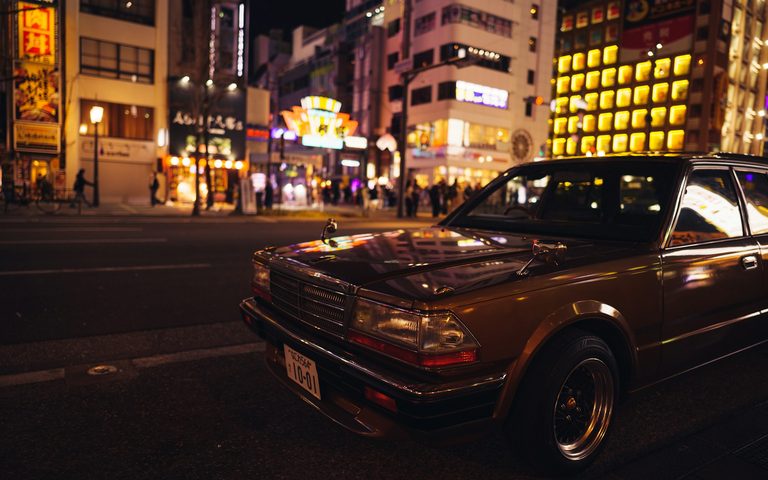
A haiya is not a taxi you flag down. It is dispatched from a garage, booked by the hour, and its meter is not displayed to you — because it runs from the moment the car leaves the garage until the moment it gets back. Minimums of two to three hours are standard, a surcharge of around 20 per cent applies through the night, and repositioning is billed.
Indicatively, a sedan for four in Tokyo runs in the region of ¥19,500 to ¥23,400 for three hours and about ¥52,000 for eight, before tolls and repositioning. These are market observations rather than Forest Travel quotes, and the number that matters is not the hourly rate — it is that a "three-hour" car is often two and a half hours of your day. Book the hours around the day you actually want, and be honest about the hours the car is only waiting.
Ride-hailing is not the escape hatch. Japan's ride-sharing has been legal only since 1 April 2024, it operates strictly under the management of a licensed taxi company, and only in named areas and time slots — Tokyo and Kyoto are among the few with daily coverage. It exists because of a driver shortage, not to serve visitors, and it is not a plan for a fixed 6.40 a.m. departure.
Where the car cannot take you
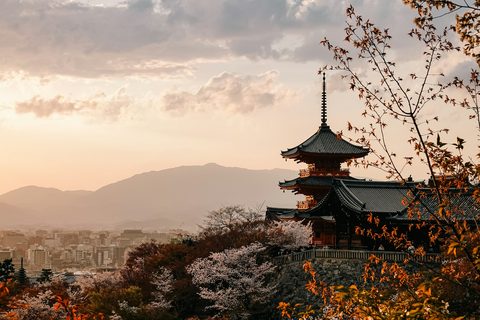
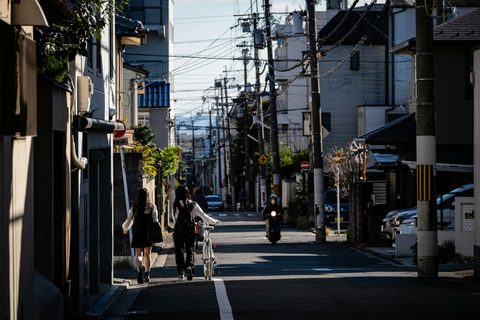
Kyoto is the case in point. The Higashiyama lanes are for walking, the streets around Ninenzaka and Sannenzaka are too narrow and too crowded for a drop at the door, and since April 2024 the private alleys of Gion are closed to visitors, posted in several languages with a ¥10,000 penalty for entering. Hoshinoya Kyoto is reached only by the property's own boat, about fifteen minutes up the Oi River.
None of that is a failure of planning; it is the plan. A good Kyoto day is built around where the car can wait and how long the walk is at each end, and it is why we treat Kyoto's crowding as a scheduling problem in Kyoto without the crowd.
When the train beats the car, which is most of the time
Tokyo to Kyoto is a little over two hours by Shinkansen against roughly six by road. On the trunk routes it is not close, and the car earns its place inside a city, on the routes rail does not serve, and on the days when three stops in the hills would otherwise eat an afternoon. The cruise trains are a separate product entirely, covered in luxury train travel in Japan.
For airports: Narita is fifty to ninety minutes into central Tokyo by car, with twenty to thirty more in the morning and evening peaks, while Haneda is a fraction of that and is the better first evening — the trade is set out in how to fly to Japan from the US. Kansai into Kyoto is about eighty to ninety minutes by car; the Haruka limited express does it in seventy-three to seventy-five, which on a bad traffic day is the faster arrival.
The luggage rule that ruins afternoons
On the Tokaido, Sanyo and Kyushu Shinkansen, a bag whose height, width and depth add up to more than 160cm (and up to 250cm) requires a seat with an oversized-baggage area, reserved in advance. The reservation costs nothing. Turning up without one costs ¥1,000 and means moving the bag to wherever the conductor decides, in front of a full carriage.
The better answer is not to carry it at all. Hand the cases to the hotel before the afternoon cut-off and they go hotel-to-hotel overnight: Tokyo to Kyoto runs roughly ¥1,650 for a small case to about ¥2,600 for a full-size one, arriving the following afternoon. There is a same-day service between participating hotels on the Tokaido at around ¥13,200 a bag if the schedule demands it. Travel with an overnight bag and a suit carrier, and the entire day changes character — this is the single highest-value adjustment we make to a first Japan itinerary.
How we build the ground plan
Day by day, in this order: what you are doing, where it is, whether it is walkable, and only then whether a car is needed and for how many hours. Guides are matched to the specific day rather than to the trip. Drivers are booked with the garage location in mind, because that is what you are paying for. Luggage moves separately. And where a rule, a lane or a boat decides the shape of a day, we say so before you arrive rather than at the kerb.
Forest Travel reviews every transport element on an itinerary against the day it serves — the same review we apply worldwide in how luxury private transfers work. The planning fee is US$250 and every trip carries it. For what the ground adds up to alongside the rooms and the tables, see what a luxury trip to Japan costs.
Questions, answered.
Not every day, and that is the useful answer. A guide earns their place where access, language or context decides the experience — a temple that opens early, a workshop visit, a market, a conversation with a maker. On a shopping day in Ginza or a slow morning in a garden, a guide is often an audience you did not want. Most itineraries we build are guided on some days and free on others, and the free days are deliberate.
No, not since 2018. Japan revised the guide-interpreter law that year and paid guiding no longer requires the national licence. What is still protected is the title itself: only a certified person may present as a national government licensed guide-interpreter, and unlicensed guides may not imply official certification. Because the credential is no longer a filter, the vetting has to be of the individual — who has worked with them, in which city, on which kind of day.
A taxi is hailed and charges for the time you are in it. A hire car is dispatched from a garage, booked by the hour with a minimum of two to three hours, and its meter — which you do not see — runs from the moment the car leaves the garage until it returns. Add a surcharge of roughly 20 per cent overnight and any repositioning. The practical implication is that a three-hour booking is not three hours of your day, so the hours have to be planned around the day rather than the other way round.
As a market observation rather than a quote: a sedan for four in Tokyo sits in the region of ¥19,500 to ¥23,400 for three hours and about ¥52,000 for eight, before tolls, parking and repositioning, with a night surcharge of around 20 per cent. A guide is a separate hire on top. Your own figure depends on the vehicle, the city, the hours and how much of the day the car spends waiting.
Only in a limited form, and not as a plan. Ride-sharing became legal on 1 April 2024 but operates solely under the management of a licensed taxi company, and only in designated areas and time slots — Tokyo and Kyoto are among the few places with daily coverage. It was introduced to relieve a driver shortage rather than to serve visitors. For a fixed departure, a booked car is the only reliable arrangement.
The train, comfortably. The Shinkansen does it in a little over two hours against roughly six by road, and you board and arrive in the centre of each city. The car is worth it inside a city, on routes rail does not serve, and on days with several stops in the countryside — not on the trunk line.
Send it ahead. Hand the cases to your hotel before the afternoon cut-off and they travel hotel to hotel overnight, roughly ¥1,650 to ¥2,600 a bag between Tokyo and Kyoto, arriving the next afternoon; a same-day service between participating hotels on the Tokaido runs around ¥13,200 a bag. It also avoids the Shinkansen rule: on the Tokaido, Sanyo and Kyushu lines a bag whose dimensions total more than 160cm needs a reserved oversized-baggage seat, free to reserve and ¥1,000 if you arrive without one.
For arriving, leaving and reaching the outlying temples, yes. Inside Higashiyama, no — the lanes are for walking, Ninenzaka and Sannenzaka cannot take a drop at the door, and since April 2024 the private alleys of Gion are closed to visitors with a posted ¥10,000 penalty. Hoshinoya Kyoto is reached only by the property's own boat, about fifteen minutes up the Oi River. A Kyoto day is built around where the car can wait.
Generally not in Japan, where the guide and the driver are two separate hires. The national guide-interpreter explains and interprets, usually arrives on foot and travels with you on the train. The haiya chauffeur is a career professional driver whose job is the car, the timing and the door, and who is usually not there to narrate a temple. A day that needs both means two hires, and a listing that assumes one person will do both often means both jobs done badly.
Haneda is the better first evening in Tokyo. From Narita, the drive into central Tokyo takes fifty to ninety minutes, with another twenty to thirty minutes in the morning and evening peaks. Haneda is a fraction of that distance by car, so arriving there leaves far more of the first evening for the city rather than the road.
Between Kansai airport and Kyoto, the Haruka limited express is often the safer choice. The journey takes about eighty to ninety minutes by car, while the Haruka does it in seventy-three to seventy-five minutes. On a bad traffic day, that makes the train the faster arrival into Kyoto, even though a car offers door-to-door convenience on a clear road.
Each day in Japan is planned in a fixed order: what you are doing, where it is, whether it is walkable, and only then whether a car is needed and for how many hours. Guides are matched to the specific day rather than the whole trip, drivers are booked with the garage location in mind, and luggage moves separately. Where a rule, a lane or a boat shapes the day, as in Kyoto, you are told before you arrive.
Decide which days need a guide rather than booking one for every day: access, language or context — a temple at opening, a workshop, a market — are where a guide earns their place, while a garden morning or a shopping day is better free. In Japan the guide and the driver are separate hires; the guide usually travels with you on the train, and a private car covers the cities.
A luxury trip to Japan costs from about US$1,000 per person per night on the land arrangements, before international flights; over ten to fourteen nights that is from roughly US$12,000 a person. Private ground transport sits inside that figure: as a market observation, a Tokyo sedan runs about ¥52,000 for eight hours, and a guide is a separate hire. Kyoto's lodging tax and dining beyond the hotel are extra, and Forest Travel's planning fee is US$250 per itinerary.
Japan
See the collection →Tell a private advisor how you like to travel — no quotes, no obligation.
Speak With a Luxury Travel AdvisorA real person answers: an in-house luxury travel advisor, in English or Spanish. The first conversation is complimentary.