Osaka in Autumn
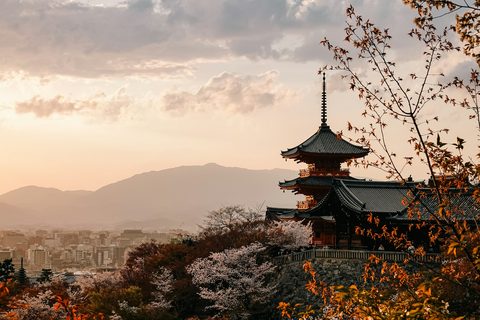
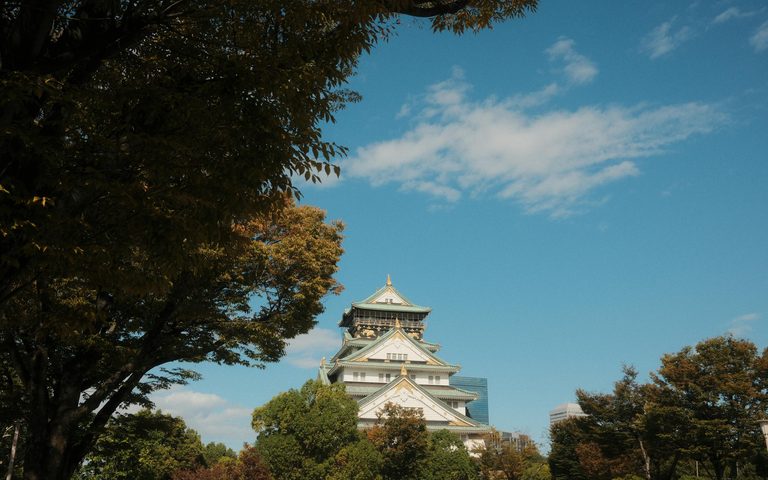
The koyo season in the city's lesser-known parks — Expo '70 Commemorative Park's ginkgo avenue, Minoh Park at the hour the maple and the waterfall are framed together, and the Osaka Museum of History at dusk when it closes for the evening. A private, tailored journey of 7 Days · 6 Nights in Osaka, Japan, designed end to end by a Forest Travel advisor — with Virtuoso privileges at the finest luxury hotels, from US$8,200 per traveler.
- Ideal length: 7 Days · 6 Nights
- Best time: Late March through mid-April brings the cherry blossoms, while November paints the maples crimson and the summer crowds recede.
- Private guiding, access and transfers throughout
- From US$8,200 per traveler — a starting point, tailored to you
- Designed one-to-one by a Forest Travel advisor
- Virtuoso privileges at the finest luxury hotels
The koyo season in the city's lesser-known parks — Expo '70 Commemorative Park's ginkgo avenue, Minoh Park at the hour the maple and the waterfall are framed together, and the Osaka Museum of History at dusk when it closes for the evening. A private, tailored journey of 7 Days · 6 Nights in Osaka, Japan, designed end to end by a Forest Travel advisor — with Virtuoso privileges at the finest luxury hotels, from US$8,200 per traveler.
Japan rewards those who slow down, offering a rare intimacy between ancient ritual, precise craft and quiet natural beauty.
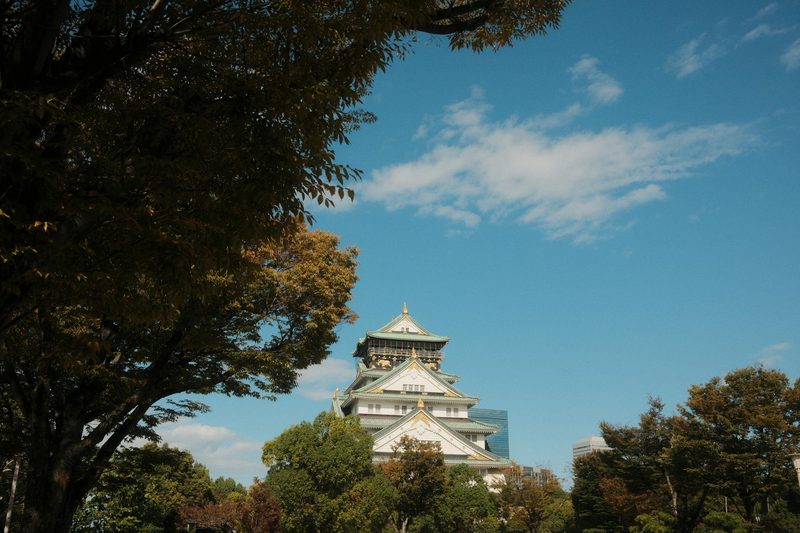
When to go
Late March through mid-April brings the cherry blossoms, while November paints the maples crimson and the summer crowds recede. Your advisor times it to the light, the crowds and your own calendar.
The experiences
A sense of what this journey can hold — each one arranged privately and shaped to you:
- A private dawn walk through the ginkgo avenue at Expo '70 Commemorative Park, arranged before the gates open to the public, with a local botanist who traces the history of the site from its 1970 World's Fair origins to its current role as Osaka's most underrated autumn canvas.
- An afternoon at Minoh Park timed precisely to the hour — late October, mid-morning light shifting to noon — when the 33-metre waterfall and the surrounding maple canopy align in a single frame that no wide-angle lens fully captures, with a ryokan-trained guide who knows which stone to stand on.
- A private after-hours viewing at the Osaka Museum of History on an evening when the eighth-floor Naniwa Palace reconstruction is lit only by the residual dusk coming through the panoramic windows, arranged through Forest's curatorial contacts in the city.
- A commissioned kaiseki dinner at Kitashinchi — the quarter that sets Osaka apart from Kyoto's more studied formality — where the chef builds an eight-course koyo menu around seasonal ingredients: persimmon, matsutake, ginkgo nut, and Pacific saury.
A sense of the rhythm
Days here move between open sky and interior quiet — a long park walk in cool morning air, a considered lunch, an afternoon inside a gallery or a museum before dusk draws you back outside. The city's grid makes spontaneous detours genuinely easy, so the itinerary holds shape without feeling rigid. By evening, Osaka reasserts itself as Japan's most sociable city, and the contrast with the day's reflective hours is one of the journey's real pleasures.
Whether to base the koyo experience in Osaka alone or split the week between Osaka and Nara
Nara's Yoshino area is Japan's most celebrated autumn foliage destination, and the temptation to combine it with an Osaka stay is understandable. What this archetype argues is that Osaka's own koyo sites — Minoh, Expo '70, the lesser-known Nagaike Park in Abeno — reward the traveler who goes deeper into one city rather than wider across a region. A split itinerary of this length tends to compress the Osaka programme to three nights, which loses the slow-paced morning rhythm that makes the autumn parks legible. Forest's counsel is to hold the full seven nights in Osaka and, if Nara is essential, treat it as a day excursion from Shin-Osaka, returning to the same base each evening.
How to do it well
The counsel our advisors give travelers planning this journey:
- Book by late July at the latest: the finest luxury hotels in Namba and Nakazakicho fill their autumn inventory by August, and the concierge relationships that unlock after-hours museum access require several weeks of advance coordination.
- Target arrival in the last week of October: Minoh Park's maple peak typically runs from late October through the first week of November, while the Expo '70 ginkgo avenue holds its full gold colour through mid-November, giving a seven-night stay the chance to catch both.
- Request a north-facing room on an upper floor at whichever property Forest places you in: Osaka's autumn light comes from low angles and the city's flat topography means a clear northern or western exposure can frame Rokko-san and the Settsu plain in colour during the final weeks of November.
- Allow at least three weeks of lead time for the Kitashinchi kaiseki reservation: the chef counters that seat the type of private koyo menu this archetype calls for are limited to two covers per evening and are not listed on any public booking platform.
What only your advisor can open
The difference between a good trip and an unrepeatable one is access — and access is a relationship, not a booking. Every guide, room and moment is chosen and sequenced for you.
Who it's for
Travelers who value privacy, time and doing it once — beautifully — and who would rather have one trusted advisor orchestrate every detail than assemble it themselves.
Estimated investment
From US$8,200 per traveler, based on double occupancy — scaled to your dates, party size and level of privacy. A starting point, not a final quote; confirmed once your advisor tailors the itinerary.
Designed entirely around you
Nothing here is a package. A Forest Travel advisor shapes the whole journey and stays one message away before and throughout your trip.
Your Virtuoso privileges
As a Virtuoso member, Forest Travel includes benefits reserved for Virtuoso guests at the finest luxury hotels, at no added cost: a room upgrade on arrival when available, daily breakfast for two, a property credit toward dining or spa, and early check-in with late check-out when the hotel allows.
Continue exploring Osaka
Part of our Osaka travel guide. Related private journeys:
Begin the conversation
Tell a Forest Travel advisor how you like to travel and they will design Osaka in Autumn around you — privately, every Virtuoso privilege included. Request your private consultation →
Questions, answered.
Nara's Yoshino area is Japan's most celebrated autumn foliage destination, and the temptation to combine it with an Osaka stay is understandable. What this archetype argues is that Osaka's own koyo sites — Minoh, Expo '70, the lesser-known Nagaike Park in Abeno — reward the traveler who goes deeper into one city rather than wider across a region. A split itinerary of this length tends to compress the Osaka programme to three nights, which loses the slow-paced morning rhythm that makes the autumn parks legible. Forest's counsel is to hold the full seven nights in Osaka and, if Nara is essential, treat it as a day excursion from Shin-Osaka, returning to the same base each evening.
Allow at least three weeks. The chef counters that serve this kind of private koyo menu seat only two covers per evening and are not listed on any public booking platform. The dinner itself is a commissioned eight-course menu built around seasonal ingredients (persimmon, matsutake, ginkgo nut and Pacific saury) in Kitashinchi, the quarter that sets Osaka apart from Kyoto's more studied formality.
Yes, as a private after-hours viewing arranged through Forest's curatorial contacts in the city. It is timed for an evening when the eighth-floor Naniwa Palace reconstruction is lit only by the residual dusk coming through the panoramic windows. Because the concierge relationships that unlock this access need several weeks of advance coordination, the guide advises booking by late July at the latest.
Request a north-facing room on an upper floor at whichever property Forest places you in. Osaka's autumn light arrives at low angles, and the city's flat topography means a clear northern or western exposure can frame Rokko-san and the Settsu plain in colour during the final weeks of November. The finest luxury hotels in Namba and Nakazakicho fill their autumn inventory by August.
The journey runs 7 Days · 6 Nights, and the guide's counsel is to spend all of them in Osaka. Days move between open sky and interior quiet: a long park walk in cool morning air, a considered lunch, an afternoon in a gallery or museum, then evenings in Japan's most sociable city. Arriving in the last week of October lets a seven-night stay catch both Minoh Park's maple peak and the Expo '70 ginkgo avenue in full gold. If Nara is essential, treat it as a day excursion from Shin-Osaka.
As a private, tailored journey it starts from roughly US$8,200 per traveler (double occupancy) and scales with your dates, party and level of privacy — a starting point, never a fixed package price. Your advisor confirms the figure once the itinerary is tailored.
For this autumn journey, aim to arrive in the last week of October. Minoh Park's maple peak typically runs from late October through the first week of November, when the 33-metre waterfall and maple canopy align, while the Expo '70 ginkgo avenue holds its full gold through mid-November. November also paints the maples crimson as the summer crowds recede. Late March through mid-April brings the cherry blossoms instead. Book by late July, as top hotels fill their autumn inventory by August.
Yes. On this Osaka autumn journey, a private dawn walk through the ginkgo avenue at Expo '70 Commemorative Park is arranged before the gates open to the public. A local botanist accompanies you and traces the site's history from its 1970 World's Fair origins to its current role as Osaka's most underrated autumn canvas. The avenue typically holds its full gold colour through mid-November.
Aim for late October, as the mid-morning light shifts toward noon. That is when Minoh Park's 33-metre waterfall and the surrounding maple canopy align in a single frame that no wide-angle lens fully captures. On this Osaka autumn journey, the afternoon is timed precisely to that hour, with a ryokan-trained guide who knows which stone to stand on. Minoh's maple peak typically runs from late October through the first week of November.
An autumn week in Osaka holds its shape without feeling rigid. The city's grid makes spontaneous detours genuinely easy, so days can move freely between a long park walk in cool morning air, a considered lunch and an afternoon in a gallery or museum. By evening, Osaka reasserts itself as Japan's most sociable city, and that contrast with the day's reflective hours is one of the journey's real pleasures.
Late October is, for autumn colour. Minoh Park's maple peak typically runs from late October through the first week of November, and the Expo '70 ginkgo avenue holds its full gold through mid-November, so arriving in the last week of October lets a seven-night stay catch both. Earlier in the month the colour has not yet turned. Book by late July, as the finest hotels fill their autumn inventory by August.
Osaka in autumn is koyo season: cool mornings, maples turning crimson at Minoh Park beside its 33-metre waterfall, the ginkgo avenue at Expo '70 Commemorative Park turning gold, and the summer crowds gone. Days move between a long park walk, a considered lunch and a museum before dusk; evenings bring kaiseki menus built on persimmon, matsutake, ginkgo nut and Pacific saury, in Japan's most sociable city.
It is called koyo, the season when the leaves turn red and gold, and going out to view the red maples is known as momijigari; autumn itself is aki. In Osaka, koyo reaches Minoh Park in late October, with the maple peak typically lasting into the first week of November, while the Expo '70 ginkgo avenue holds its gold through mid-November.
Japan
See the collection →Tell a private advisor how you like to travel — no quotes, no obligation.
Speak With a Luxury Travel AdvisorA real person answers: an in-house luxury travel advisor, in English or Spanish. The first conversation is complimentary.