Art & Culture in Osaka
Osaka Castle's Nishinomaru Garden opened before the first visitor with a Tokugawa historian, the National Museum of Art's modern Japanese collection walked with a curator, and a private morning at the Abeno Harukas sky garden before the fog lifts. A private, tailored journey of 6 Days · 5 Nights in Osaka, Japan, designed end to end by a Forest Travel advisor — with Virtuoso privileges at the finest luxury hotels, from US$9,800 per traveler.
- Ideal length: 6 Days · 5 Nights
- Best time: Late March through mid-April brings the cherry blossoms, while November paints the maples crimson and the summer crowds recede.
- Private guiding, access and transfers throughout
- From US$9,800 per traveler — a starting point, tailored to you
- Designed one-to-one by a Forest Travel advisor
- Virtuoso privileges at the finest luxury hotels
Osaka Castle's Nishinomaru Garden opened before the first visitor with a Tokugawa historian, the National Museum of Art's modern Japanese collection walked with a curator, and a private morning at the Abeno Harukas sky garden before the fog lifts. A private, tailored journey of 6 Days · 5 Nights in Osaka, Japan, designed end to end by a Forest Travel advisor — with Virtuoso privileges at the finest luxury hotels, from US$9,800 per traveler.
Japan rewards those who slow down, offering a rare intimacy between ancient ritual, precise craft and quiet natural beauty.
When to go
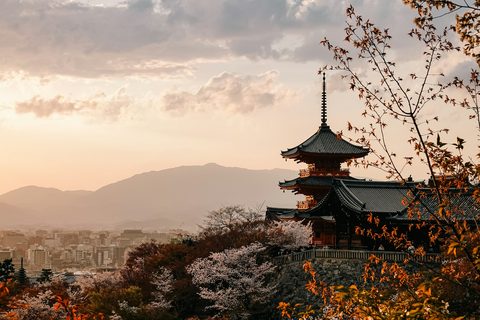
Late March through mid-April brings the cherry blossoms, while November paints the maples crimson and the summer crowds recede. Your advisor times it to the light, the crowds and your own calendar.
The experiences
A sense of what this journey can hold — each one arranged privately and shaped to you:
- A pre-opening walk through Nishinomaru Garden with a Tokugawa-period historian who reads the castle's stone arrangements as political autobiography — arranged for your group alone, before the public gates open.
- A curator-led study of the National Museum of Art Osaka's modern Japanese collection, including works rarely rotated into the permanent hang, with access to the conservation study room.
- A private morning at the Abeno Harukas sky garden on the 58th floor, timed to the clearing of the Osaka Bay fog — accompanied by an architectural guide who situates the tower within the city's postwar reconstruction narrative.
- An evening walk through the Nakazakicho gallery district with a gallerist who represents emerging Kansai artists, ending with an introduction to a studio rarely open to outside visitors.
A sense of the rhythm
Each morning is anchored to a single institutional or historical site, given enough time to be genuinely absorbed rather than photographed and left. Afternoons open into the city — the covered arcades of Tenjinbashisuji, the canal-side warehouses of Kitahama repurposed as galleries — before evenings return to focused, unhurried encounters. The pace is deliberate: six days is the minimum to read Osaka as a cultural capital rather than a food city with monuments.
Whether to base entirely in Osaka or divide nights between Osaka and Kyoto
Dividing the stay is the instinct of many first-time visitors to the Kansai region, and it is almost always the wrong call for this archetype. The cultural institutions that distinguish Osaka — the National Museum of Art, the Museum of Oriental Ceramics, the living tradition of Bunraku at the National Bunraku Theatre — reward consecutive mornings, not day-trip logistics. Spending fewer than four consecutive nights in Osaka means arriving at institutions already tired from transit and leaving before curator relationships develop. We design this journey as an Osaka residency, with Kyoto available as a day excursion on day four if the traveler wishes.
How to do it well
The counsel our advisors give travelers planning this journey:
- Request National Museum of Art curator access at least eight weeks in advance — the museum's education department coordinates private scholarly visits on a limited calendar, and availability collapses in March and October.
- The National Bunraku Theatre in Nipponbashi stages performances in January, April, June, July–August, and November; confirm your travel dates against the published programme before finalising flights, as the theatre does not adjust its schedule for tour groups.
- Nishinomaru Garden inside Osaka Castle Park requires a separate coordination with the park authority for pre-opening access — this is not available through the standard ticket window and must be arranged through a licensed cultural liaison at least six weeks out.
- Pack one full unscheduled afternoon, ideally on day three: the Nakazakicho and Temma neighbourhoods reward slow, unguided walking, and curators often extend informal invitations that are impossible to honour against a rigid itinerary.
What only your advisor can open
The difference between a good trip and an unrepeatable one is access — and access is a relationship, not a booking. Every guide, room and moment is chosen and sequenced for you.
Who it's for
Travelers who value privacy, time and doing it once — beautifully — and who would rather have one trusted advisor orchestrate every detail than assemble it themselves.
Estimated investment
From US$9,800 per traveler, based on double occupancy — scaled to your dates, party size and level of privacy. A starting point, not a final quote; confirmed once your advisor tailors the itinerary.
Designed entirely around you
Nothing here is a package. A Forest Travel advisor shapes the whole journey and stays one message away before and throughout your trip.
Your Virtuoso privileges
As a Virtuoso member, Forest Travel includes benefits reserved for Virtuoso guests at the finest luxury hotels, at no added cost: a room upgrade on arrival when available, daily breakfast for two, a property credit toward dining or spa, and early check-in with late check-out when the hotel allows.
Continue exploring Osaka
Part of our Osaka travel guide. Related private journeys:
Begin the conversation
Tell a Forest Travel advisor how you like to travel and they will design Art & Culture in Osaka around you — privately, every Virtuoso privilege included. Request your private consultation →
Questions, answered.
Dividing the stay is the instinct of many first-time visitors to the Kansai region, and it is almost always the wrong call for this archetype. The cultural institutions that distinguish Osaka — the National Museum of Art, the Museum of Oriental Ceramics, the living tradition of Bunraku at the National Bunraku Theatre — reward consecutive mornings, not day-trip logistics. Spending fewer than four consecutive nights in Osaka means arriving at institutions already tired from transit and leaving before curator relationships develop. We design this journey as an Osaka residency, with Kyoto available as a day excursion on day four if the traveler wishes.
Request it at least eight weeks in advance. The museum's education department coordinates private scholarly visits on a limited calendar, and availability collapses in March and October. Once arranged, a curator leads you through the modern Japanese collection, including works rarely rotated into the permanent hang, with access to the conservation study room.
The National Bunraku Theatre in Nipponbashi stages performances in January, April, June, July–August and November. Confirm your travel dates against the published programme before finalising flights, because the theatre does not adjust its schedule for tour groups. Bunraku is one of the cultural institutions that distinguish Osaka, alongside the National Museum of Art and the Museum of Oriental Ceramics.
Pre-opening access to Nishinomaru Garden inside Osaka Castle Park requires separate coordination with the park authority. It is not available through the standard ticket window and must be arranged through a licensed cultural liaison at least six weeks out. The walk is for your group alone, before the public gates open, with a Tokugawa-period historian who reads the castle's stone arrangements as political autobiography.
Art & Culture in Osaka is 6 Days · 5 Nights, and six days is the minimum to read Osaka as a cultural capital rather than a food city with monuments. Each morning is anchored to a single institutional or historical site, given time to be genuinely absorbed. Afternoons open into the city, from the covered arcades of Tenjinbashisuji to the canal-side warehouses of Kitahama repurposed as galleries, and evenings return to focused, unhurried encounters. Keep one full afternoon unscheduled, ideally on day three, for slow walks in Nakazakicho and Temma; Kyoto is available as a day excursion on day four if you wish.
As a private, tailored journey it starts from roughly US$9,800 per traveler (double occupancy) and scales with your dates, party and level of privacy — a starting point, never a fixed package price. Your advisor confirms the figure once the itinerary is tailored.
Late March through mid-April brings the cherry blossoms, while November paints the maples crimson and the summer crowds recede. For this journey, timing also turns on the institutions: the National Bunraku Theatre stages performances in April and November, among other months, while National Museum of Art curator availability collapses in March and October, so request access at least eight weeks ahead. Your advisor times it to the light, the crowds and your own calendar.
The Abeno Harukas sky garden morning in Osaka is arranged privately on the 58th floor and timed to the clearing of the Osaka Bay fog. An architectural guide accompanies you and situates the tower within the city's postwar reconstruction narrative, so the view becomes a way of reading how Osaka rebuilt itself. Like every experience on this journey, it is shaped to you and anchored as a single, unhurried morning.
Yes. An evening walk through Osaka's Nakazakicho gallery district is led by a gallerist who represents emerging Kansai artists, and it ends with an introduction to a studio rarely open to outside visitors. It is arranged privately. Nakazakicho and neighbouring Temma also reward slow, unguided walking, which is why advisors suggest leaving a full afternoon free, when curators often extend informal invitations.
Japan
See the collection →Tell a private advisor how you like to travel — no quotes, no obligation.
Speak With a Luxury Travel AdvisorA real person answers: an in-house luxury travel advisor, in English or Spanish. The first conversation is complimentary.