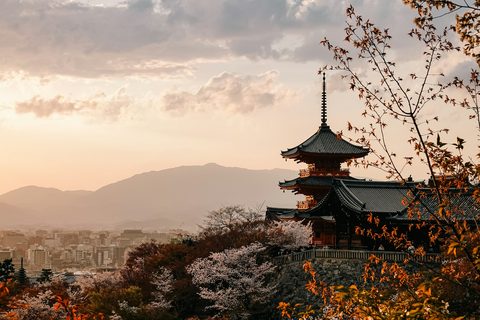
Kyoto in Autumn
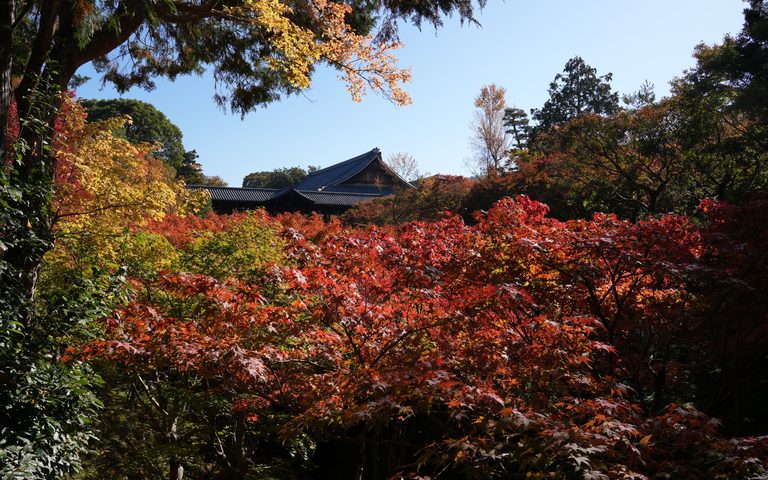
The kaede maple season at its peak — Rurikō-in opened privately for the week it is most beautiful, Eikan-dō's garden at the hour the colour is deepest, and the Philosopher's Path walked before the photographers arrive. A private, tailored journey of 7 Days · 6 Nights in Kyoto, Japan, designed end to end by a Forest Travel advisor — with Virtuoso privileges at the finest luxury hotels, from US$12,800 per traveler.
- Ideal length: 7 Days · 6 Nights
- Best time: From March to April and from October to November, the best window for Kyoto.
- Private guiding, access and transfers throughout
- From US$12,800 per traveler — a starting point, tailored to you
- Designed one-to-one by a Forest Travel advisor
- Virtuoso privileges at the finest luxury hotels
The kaede maple season at its peak — Rurikō-in opened privately for the week it is most beautiful, Eikan-dō's garden at the hour the colour is deepest, and the Philosopher's Path walked before the photographers arrive. A private, tailored journey of 7 Days · 6 Nights in Kyoto, Japan, designed end to end by a Forest Travel advisor — with Virtuoso privileges at the finest luxury hotels, from US$12,800 per traveler.
Japan rewards those who slow down, offering a rare intimacy between ancient ritual, precise craft and quiet natural beauty.
When to go
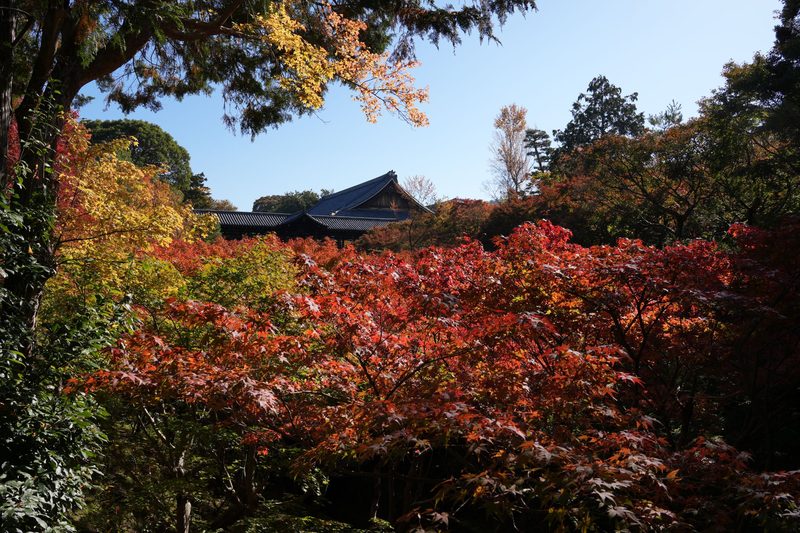
From March to April and from October to November is the best window for Kyoto. Your advisor times it to the light, the crowds and your own calendar.
The experiences
A sense of what this journey can hold — each one arranged privately and shaped to you:
- A private early-morning opening at Rurikō-in during the single week its reflecting-floor maple display reaches full colour, arranged before general visitors are admitted.
- A guided lantern-lit evening at Eikan-dō Zenrin-ji during the Momiji-tōrō illumination, timed to the hour the garden's kaede maples glow deepest against the pond.
- A dawn walk along the Philosopher's Path from Ginkaku-ji southward, led by a local scholar, before tour groups arrive and while autumn mist still holds in the canal.
- A private audience with a Nishijin textile master in his Kyoto workshop, where seasonal motifs in silk capture the same autumn palette the maples display outside.
A sense of the rhythm
Days begin before the crowds — first light at a moss garden, a stone path walked in near-silence. Afternoons slow into craft encounters and temple precincts that feel borrowed for the afternoon. Evenings are deliberately unhurried: kaiseki counter seats at places like Nakamura or Kikunoi, then the walk back through lantern-lit lanes.
Whether to centre the itinerary on the Higashiyama hills or spread across the wider basin
Higashiyama — Nanzen-ji, Eikan-dō, Rurikō-in and the Philosopher's Path — holds the highest concentration of maple moments and can be worked on foot across a full week without exhausting its depth. Arashiyama adds the Ōi River and Tenryū-ji's garden, but travelling between districts each day breaks the contemplative pace that makes autumn Kyoto distinctive. For a seven-night stay our counsel is to anchor in the Okazaki or Higashiyama corridor and make one dedicated half-day excursion west, rather than treating the two as equal poles. The journey's character — stillness, repetition at different hours — rewards depth over breadth.
How to do it well
The counsel our advisors give travelers planning this journey:
- Request access to Rurikō-in no later than June for November travel; the temple's private-opening calendar fills by midsummer and Forest Travel holds advance relationships that bypass the public queue entirely.
- Peak colour in the Higashiyama corridor typically falls between 15 and 25 November, though it shifts by four to seven days depending on the year — we monitor temple garden reports from October onward and adjust arrival dates accordingly.
- The Eikan-dō Momiji-tōrō illumination runs from mid-to-late November each year; evening entry with a private guide requires coordination with the temple office months in advance, as timed slots are extremely limited.
- Book the finest luxury hotels in the Okazaki and Higashiyama neighbourhoods by April for November dates — autumn is Kyoto's most sought-after season and the corridor's best addresses release inventory once and rarely return it.
What only your advisor can open
The difference between a good trip and an unrepeatable one is access — and access is a relationship, not a booking. Every guide, room and moment is chosen and sequenced for you.
Who it's for
Travelers who value privacy, time and doing it once — beautifully — and who would rather have one trusted advisor orchestrate every detail than assemble it themselves.
Estimated investment
From US$12,800 per traveler, based on double occupancy — scaled to your dates, party size and level of privacy. A starting point, not a final quote; confirmed once your advisor tailors the itinerary.
Designed entirely around you
Nothing here is a package. A Forest Travel advisor shapes the whole journey and stays one message away before and throughout your trip.
Your Virtuoso privileges
As a Virtuoso member, Forest Travel includes benefits reserved for Virtuoso guests at the finest luxury hotels, at no added cost: a room upgrade on arrival when available, daily breakfast for two, a property credit toward dining or spa, and early check-in with late check-out when the hotel allows.
Continue exploring Kyoto
Part of our Kyoto travel guide. Related private journeys:
Begin the conversation
Tell a Forest Travel advisor how you like to travel and they will design Kyoto in Autumn around you — privately, every Virtuoso privilege included. Request your private consultation →
Questions, answered.
Higashiyama — Nanzen-ji, Eikan-dō, Rurikō-in and the Philosopher's Path — holds the highest concentration of maple moments and can be worked on foot across a full week without exhausting its depth. Arashiyama adds the Ōi River and Tenryū-ji's garden, but travelling between districts each day breaks the contemplative pace that makes autumn Kyoto distinctive. For a seven-night stay our counsel is to anchor in the Okazaki or Higashiyama corridor and make one dedicated half-day excursion west, rather than treating the two as equal poles. The journey's character — stillness, repetition at different hours — rewards depth over breadth.
Request it no later than June for November travel. The temple's private-opening calendar fills by midsummer, and Forest Travel holds advance relationships that bypass the public queue entirely. The opening itself is arranged early in the morning, before general visitors are admitted, during the single week the reflecting-floor maple display reaches full colour.
Yes, though it takes planning. The illumination runs from mid-to-late November each year, and evening entry with a private guide requires coordination with the temple office months in advance, because timed slots are extremely limited. The lantern-lit evening is timed to the hour the garden's kaede maples glow deepest against the pond.
Book the finest luxury hotels in the Okazaki and Higashiyama neighbourhoods by April for November dates. Autumn is Kyoto's most sought-after season, and the corridor's best addresses release inventory once and rarely return it. Anchoring here matters: Higashiyama holds the highest concentration of maple moments, and much of it can be worked on foot across the week.
Plan on 7 Days · 6 Nights. Days begin before the crowds, with first light at a moss garden or a dawn walk along the Philosopher's Path from Ginkaku-ji southward. Afternoons slow into craft encounters, such as a private audience with a Nishijin textile master, and quiet temple precincts. Evenings are unhurried: kaiseki counter seats at places like Nakamura or Kikunoi, then the walk back through lantern-lit lanes. Our counsel is to anchor in the Okazaki or Higashiyama corridor and make one dedicated half-day excursion west to Arashiyama, favouring depth over breadth.
As a private, tailored journey it starts from roughly US$12,800 per traveler (double occupancy) and scales with your dates, party and level of privacy — a starting point, never a fixed package price. Your advisor confirms the figure once the itinerary is tailored.
November, when the maples turn crimson and the summer crowds recede. Peak colour in the Higashiyama corridor typically falls between 15 and 25 November, though it shifts by four to seven days depending on the year, so garden reports are monitored from October onward and arrival dates adjusted. That window also brings Rurikō-in's single week of full colour and Eikan-dō's Momiji-tōrō illumination, which runs from mid-to-late November. Late March through mid-April brings the cherry blossoms instead.
Walk Kyoto's Philosopher's Path at dawn, starting from Ginkaku-ji and heading south. On this journey the walk is led by a local scholar and timed before tour groups arrive, while the autumn mist still holds in the canal. The path is part of the Higashiyama corridor, alongside Nanzen-ji, Eikan-dō and Rurikō-in, which holds the highest concentration of maple moments in Kyoto and can be worked on foot.
Yes. An autumn journey to Kyoto can include a private audience with a Nishijin textile master in his Kyoto workshop. There, seasonal motifs in silk capture the same autumn palette the maples display outside. Encounters like this belong to the afternoons, when the pace slows into craft and temple precincts that feel borrowed for the afternoon, after mornings that begin before the crowds.
For kaiseki in autumn Kyoto, the guide points to counter seats at places like Nakamura or Kikunoi. Evenings on this journey are deliberately unhurried: dinner at the kaiseki counter, then the walk back through lantern-lit lanes. They close days that begin at first light in a moss garden and slow in the afternoon into craft encounters and quiet temple precincts.
Yes, though October is the prelude rather than the peak. The maples of the Higashiyama corridor usually reach full colour between 15 and 25 November, shifting by four to seven days from year to year, so October brings the first turn of the leaves rather than the crimson. Pre-dawn temple halls already hold a real chill, so pack a light layer. If the maples are the reason for the trip, your advisor follows the temple garden reports from October and sets the arrival dates around them.
There is no season to rule out, but there are weeks that punish a trip planned late. The cherry blossom, usually from late March to mid-April, and the November maples are Kyoto's most sought-after windows, and the best addresses in Okazaki and Higashiyama should be held by April for November dates. Travel then with private early openings and dawn starts, or choose the quieter weeks either side of each season, which give you the same city under far less pressure.
Japan
See the collection →Tell a private advisor how you like to travel — no quotes, no obligation.
Speak With a Luxury Travel AdvisorA real person answers: an in-house luxury travel advisor, in English or Spanish. The first conversation is complimentary.