Art & Culture in Kyoto
Nijo Castle opened privately before the public, the Kyoto National Museum's Heian collection walked with its director, and Kinkaku-ji at the hour the gold reflects on the water without another visitor in the frame. A private, tailored journey of 6 Days · 5 Nights in Kyoto, Japan, designed end to end by a Forest Travel advisor — with Virtuoso privileges at the finest luxury hotels, from US$12,800 per traveler.
- Ideal length: 6 Days · 5 Nights
- Best time: From March to April and from October to November, the best window for Kyoto.
- Private guiding, access and transfers throughout
- From US$12,800 per traveler — a starting point, tailored to you
- Designed one-to-one by a Forest Travel advisor
- Virtuoso privileges at the finest luxury hotels
Nijo Castle opened privately before the public, the Kyoto National Museum's Heian collection walked with its director, and Kinkaku-ji at the hour the gold reflects on the water without another visitor in the frame. A private, tailored journey of 6 Days · 5 Nights in Kyoto, Japan, designed end to end by a Forest Travel advisor — with Virtuoso privileges at the finest luxury hotels, from US$12,800 per traveler.
Japan rewards those who slow down, offering a rare intimacy between ancient ritual, precise craft and quiet natural beauty.
When to go
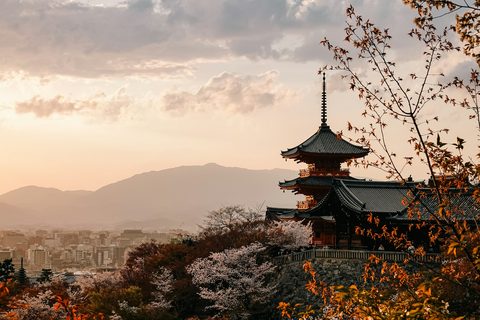
From March to April and from October to November is the best window for Kyoto. Your advisor times it to the light, the crowds and your own calendar.
The experiences
A sense of what this journey can hold — each one arranged privately and shaped to you:
- A private early-morning access to Nijo Castle's Ninomaru Palace, arranged with the Kyoto City authorities before the public gates open, lets you walk the nightingale floors in complete silence.
- The director of the Kyoto National Museum leads a focused walk through the Heian-period collection, pausing on lacquerwork and sutras that rarely surface in the permanent galleries.
- A master maki-e lacquer artist in the Nishijin district opens his studio for a working session, demonstrating the gold-dust technique that has defined Kyoto craft for five centuries.
- Kinkaku-ji is visited at the precise window — roughly forty minutes after the site opens on a weekday — when low morning light strikes the gold leaf on the water and the pavilion path holds fewer than a dozen people.
A sense of the rhythm
Each morning opens with a single immersive cultural appointment — a private access, a museum director, a working atelier — that sets the intellectual register for the day. Afternoons move at a slower pace through specific neighbourhoods: Gion Shimbashi, the Nishiki market lane, the textile merchants of Muromachi-dori. By evening the city reveals a quieter face, whether at a kaiseki counter or a reserved seat at a noh performance at the Kanze Kaikan.
Whether to focus the itinerary on imperial and shogunal heritage or on Kyoto's living craft traditions
Kyoto holds both in equal depth, but they produce different days. The heritage thread — Nijo Castle, Fushimi Inari's inner precincts, the Kyoto Imperial Palace's state rooms — rewards travelers who want to read power and ceremony in architecture and garden design. The craft thread — Nishijin weaving studios, Kiyomizuyaki pottery kilns east of Higashiyama, the Kawai Kanjiro memorial house — rewards those who want to meet makers still working in centuries-old lineages. The most satisfying itineraries weave both, using the mornings for controlled-access heritage sites and the afternoons for studio visits, so neither competes with the other for attention.
How to do it well
The counsel our advisors give travelers planning this journey:
- Private access to Nijo Castle before public opening requires a formal request to the Kyoto City tourism authority and typically needs six to eight weeks of lead time; April and November dates fill earliest.
- The Kyoto National Museum's curator-led visits are arranged through Virtuoso's Japan partner desk and are not available on Mondays or during installation changeovers — confirm the collection schedule before fixing travel dates.
- Nishijin weaving studios and Kiyomizuyaki kilns that accept private visits generally require appointments made at least four weeks in advance through a Japanese-language intermediary; our Kyoto-based specialist handles this directly.
- The optimal window for Kinkaku-ji without crowds is a weekday arrival at opening, between mid-January and late February or in early June before the summer school-visit season begins; avoid Golden Week entirely.
What only your advisor can open
The difference between a good trip and an unrepeatable one is access — and access is a relationship, not a booking. Every guide, room and moment is chosen and sequenced for you.
Who it's for
Travelers who value privacy, time and doing it once — beautifully — and who would rather have one trusted advisor orchestrate every detail than assemble it themselves.
Estimated investment
From US$12,800 per traveler, based on double occupancy — scaled to your dates, party size and level of privacy. A starting point, not a final quote; confirmed once your advisor tailors the itinerary.
Designed entirely around you
Nothing here is a package. A Forest Travel advisor shapes the whole journey and stays one message away before and throughout your trip.
Your Virtuoso privileges
As a Virtuoso member, Forest Travel includes benefits reserved for Virtuoso guests at the finest luxury hotels, at no added cost: a room upgrade on arrival when available, daily breakfast for two, a property credit toward dining or spa, and early check-in with late check-out when the hotel allows.
Continue exploring Kyoto
Part of our Kyoto travel guide. Related private journeys:
Begin the conversation
Tell a Forest Travel advisor how you like to travel and they will design Art & Culture in Kyoto around you — privately, every Virtuoso privilege included. Request your private consultation →
Questions, answered.
Kyoto holds both in equal depth, but they produce different days. The heritage thread — Nijo Castle, Fushimi Inari's inner precincts, the Kyoto Imperial Palace's state rooms — rewards travelers who want to read power and ceremony in architecture and garden design. The craft thread — Nishijin weaving studios, Kiyomizuyaki pottery kilns east of Higashiyama, the Kawai Kanjiro memorial house — rewards those who want to meet makers still working in centuries-old lineages. The most satisfying itineraries weave both, using the mornings for controlled-access heritage sites and the afternoons for studio visits, so neither competes with the other for attention.
Arrive at opening on a weekday, ideally between mid-January and late February or in early June before the summer school-visit season begins, and avoid Golden Week entirely. On this journey Kinkaku-ji is visited roughly forty minutes after the site opens on a weekday, when low morning light strikes the gold leaf on the water and the pavilion path holds fewer than a dozen people.
Plan on six to eight weeks. Private access before public opening requires a formal request to the Kyoto City tourism authority, and April and November dates fill earliest. The reward is the Ninomaru Palace before the public gates open, so you can walk the nightingale floors in complete silence. Your advisor arranges it with the Kyoto City authorities as part of the journey.
No. The Kyoto National Museum's curator-led visits are not available on Mondays or during installation changeovers, so confirm the collection schedule before fixing travel dates. They are arranged through Virtuoso's Japan partner desk. On this journey the museum's director leads a focused walk through the Heian-period collection, pausing on lacquerwork and sutras that rarely surface in the permanent galleries.
Plan on 6 Days · 5 Nights. Each morning opens with a single immersive cultural appointment — private early access to Nijo Castle, a walk through the Heian collection with the Kyoto National Museum's director, a working session in a maki-e lacquer studio in Nishijin. Afternoons slow down through Gion Shimbashi, the Nishiki market lane and the textile merchants of Muromachi-dori. Evenings belong to a kaiseki counter or a noh performance at the Kanze Kaikan. The best itineraries weave heritage sites into the mornings and studio visits into the afternoons.
As a private, tailored journey it starts from roughly US$12,800 per traveler (double occupancy) and scales with your dates, party and level of privacy — a starting point, never a fixed package price. Your advisor confirms the figure once the itinerary is tailored.
Late March through mid-April brings the cherry blossoms, while November paints the maples crimson and the summer crowds recede. Both are popular for this journey, and April and November dates for private Nijo Castle access fill earliest, so request them six to eight weeks ahead. If an uncrowded Kinkaku-ji matters most, the quietest weekday openings fall between mid-January and late February or in early June; avoid Golden Week entirely. Your advisor times it to the light, the crowds and your calendar.
In Kyoto's Nishijin district, a master maki-e lacquer artist opens his studio for a working session arranged privately for you. He demonstrates the gold-dust technique that has defined Kyoto craft for five centuries. Like each morning on this journey, it is a single immersive cultural appointment that sets the intellectual register for the day, leaving the afternoon free for a slower pace through neighbourhoods such as Gion Shimbashi or the Nishiki market lane.
Nishijin weaving studios and Kiyomizuyaki pottery kilns in Kyoto that accept private visits generally require appointments made at least four weeks in advance, through a Japanese-language intermediary. Forest Travel's Kyoto-based specialist handles this directly. These studio visits sit best in the afternoons, leaving the mornings for controlled-access heritage sites such as Nijo Castle, so the craft and heritage threads never compete for attention.
Evenings in Kyoto reveal a quieter face of the city. On this journey they are spent either at a kaiseki counter or in a reserved seat at a noh performance at the Kanze Kaikan. They follow afternoons that move at a slower pace through specific neighbourhoods: Gion Shimbashi, the Nishiki market lane and the textile merchants of Muromachi-dori.
Japan
See the collection →Tell a private advisor how you like to travel — no quotes, no obligation.
Speak With a Luxury Travel AdvisorA real person answers: an in-house luxury travel advisor, in English or Spanish. The first conversation is complimentary.