Which weeks are the real trekking window?
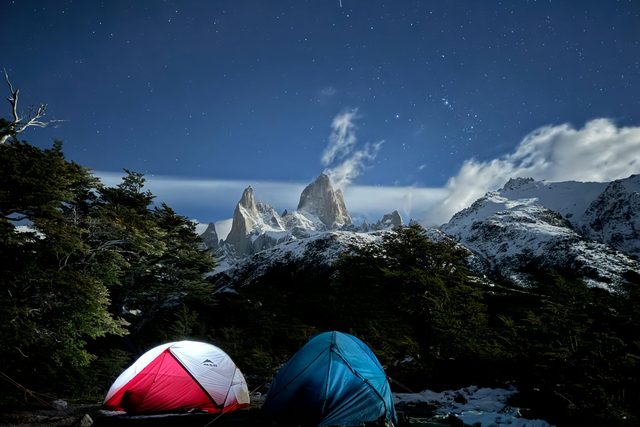
November to March, with December, January and February the most settled. That is the season for the classic Torres del Paine routes on the Chilean side and for El Chaltén and the Fitz Roy trails on the Argentine side. Late October and April are quieter, cooler and far more changeable, and the lodge-category properties largely work to that same October-to-April calendar. The wind, though, is constant all year — it is not a shoulder-season problem, and any plan that assumes a still morning is not a plan.
What changed about getting into Torres del Paine?
The ticket is no longer a park pass. From 1 May 2026 — delayed from January — CONAF sells section-specific entry tickets: a day-hiker to the base of the towers buys the Base Torres ticket, a W trekker buys the W section, and there is no blanket multi-day pass to fall back on. Entry must be bought in advance through CONAF's own portal. Rangers at Laguna Amarga ask to see the full itinerary and confirmed bookings for every campsite or refugio on the route, and they have turned people away who could not show them.
So what is actually reserved, and by whom?
Three separate systems, which is the part that catches independent travellers. Park entry comes from CONAF; the refugios and campsites are split between two operators — one holding Paine Grande, Grey, Dickson and Los Perros, the other holding Central, Chileno, Cuernos, Francés and Serón. A W itinerary therefore requires bookings in three places to line up on the same nights, in the right direction, before you are allowed through the gate. This is public, rationed access and we will not pretend otherwise; what we do is hold the sequence and the beds, and put a private guide inside it.
How do the Chilean and Argentine sides join?
Overland, in about five hours, with a border formality in the middle. Torres del Paine to El Calafate is the standard link, and El Calafate is the base for the Perito Moreno glacier — where the park gives 50% off a second entry used within 72 hours of the first, which is exactly why we usually split the glacier across two days rather than trying to see it in one long one. Add El Chaltén for Fitz Roy and the Patagonian leg runs six to eight nights across both countries.
What do the flights and the roads actually cost in time?
Two days of the trip, if you do not plan for them. No international flight reaches Patagonia directly: it is Santiago to Punta Arenas on the Chilean side or Buenos Aires to El Calafate on the Argentine side, each about three to three and a half hours, and then a further two to five hours by road to the lodge. Private transfers are not optional at those distances, and a private charter is the only thing that genuinely shortens them.
Who should not book Patagonia?
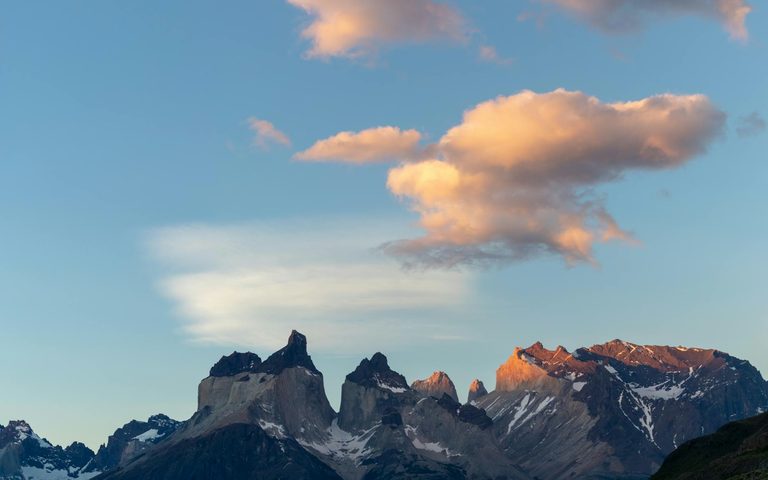
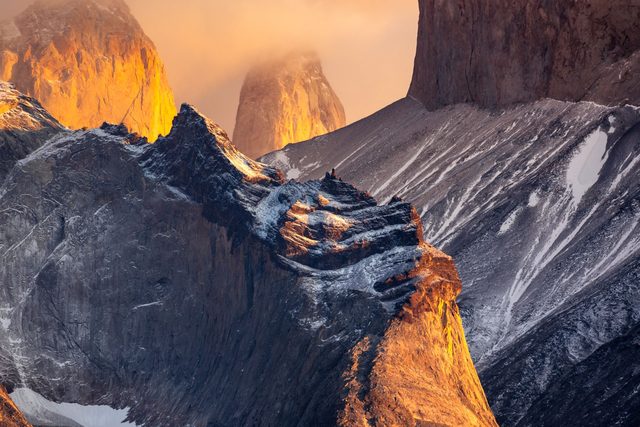
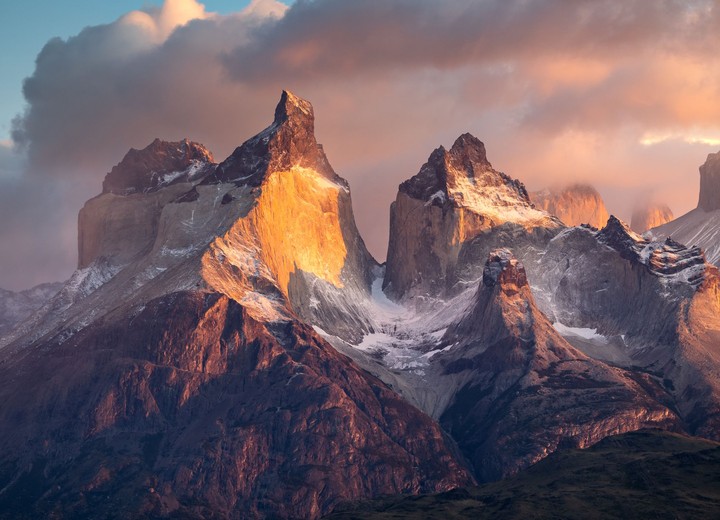
Anyone who needs an hour-by-hour plan, and anyone with three nights. The towers are cloud-bound more often than not, which is why we build two attempts at the base into any itinerary that cares about seeing them, and why the days have to be reversible. June to August is the wrong season — short light, most lodges closed or reduced — and Bariloche is the wrong substitute, being a forested lake district rather than the steppe. Our Patagonia guide sets out how the two differ.