Is the Devil's Throat open right now?
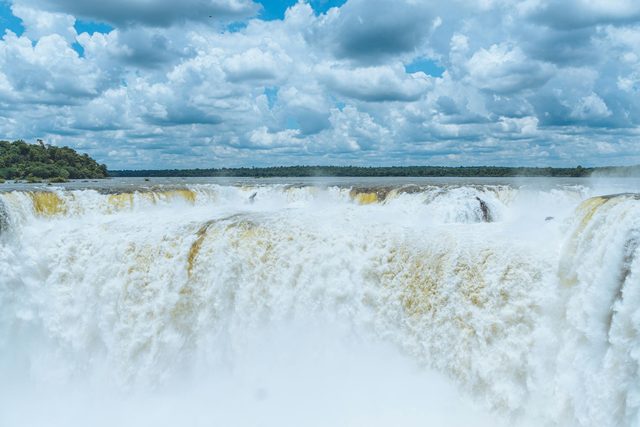
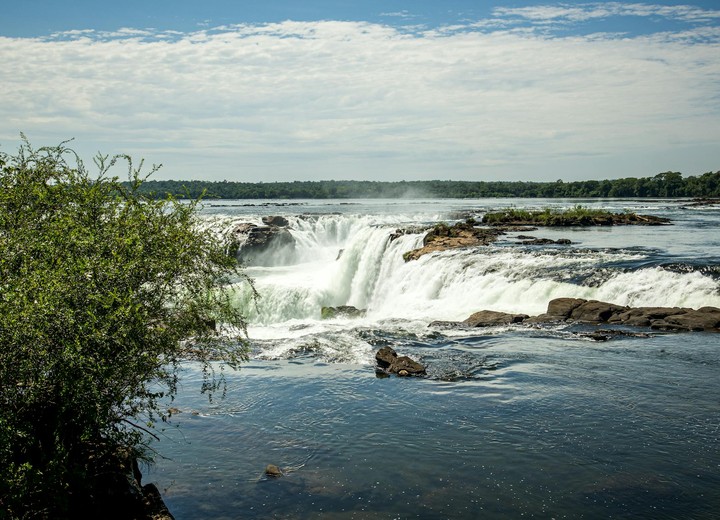
No. Iguazú National Park closed the Garganta del Diablo circuit indefinitely from 3 August 2026 and began a roughly forty-day operation to lift the walkway's decking and railings, ahead of forecast extraordinary rises on the Iguazú river through September and October. The Upper and Lower circuits, the Macuco trail and the ecological train are all running. This is the second such closure — the walkways were also down from November 2023 — and no reopening date has been confirmed. We will not sell you the Garganta as part of an itinerary until the park says it is standing.
Which months are comfortable, and which are powerful?
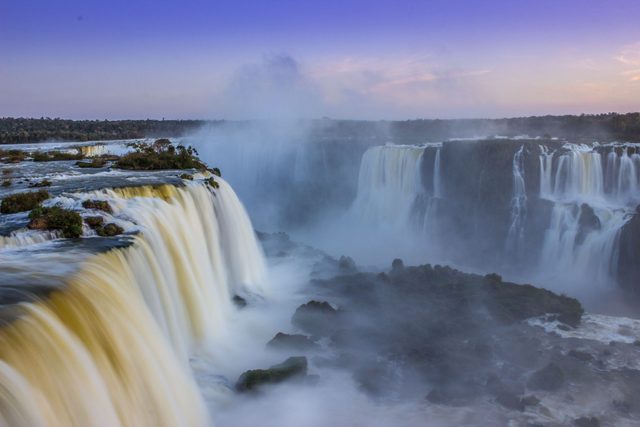
April to June and September to November are comfortable; December to February are powerful. The autumn and spring shoulders bring mild temperatures and thinner crowds. The subtropical summer brings heat, humidity, the highest water flow and the largest numbers — and the highest chance of the closures above, because very heavy rain shuts catwalks with no notice. If you want the falls at maximum volume you are also accepting the month in which the park is most likely to take part of itself offline.
Argentine side or Brazilian side?
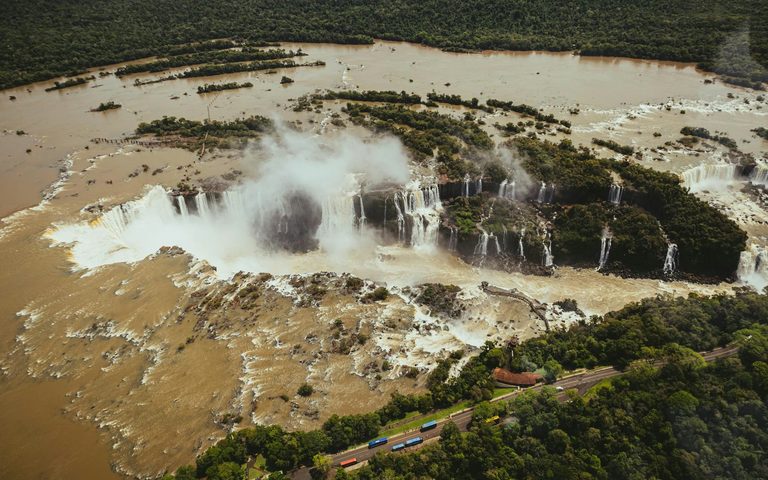
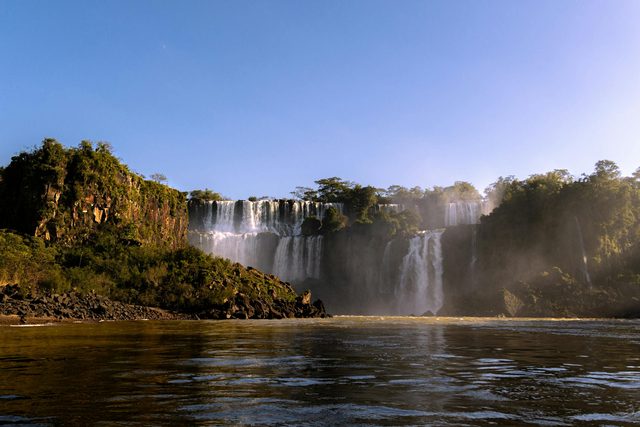
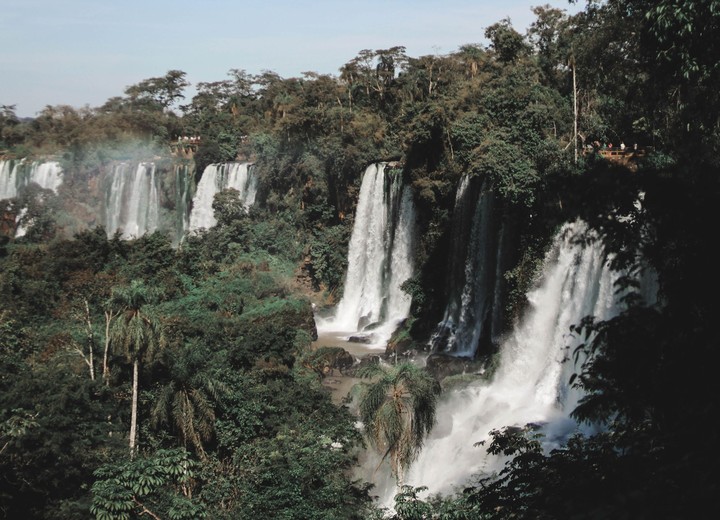
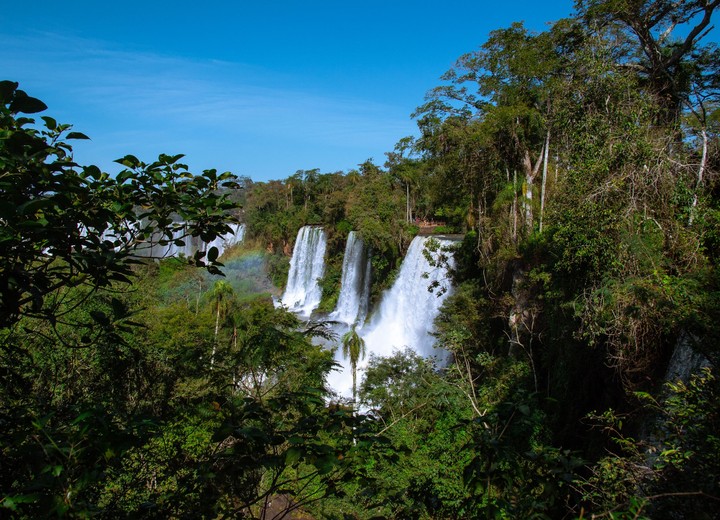
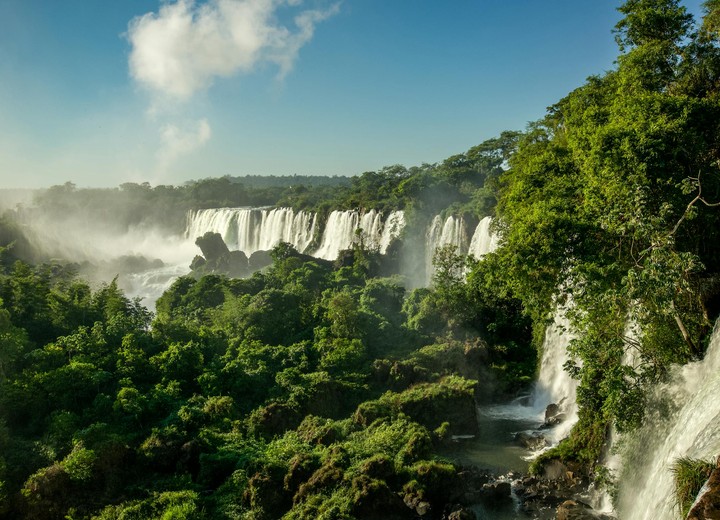
Both, over two nights, and they are not interchangeable. The Argentine park holds the extensive catwalk network that puts you above and beside the water; the Brazilian park gives the single panoramic view of the whole system, and the helicopter flights depart from that side. Two nights is enough to do both without hurrying, which is why Iguazú works as a module between Buenos Aires and Rio, or as the warm northern contrast to Patagonia, rather than as a destination in itself.
What does crossing the border require?
A Brazilian e-visa, if you hold a US passport. Brazil reinstated the requirement on 10 April 2025: roughly US$80.90, about five business days, applied for online, and it must be in hand before you go — a day trip across the river is a formal entry to Brazil like any other. Argentina asks nothing but the passport. The crossing itself is the Tancredo Neves bridge between Puerto Iguazú and Foz do Iguaçu, about 15 km, one to two hours with immigration on both sides.
Where should you stay for the head start?
Inside the park, if it is available. There is a single hotel within the Argentine national park and an equivalent within the Brazilian one, and what they buy is the trails before the day visitors arrive — which on a site this contingented is the only real access advantage that exists. Otherwise the refined properties are in Puerto Iguazú on the Argentine side and Foz do Iguaçu on the Brazilian, both a short drive from their respective gates.
Who should not build a trip around Iguazú?
Anyone whose reason for coming is the Garganta del Diablo, at least until the park reopens it. Anyone flying in for one night, because a single day cannot cover two countries and a border. And anyone who cannot tolerate heat: January on the catwalks is 35°C, high humidity and permanent spray. The falls are one of the great things on the continent and they are also a public park with a queue, a timetable and a river that closes them — the wider route is what we build so that a bad Iguazú day costs you an afternoon rather than the trip, and our regional guide explains where the falls sit in it.