The Okavango & Victoria Falls
Four nights on the water, three on land, two at the Falls — the order that gives the Okavango its full range and ends the trip somewhere that asks nothing of you.
- Ideal length: 10 days, 9 nights — 4 in a water camp, 3 in a land camp, 2 at Victoria Falls
- Best time: May to October; the flood peaks in July and August
- Light aircraft between camps, soft bags of around 20 kg per person
- From around US$800 per person, per night — tailored to the camps you choose
- Designed one-to-one by a Forest Travel advisor
Four nights on the water, three on land, two at the Falls — the order that gives the Okavango its full range and ends the trip somewhere that asks nothing of you.
Why a water camp and a land camp?
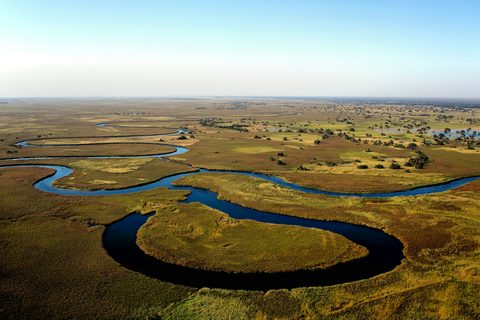
Because the delta is two safaris. A water camp — Jao or Vumbura Plains — gives you the mokoro gliding through papyrus channels, the motorboat at sunset and the birds you only see from water level. A land camp in the Linyanti, at Duba Plains or on Chief's Island at Mombo, gives you the predators and the long game drives. Doing only one is seeing half the delta; doing both costs one extra light-aircraft hop.
Why four nights and three, not three and three?
The water camp comes first, while you are still adjusting, because its rhythm is slower. Four nights there lets one day go entirely to the mokoro and another to a sleep-out or a helicopter flight. Three nights on land is enough for the predators: the light aircraft deliver you to the airstrip by mid-morning, and the first game drive is that afternoon.
How do you reach Victoria Falls?
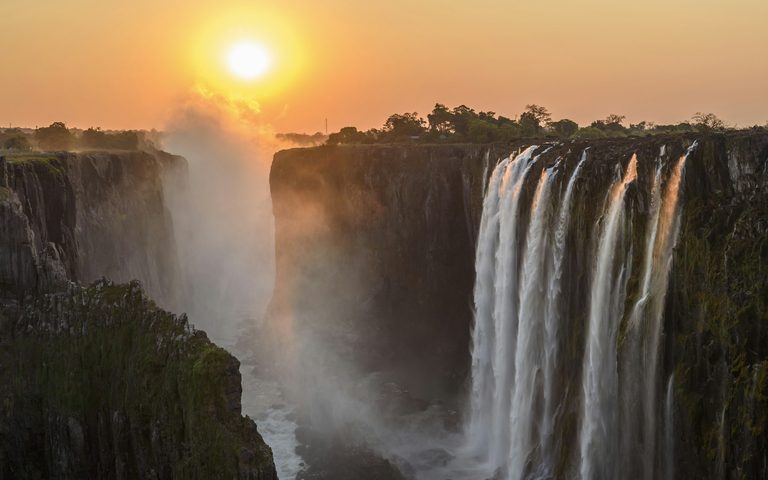
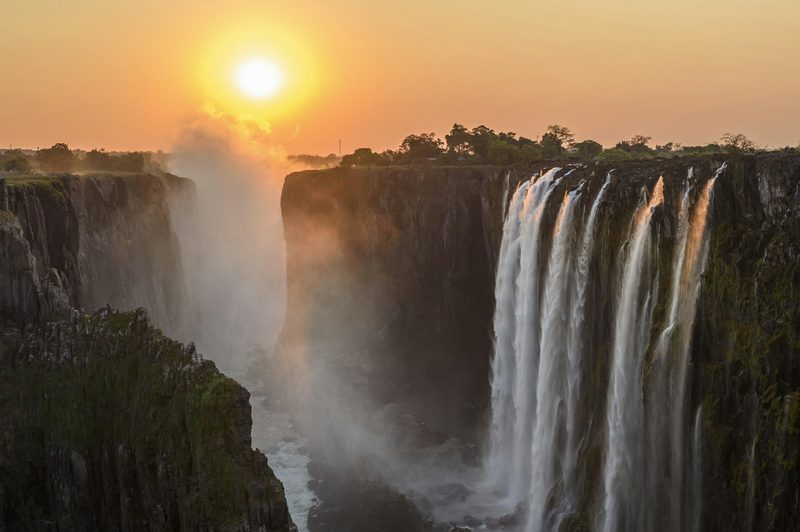
A light aircraft to Kasane, then about an hour and a half by road across the Kazungula border into Zimbabwe — or a private charter straight to Victoria Falls. Two nights is enough: one for the falls on foot, one for the Zambezi at sunset. The falls are fullest from roughly February to May, which conveniently inverts the delta's own calendar.
When should you go?
May to October. The flood that fell as rain in the Angolan highlands arrives from March and peaks in July and August, when the land around it is driest and the animals concentrate on the water. September and October are hotter and the best months for predators. The best camps fill a year ahead for July to September; your advisor holds the dates as soon as you decide.
Related journeys
The camps, the seasons and the fees behind this route are set out in our Botswana safari guide. More private journeys there:
Begin the conversation
Tell a Forest Travel advisor how you like to travel and they will design The Okavango & Victoria Falls around you — privately, every Virtuoso privilege included. Request your private consultation →
Questions, answered.
Nine nights is the balance we recommend: four in a water camp, three in a land camp for the predators and two at Victoria Falls. Below six nights in Botswana the light-aircraft transfers take too large a share of the trip.
Two, in that order: a water camp such as Jao or Vumbura Plains for the mokoro and the channels, then a land camp — Duba Plains, Mombo or one in the Linyanti — for the predators.
A light aircraft to Kasane and about an hour and a half by road across the Kazungula border into Zimbabwe, or a private charter flown straight to Victoria Falls.
Yes. Two nights is enough, it gives the trip a soft ending after camps that start before dawn, and the falls are at their fullest from roughly February to May, outside the delta's own peak.
Safaris
See the collection →Tell a private advisor how you like to travel — no quotes, no obligation.
Begin Your Private Consultation