The Best Time to Visit Switzerland — a Luxury Guide, Month by Month
The best time to visit Switzerland is June to September for the summits and the lakes, or December to March for the snow. The country behaves like two different destinations, and between them there are honest gaps, late October to early December and much of May, when half the lifts are closed for maintenance.
- The best time to visit Switzerland is June to September for hiking, lakes and scenic trains, and December to March for skiing, Christmas markets and the Alpine winter.
- Late October to early December, and much of May, are the quiet gaps: mountain railways and cableways close for published maintenance, and the Glacier Express does not run from 10 October to 3 December in 2027.
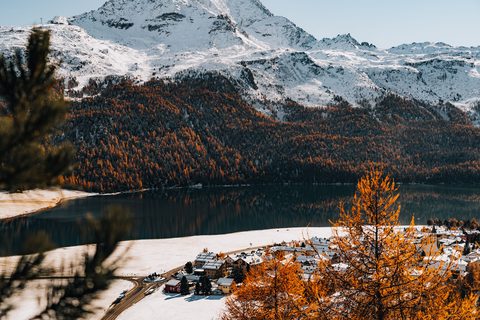
- Routes above 2,000 metres are generally clear of snow by July, and the golden larches of the Engadine peak around mid-October.
- Zermatt's winter season runs from 1 November 2026 to 3 May 2027; Lake Geneva is the one shore that works in every month.
- Zurich averages highs of 3.5°C (38°F) in January and 24°C (76°F) in July, and May is its wettest month.
- A private Switzerland journey starts from around US$2,200 per person per night, the highest figure among our European destinations.
The short answer
The best time to visit Switzerland is June to September for the summits, the lakes and the scenic trains, and December to March for skiing and the Alpine winter. September is the month that sits between the two: warm days, open mountain lines and lighter crowds than July and August. The honest gaps are late October to early December and much of May, when railways and cableways close for maintenance published well in advance. Our rule of thumb: choose the season for the mountains first, then the valley.
Switzerland month by month
| Months | What it is like | Best for |
|---|---|---|
| December to February | The Alpine winter: Zermatt's season runs from 1 November 2026 to 3 May 2027, and the Engadine's high, dry February light draws people back. Zurich averages highs of 3.5°C (38°F) in January. Basler Fasnacht runs from 15 to 17 February 2027 | Skiing, the lake weekends in St. Moritz, the Christmas markets, the clinics and spas of Lake Geneva |
| March to April | Late snow at altitude and spring in the valleys; Zermatt skis until 3 May. The Glacier Express timetable runs to 7 May, with the Rhine Gorge closed from 17 April to 2 May 2027 | Spring skiing, the cities, Lake Geneva |
| May | The quiet gap: many mountain lifts are down for maintenance and high routes are still under snow. May is the wettest month in Zurich, at about 128 mm, with highs near 19°C (66°F) | Lakeside stays, wellness, the cities |
| June to August | The summit season: routes above 2,000 metres are generally clear of snow by July, and the Alpine passes are open. Art Basel is on 17 to 20 June 2027 and Montreux Jazz Festival from 2 to 17 July 2027. Zurich averages highs of 24°C (76°F) in July | Hiking, glacier trains, private boats on the lakes, heli days over the peaks |
| September to October | The best shoulder: the cattle come down from the high pastures, with the désalpe in Charmey on 25 September 2027, the vendange gilds the Lavaux terraces and the larches of the Engadine turn gold around mid-October. From mid-October lifts begin to close | Walking with fewer visitors, the vineyards, the autumn colour |
| Late October to early December | The honest gap: many cableways and railways close for maintenance, and some mountain hotels shut. The Glacier Express does not run from 10 October to 3 December in 2027. Basel's Christmas market opens on 26 November in 2026 | Cities, Lake Geneva, the Christmas markets from late November |
Two seasons, and the weeks between them
Winter belongs to Zermatt, St. Moritz and the high resorts. The lake weekends define St. Moritz in January and February, with the Snow Polo World Cup on 22 to 24 January 2027 and White Turf on three Sundays in February, and suites for those weekends move a year ahead. See our luxury skiing in Switzerland guide and the ski season opening dates.
Summer is for the other country: summits, lakes and trains. High routes above 2,000 metres are generally clear of snow by July, and those above 2,500 metres open from late June to mid-July. The seasonal passes, the Furka, Grimsel, Nufenen and Susten, reopen only in late spring. See Summits & Lakes in Summer.
Between the two, the mountain closes more often than the postcards suggest, and always with notice. Cableways and cogwheel railways take their maintenance breaks from late October to early December and again in spring, and the exact weeks change from lift to lift. Paying more does not avoid them; choosing dates before anything is booked does.
The dates worth planning around
- Glacier Express. The winter timetable runs from 5 December 2026 to 7 May 2027, and the summer timetable from 8 May to 9 October 2027. There are no trains from 10 October to 3 December 2027.
- Basler Fasnacht. 15 to 17 February 2027, with the Morgestraich at 4 a.m. on the Monday.
- Art Basel. 17 to 20 June 2027.
- Montreux Jazz Festival. 2 to 17 July 2027, the exception to the quiet of Lake Geneva in early summer.
- The désalpe. The cattle descents run through September and October; Charmey holds its own on the last Saturday of September, which is 25 September in 2027.
- The Jungfraujoch. The cog railway to the station at 3,454 metres runs all year.
- School holidays. Most cantons close schools from 21 December 2026 to 1 January 2027, and the February sports holidays fall between late January and early March depending on the canton.
The quietest time to go
The quietest stretch is the gap between seasons, from late October to early December, when lifts are down and some mountain hotels shut. It suits the cities, the Lavaux wine terraces and Lake Geneva, which is the only shore that genuinely reads year-round: the clinics, the cellars and the watch manufactures keep working when the mountains close, so a February stay is a real stay. The busiest weeks are the Christmas and New Year fortnight and the February school holidays in the ski resorts, and July and August on the lakes.
How many days are enough
A Switzerland journey typically runs five to ten days. The Connoisseur's Switzerland of watch manufactures and private cellars takes five to seven days, an Alpine winter in St. Moritz and Zermatt six to eight, and summer in the mountains and on the lakes eight to ten. One trip holds two valleys comfortably, three if the train does the work, because Zermatt to St. Moritz is a full day by rail.
How to see it in luxury
The season decides the order of the trip. In winter we begin with the lake weekends and the private heli days; in summer with the high routes at first light and a private boat on Lake Lucerne or Lake Geneva; in the gaps, with the clinics, the cellars and the cities. The full country is in our Switzerland guide, with pages for Zermatt, St. Moritz and Lake Geneva.
What a luxury Switzerland journey starts from
As a luxury advisory we quote a from-price, not a final one. A private Switzerland journey starts from around US$2,200 per person per night, roughly double France and the highest figure among our European destinations, before international flights. On top sits the Kurtaxe, a visitor's tax of generally CHF 1 to CHF 7 per person per night, and guides, heli time and private mountain arrangements are priced separately. Your Forest Travel advisor gives the exact figure for your dates.
For the luxury window of every destination on one page, see the best time to visit, by destination.
Questions, answered.
The best time to visit Switzerland is June to September for the summits and lakes, or December to March for the snow, and September is the month that sits between the two. The honest gaps are late October to early December and much of May, when half the lifts close for maintenance. Forest Travel chooses the season for the mountains first, then the valley.
September, followed closely by June. September keeps warm days and open mountain lines with lighter crowds than July and August, and the cattle descents and the Lavaux vendange fall in it. For skiing, the reliable weeks are December and March. Zermatt's 2026/27 winter season runs from 1 November 2026 to 3 May 2027.
Mild in the valleys and unsettled. In Zurich, May averages highs of about 19°C (66°F) and lows of 9°C (48°F), with about 128 mm of rain, the wettest month of the year; Lucerne is similar. High routes are still under snow and many lifts are closed for maintenance, so May suits lakeside stays and the cities.
Five to ten days. The Connoisseur's Switzerland of watch manufactures and private cellars takes five to seven days, an Alpine winter in St. Moritz and Zermatt six to eight, and summer in the mountains and on the lakes eight to ten. One trip holds two valleys comfortably, three if the train does the work.
The quietest and generally lowest-priced stretch is the gap between seasons, from late October to early December, when many lifts and some mountain hotels close. The most expensive weeks are Christmas and New Year and the February school holidays in the ski resorts. A private journey starts from around US$2,200 per person per night in any season.
For the mountains, late October to early December and much of May, when railways and cableways close for maintenance published in advance. The Glacier Express, for example, does not run from 10 October to 3 December in 2027. For a city or Lake Geneva stay there is no bad month, because the lake shore keeps working when the lifts are down.
For the cities and Lake Geneva, yes: the clinics, cellars and watch manufactures keep working, and Basel's Christmas market opens on 26 November in 2026. For the mountains, mostly no: many cableways and cogwheel railways are closed for maintenance until early December, so we plan November around the lake and the cities.
A private Switzerland journey starts from around US$2,200 per person per night, so seven nights start from US$15,400 per person, before international flights. The Kurtaxe, a visitor's tax of generally CHF 1 to CHF 7 per person per night, sits on top, and guides, heli time and private mountain arrangements are priced separately.
Switzerland
See the collection →Tell a private advisor how you like to travel — no quotes, no obligation.
Speak With a Luxury Travel AdvisorA real person answers: an in-house luxury travel advisor, in English or Spanish. The first conversation is complimentary.