The Best Time to Visit Hawaii — and Which Island to Choose for Luxury
Six very different islands, one near-perfect climate — when to go, which island suits you, and what a luxury Hawaiian escape starts from.
- Hawaii is excellent year-round; the drier, sunnier months are roughly April–October, with whale season December–April.
- Each island differs: Maui for polished resorts and beaches, Kauai for dramatic nature, the Big Island for volcanoes and variety, Oahu for culture and surf, Lanai for ultra-private seclusion.
- Peak periods are the winter holidays and summer; the shoulder months offer the best balance of weather and value.
- An easy, sophisticated US escape — direct flights from the West Coast and beyond, no passport needed for Americans.
- As an indicative guide, a luxury Hawaii stay starts from around US$1,500 per night — the final cost depends on the island, resort or villa and season.
- We match the island to your party and design the resort-villa-and-experiences around you.
When do you go to Hawaii if the weather decides?
Hawaii works all twelve months, and what changes is rain, not temperature. The driest, brightest stretch runs roughly April to October; winter, November to March, brings more water and bigger surf on north-facing coasts while still delivering plenty of sun. Seasonal temperature swings are small. What you are choosing when you choose a month is the odds of cloud, the size of the swell and the density of other people — not the thermometer.
Does the month matter more, or the side of the island?
The side, almost always. Rain in Hawaii is geography rather than calendar: the trades unload on the windward slopes (east and north) and leave the leeward coasts (west and south) dry. The numbers are blunt. The Kohala Coast and Kona, on the Big Island's west side, take roughly 6 to 10 inches of rain a year; Hilo, same island, windward, runs around 130. Kihei and Wailea in south Maui sit between 10 and 15 inches. Waiʻaleʻale, at the centre of Kauai, exceeds 400. That is why the great resorts sit where they sit. The right coast rescues a mediocre month; the wrong coast is not rescued by any month.
Which month do you pick if you came for whales?
February, if the whales are the reason for the trip. Humpbacks are in Hawaiian waters from November to April, peaking January through March, with the highest density in February. Maui is the centre of the season: the Maui Nui basin — the shallow, sheltered water between Maui, Lānaʻi and Molokaʻi — draws roughly three-quarters of the North Pacific humpback population each winter. That same window is peak resort season, so the decision is not only natural history: it is calendar and availability.
Which island belongs to your trip?
Each island solves a different journey, and confusing them is the most expensive mistake in Hawaii. Maui: polished resorts, leeward beaches and the archipelago's strongest dining. Kauai: dramatic landscape, cliffs and canyons, the greenest island and the most changeable. The Big Island: active volcanoes, many climates on one island, and the dry Kohala Coast. Oahu: culture, history, surf and the only real city. Lānaʻi: small, uncrowded, undistracted, for absolute retreat. We do not start from the island. We start from what you want your mornings to look like, and the island follows.
How many nights, and how many islands?
Five to seven nights for one island; ten or more for two. The arithmetic is simple: every island change costs half a day between resort checkout, airport, flight and arrival, so three islands in ten nights means three half-days spent on logistics. The pairing that works best sets a resort-and-dining island against one of landscape or silence, across seven to ten nights. Seeing all of Hawaii in one trip is not ambition; it is the surest way to see none of it.
How do you move between the islands?
By air, with one exception. Inter-island hops run 25 to 50 minutes and several airlines fly them daily. The exception is the passenger ferry between Māʻalaea, Maui and Manele, Lānaʻi, about an hour and fifteen minutes with three round trips a day — the only regular sea link between Hawaiian islands. It sailed from Lahaina until the 2023 fire took that harbour out of service. No island connects to another by bridge. We arrange private transfers at both ends, because the time lost in Hawaii is never in the air; it is on the ground either side of it.
What should a returning Maui traveller know?
That Kāʻanapali and Kapalua are operating normally, and that Lahaina is still rebuilding. On 1 August 2026, Front Street reopened to vehicles between Pāpalaua and Shaw — a milestone after the 2023 fire — while the historic commercial core most visitors remember stays behind construction fencing and is not open to general visitor access. Several much-loved restaurants are serving again. We say it plainly because the expectation matters: Maui wants visitors and visitor spending underwrites the recovery, but Front Street today is not the Front Street of 2023.
When do you travel well, and when do you overpay?
April, May, September and early October are the four good windows: dry weather, fewer people, better availability of the suites that actually matter. The two peaks are the year-end holidays — late December into early January — and summer, mid-June to mid-August, when school breaks stack up. For the best properties we work four to eight months ahead, and further for those two peaks. In the shoulder months there is real room to manoeuvre. See also The Season of Access.
Where does a luxury stay start?
Our reference is around US$1,500 per night, and upward from there. Seven nights puts the accommodation line near US$10,500 before flights, guides and private experiences; an exclusive-use villa or a peak-season suite lifts that base without argument. We always give a "from" figure with the arithmetic visible, and we do not quote a total until the island, the property and the dates are decided.
What does an advisor actually change in Hawaii?
Three decisions no booking site shows you: the right side of the island, the order of the two islands, and the specific room inside the resort. Then the things that sell out first — the private guide in the volcano park, the February whale charter, the Friday table — and the inter-island logistics, which is where days disappear. For travelling with children see luxury family travel; for two, our journeys for couples. For the destination itself, start at Hawaii, privately.
Questions, answered.
Hawaii is good year-round; the drier, brighter stretch is roughly April to October, and winter (November to March) is wetter with bigger north-shore surf. April, May, September and early October give the best combination of dry weather, fewer people and availability. Late December to early January and mid-June to mid-August are the two peaks.
Maui for polished resorts, leeward beaches and the strongest dining; Kauai for dramatic cliffs and canyons; the Big Island for active volcanoes and the dry Kohala Coast; Oahu for culture, history and city life; Lānaʻi for small-scale, uncrowded retreat. We choose from how you want your mornings to feel, then match the island to it.
Humpbacks are in Hawaiian waters November to April, peaking January to March, with February the densest month. Maui is the centre of it: the shallow Maui Nui basin between Maui, Lānaʻi and Molokaʻi draws roughly three-quarters of the North Pacific humpback population each winter. That window is also peak resort season, so it books early.
Leeward coasts, on any island. The Kohala Coast and Kona on the Big Island take roughly 6–10 inches of rain a year and Kihei–Wailea on Maui 10–15, while windward Hilo runs around 130 inches and Waiʻaleʻale on Kauai exceeds 400. Choosing the right coast matters more than choosing the right month.
Almost always by air — inter-island flights run 25 to 50 minutes, daily, on several airlines. The one sea link is the passenger ferry between Māʻalaea on Maui and Manele on Lānaʻi, about an hour and fifteen minutes with three round trips a day — it sailed from Lahaina until the 2023 fire. No islands are joined by bridge. We handle private transfers at both ends, which is where the time is actually lost.
Partly. Front Street reopened to vehicles between Pāpalaua and Shaw on 1 August 2026, and several well-known restaurants are serving again, but the historic commercial core remains behind construction fencing and is not open to general visitor access. Kāʻanapali and Kapalua resorts are operating normally, and visitor spending supports the recovery.
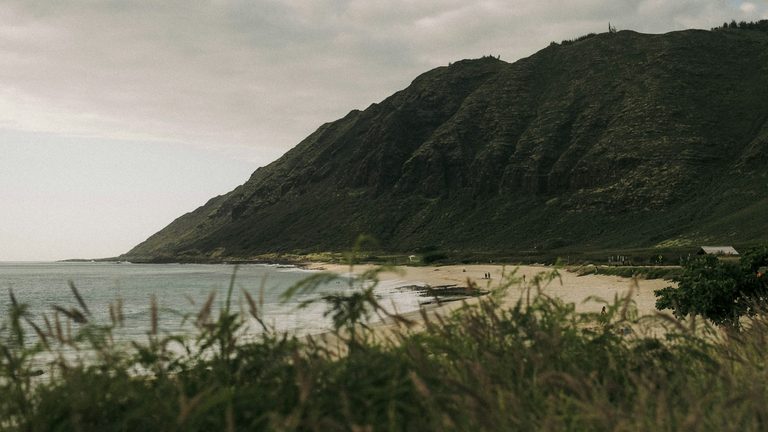
Hawaii
See the collection →Tell a private advisor how you like to travel — no quotes, no obligation.
Begin Your Private Consultation