Where to Spend New Year, and What Closes First
New Year is one evening that the rest of a trip is built around, and the places that do it best are decided long before December. Here is what closes when — and what, for this year, is already closed.
- St Barth closes first. Villas over the turn of the year are let by the fortnight and committed to returning guests by spring; what surfaces in the autumn is almost always a cancellation rather than an opening.
- Vienna's New Year's Concert is not bought, it is drawn. Applications for the 2026/27 concerts ran from 1 to 28 February 2026 on the Vienna Philharmonic's own site, a fresh registration is required every year, and tickets ran from €25 to €1,320. Winning the draw does not oblige you to buy — but missing the window means the room is not available at any price through official channels.
- The Engadine treats New Year as a season rather than a night. The frozen-lake spectacle is not then: White Turf runs on 7, 14 and 21 February 2027. Anyone selling you the lake at New Year is selling you the wrong week.
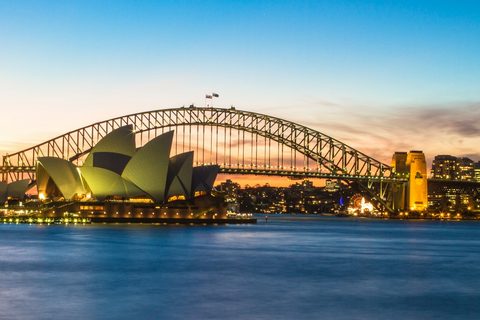
- South of the equator it is high summer. Sydney runs two shows — the 9pm Calling Country fireworks, presented by Aboriginal and Torres Strait Islander artists, and a twelve-minute midnight display off the Harbour Bridge and the Opera House. A harbour-facing terrace or a boat is the entire game.
- Japan is the quiet version. New Year is the country's largest holiday and it is observed rather than staged — temples at midnight, family tables, and much of the country paused for the first days of January. That is either exactly what you want or the precise opposite of it.
What actually decides it
New Year divides on a question that sounds trivial and is not: are you arranging an evening, or a fortnight that happens to contain one? The answer changes the destination entirely. An evening wants a city, a harbour or a concert hall. A fortnight wants a house, and the house has to be held before the evening is even a consideration.
What follows is ordered the way it matters in practice — by how early each option commits, not by how appealing it sounds in September.
St Barth, and why it closes first
The island is small, the good houses are few, and over the turn of the year they are let by the fortnight rather than the week. Returning families hold many of them before they are offered to anyone else, which is why availability in the autumn is usually somebody else's cancellation. Two consequences follow. The first is that a specific villa on a specific hillside is a spring decision, not an autumn one. The second is that when a house does come back, it moves within hours, and it moves through the people who hear about it rather than the sites that list it.
The Engadine: a season, not a night
St Moritz is the counter-example to St Barth. It does not treat the 31st as the point; the whole valley runs a season, and the days around New Year are the opening of it rather than its peak. This is worth knowing because the images that sell the Engadine — horses on the ice, crowds on a frozen lake — are from a different month. White Turf races on 7, 14 and 21 February 2027, with family days on the 6th, 13th and 20th. If the frozen lake is the reason you are going, go in February and take the New Year somewhere else.
Vienna: drawn, not bought
The Vienna Philharmonic's end-of-year concerts are the most misunderstood ticket in luxury travel. There are three — a Preview Performance on 30 December, the New Year's Eve Concert on the 31st, and the New Year's Concert on the morning of 1 January in the Musikverein — and none of them is sold in the ordinary sense. They are allocated by a draw held on the orchestra's own website, applications opened for one month only, and a new registration is required each year rather than carried over.
For the 2026/27 concerts that month was February 2026. It has passed. Tickets in the draw ran from €25 to €1,320, and winning did not commit anyone to buying. What this means for anyone reading in September is simple and worth saying plainly: no advisor, ours included, can produce an official seat for 1 January 2027 now. What we can do is tell you that, and put February 2027 in the calendar for the year after.
The southern hemisphere, where it is summer
Sydney is the most watched New Year on earth and the most badly planned. Two displays, not one: the 9pm Calling Country fireworks, presented by Aboriginal and Torres Strait Islander artists and the sensible choice for a household with small children, and the twelve-minute midnight show launched from barges in the harbour with the Harbour Bridge as its focal point. Everything depends on the sightline. A terrace, a headland or a boat with a harbour position is the difference between the event and a crowd; all three are committed months ahead.
Cape Town is the other summer option and a quieter one — a wine-country house, long evenings, and none of Sydney's logistics. It suits a party that wants the season more than the night.
Japan: the quiet New Year
Shōgatsu is the largest holiday in the Japanese calendar and almost nothing about it resembles a Western New Year. Temple bells at midnight, family tables, shrines full at dawn, and a country that genuinely pauses for the first days of January. Restaurants and shops close; the trains fill with people going home rather than out. For a traveller who wants ceremony instead of a party it is unmatched, and for one who wants a party it is a mistake — which is exactly why it should be chosen deliberately rather than discovered on arrival.
The Caribbean fortnight
Beyond St Barth, the practical Caribbean answer over the turn of the year is a staffed house held for ten to fourteen nights, which absorbs both the travel days and the 31st without anyone having to move. Turks & Caicos does it with space and calm water; Punta Cana holds availability further into the autumn than the smaller islands. Both are covered at length in our guide to Caribbean villas over Christmas and New Year.
For the night itself spent afloat, from the St Barth anchorage to the rules for boats on Sydney Harbour, see New Year's Eve on a yacht.
New Year's Eve 2026, side by side
The choice comes down to the kind of night you want and how early it closes. St Barth and Vienna close first; the places without a fixed-date ticket are the more forgiving.
| Where | What the night is like | How far ahead |
|---|---|---|
| St Barth | A staffed villa let by the fortnight, on a small island where returning families hold many of the houses | Spring, a year out for a specific house |
| St Moritz and the Engadine | The opening of the winter season rather than its peak | By early summer |
| Vienna | The Vienna Philharmonic's Preview Performance on 30 December, the New Year's Eve Concert and the New Year's Concert at the Musikverein on 1 January | A draw on the orchestra's website each February; the 2026/27 draw has closed |
| Sydney | The 9pm Calling Country fireworks for families, then the twelve-minute midnight show over the harbour | Months ahead for a terrace, a headland or a boat position |
| Cape Town | Summer, a wine-country house and long evenings, without Sydney's logistics | No fixed-date event, so more forgiving |
| Japan | Shōgatsu: temple bells at midnight and shrines at dawn, with restaurants and shops closed | No ballot or sale date; plan around the closures in the first days of January |
| Turks & Caicos and Punta Cana | A staffed house for ten to fourteen nights that absorbs the 31st | By early summer; Punta Cana holds availability further into the autumn |
Lead times, plainly
St Barth and Aspen in the spring, a year out for a specific house. The Engadine and the Caribbean by early summer. Sydney's harbour positions and Vienna's February ballot on their own calendars, both earlier than instinct suggests. Anything without a fixed date is far more forgiving, and that is the real argument for moving the celebration off the 31st if the household can bear it. Our planning fee is US$250 per itinerary and is charged in every case, before anything is held.
Questions, answered.
Decide first whether you want an evening or a fortnight. For an evening, a harbour or a concert hall: Sydney runs two displays, at 9pm and midnight, and it is summer there. For a fortnight, a house: St Barth is the benchmark, but its villas are let by the fortnight and committed by spring, so autumn availability is usually someone else's cancellation. Vienna's New Year concerts are allocated by a February ballot, so no one can produce an official seat for 2027 now. Japan offers the quiet, observed New Year.
Four registers, and they rarely overlap. A staffed villa in the Caribbean — St Barth first, then Turks & Caicos and Punta Cana. The Engadine, for a season rather than a night. The southern hemisphere in high summer, Sydney or Cape Town. Or Japan, where New Year is observed rather than staged. The choice is really between an evening and a fortnight.
St Barth, without much competition. Its houses are let by the fortnight across the turn of the year and committed to returning guests by spring, so autumn availability is usually a cancellation. Aspen commits comparably early, often a full year out.
Not through official channels once the ballot has closed. The three end-of-year concerts are allocated by a draw on the Vienna Philharmonic's own website, and applications for the 2026/27 concerts ran only from 1 to 28 February 2026. A new registration is required each year. Tickets in the draw ran from €25 to €1,320, and winning did not oblige the winner to buy.
Yes, but for the season rather than the spectacle. The frozen-lake racing everyone associates with the Engadine is in February — White Turf runs on 7, 14 and 21 February 2027 — so New Year there is the opening of the winter, not its peak. Both are worth doing; they are not the same trip.
Sydney or Cape Town. Sydney is the bigger event and the harder logistics: two displays, the 9pm Calling Country fireworks and a twelve-minute show at midnight, with everything depending on the sightline you hold. Cape Town gives you the same season with none of the crowd.
It is exceptional if you want ceremony and wrong if you want a party. Shōgatsu is the country's largest holiday, observed with temple bells and family tables, and much of Japan pauses for the first days of January — restaurants and shops included. Choose it deliberately.
For a specific house on a specific island, the spring before — April or May is the difference between choosing and being allocated. Harbour positions in Sydney and the Vienna ballot run on their own, earlier calendars. Late enquiries are still worth making, because cancellations move, but they are a different conversation.
That is often the better arrangement. Caribbean houses let by the fortnight carry both dates inside one booking, which removes a move on the worst travel days of the year. In the Alps the two weeks are priced and let separately, so the same trick does not apply.
In Sydney, everything depends on the sightline: a terrace, a headland or a boat with a harbour position is the difference between the event and a crowd, and all three are committed months ahead. There are two displays. The 9pm Calling Country fireworks, presented by Aboriginal and Torres Strait Islander artists, are the sensible choice for a household with small children; the twelve-minute midnight show is launched from barges with the Harbour Bridge as its focal point.
When a St Barth house comes back over the turn of the year, it moves within hours, and it moves through the people who hear about it rather than the sites that list it. Returning families hold many of the island's few good houses before they are offered to anyone else, so autumn availability is usually somebody else's cancellation. A specific villa on a specific hillside is therefore a spring decision, not an autumn one.
Beyond St Barth, both Turks & Caicos and Punta Cana suit a staffed house held for ten to fourteen nights, which absorbs the travel days and the 31st without anyone having to move. Turks & Caicos offers space and calm water. Punta Cana holds availability further into the autumn than the smaller islands, which makes it the more forgiving choice for a later decision.
The Vienna Philharmonic gives three end-of-year concerts: a Preview Performance on 30 December, the New Year's Eve Concert on the 31st, and the New Year's Concert on the morning of 1 January in the Musikverein. None is sold in the ordinary sense; all three are allocated by a draw on the orchestra's own website, open for one month only, with a new registration required each year.
Tell a private advisor how you like to travel — no quotes, no obligation.
Speak With a Luxury Travel AdvisorA real person answers: an in-house luxury travel advisor, in English or Spanish. The first conversation is complimentary.