Why does a caldera suite cost what it costs?
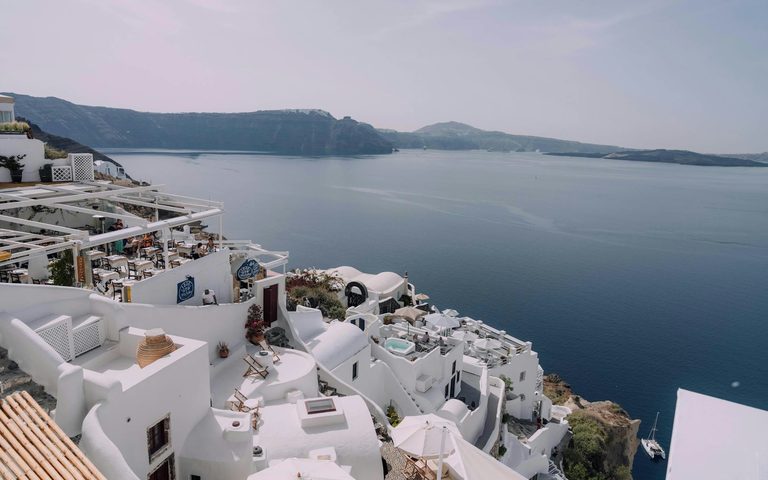
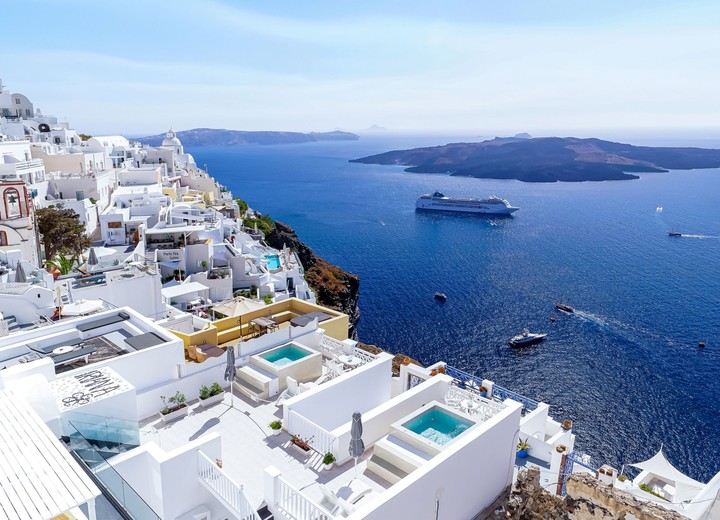
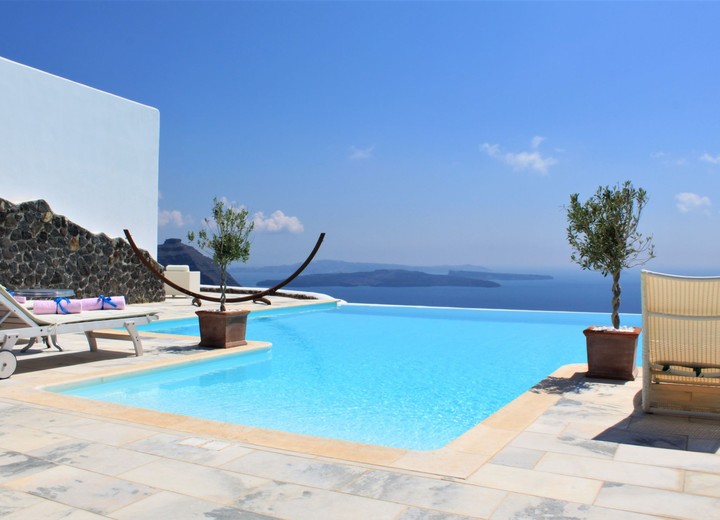
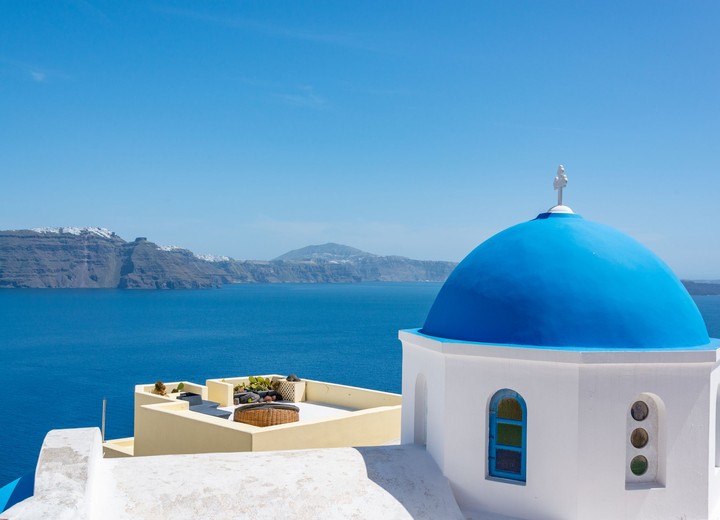
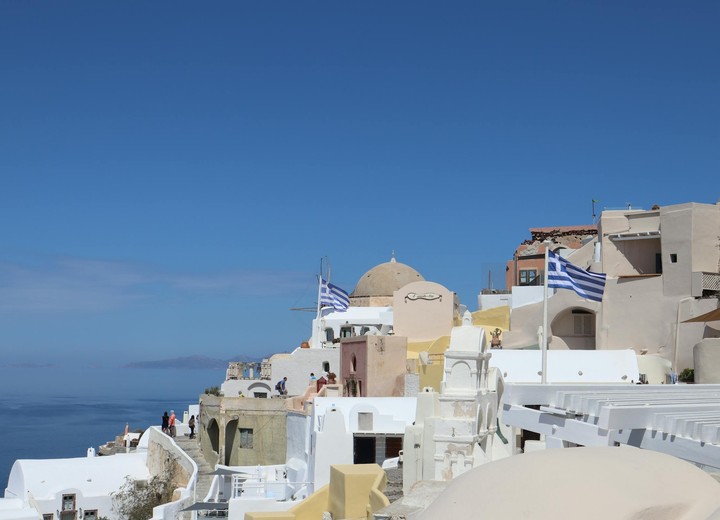
Because the rim is finite and cannot be built twice. The luxury inventory on Santorini is a thin ribbon of cave-cut suites carved into the cliff at Oia, Imerovigli and Firostefani — a few hundred rooms with terraces facing the volcano, most of them reached only on foot. Oia's core is a pedestrian zone: vehicles stop at the road, luggage goes down by porter, and a suite may sit a hundred steps below the street. You are paying for an address on a caldera wall, not for square metres. Expect from around US$1,350 per person, per night at the level we work.
For whom is the caldera the wrong purchase?
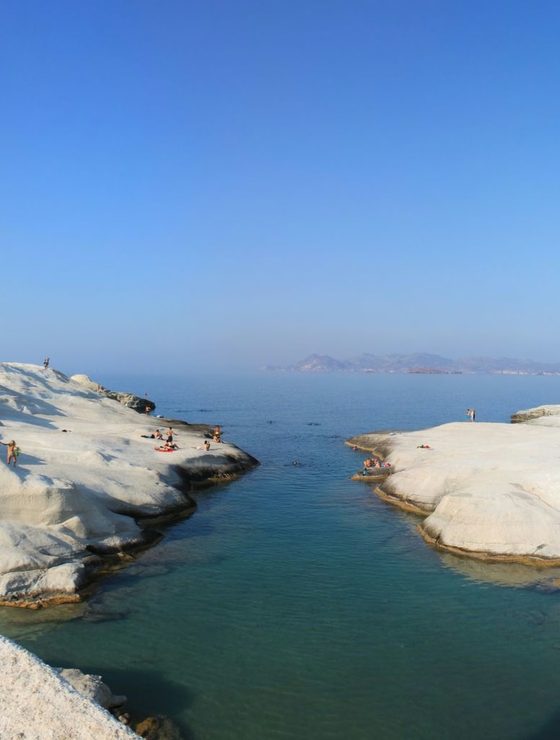
Anyone with a stroller, a bad knee, heavy cases or a beach holiday in mind. The caldera villages are hundreds of steep, uneven steps with no lifts and no through traffic, and the shoreline beneath the cliff is not swimmable in the way the photograph suggests. If the trip is about water, the black sand of Vlychada and Perissa in the southeast — or Milos outright — gives you more day and less climbing. If the trip is about mobility, we book the rim for dinner and sleep elsewhere.
When is the island full, and when is it empty?
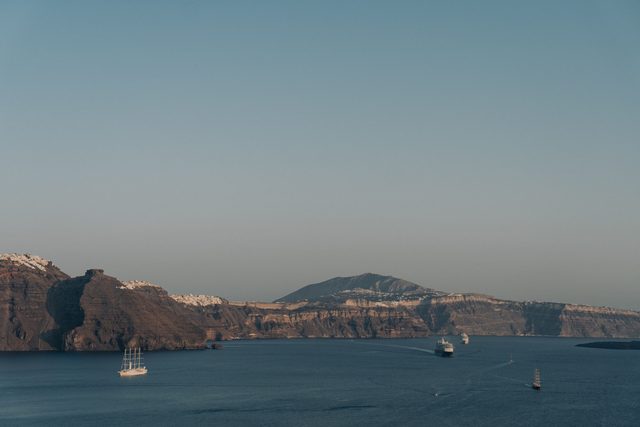
Roughly 11:00 to 17:00 on multi-ship days, and calm on either side. Santorini caps cruise arrivals at 8,000 passengers a day, and for 2026 the port counts each ship at 100% of its berths rather than the 80% assumption used in 2025 — a 3,000-berth ship now consumes 3,000 slots. Scheduled calls fell to 595 for 2026 from 728 in 2025. Passengers stepping ashore pay €20 from 1 June to 30 September and €12 in April, May and October. We read the berth schedule before placing your Oia day, because the difference is effectively a different island.
How do you see the Oia sunset without the crush?
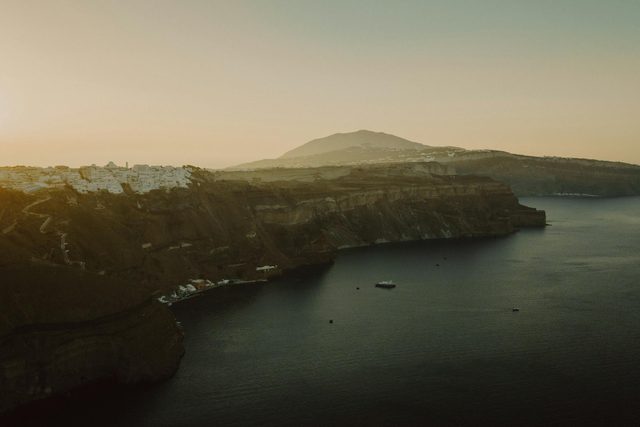
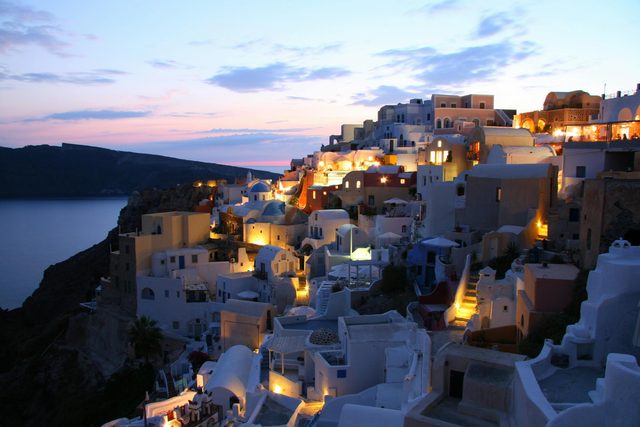
From the water or from your own terrace — never from the public castle walkway in August. That path is where several thousand people converge for the same twenty minutes; there is no reserved viewing platform there and we will not pretend otherwise. A crewed catamaran or motor yacht sails the caldera in the afternoon, stops at the hot springs off Nea Kameni and the Red Beach, and times the return so the sun goes down over the bow with dinner aboard. The volcanic-soil estates near Pyrgos and Megalochori take the late afternoon on a day you do not sail.
Where does Santorini belong in the route?
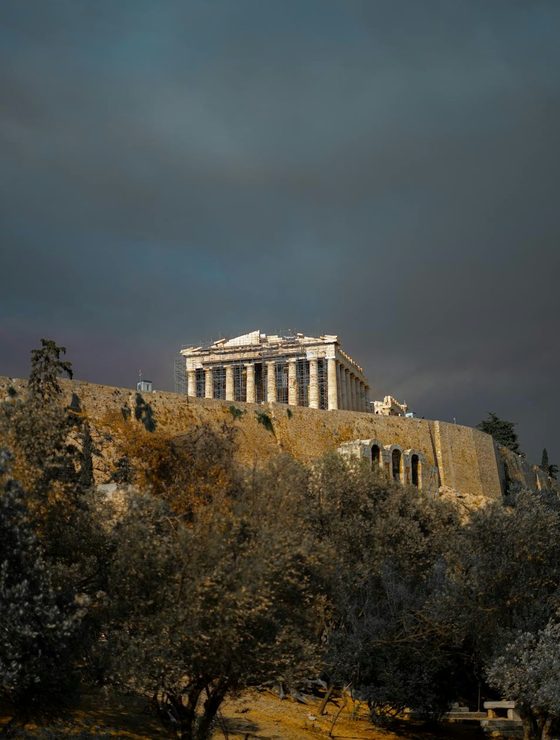
At the end. Its drama is a finale, not an overture, and the classical days belong earlier, in Athens. From Mykonos the fast catamaran takes 2 hours 10 minutes to about 2.5 hours; a helicopter takes 30 to 38 minutes, and there is no scheduled flight between the two islands. Ferries dock at Athinios, below the cliffs, on a steep and congested road where a pre-arranged car matters more than anywhere else in Greece.
Which months, and what closes?
Late April to June and September to October — warm, clear and markedly quieter than the July–August peak. Winter is a real closure rather than a quiet season: much of the caldera inventory shuts, the restaurant map contracts to Fira, and Piraeus sailings drop from as many as ten a day in summer to about two, with the crossing itself running some five to eight hours depending on the vessel against a 45-minute flight from Athens. For a honeymoon we favour the second half of September.