The Best Time to Visit Ireland: A Luxury Guide, Month by Month
Ireland is green because it is damp, so the best month is not the one with no rain but the one with the longest days and the gentlest light. Here is how to choose.
- The best time to visit Ireland is late May, June and early September: long days, mild weather and fewer crowds than July and August.
- Dublin is driest in March, at about 51 mm, while May is the sunniest month nationally and the west coast is the wettest region.
- A first journey works best at 7 to 10 days across Dublin, the south-west and the west coast, with a private guide and driver.
The short answer
The best time to visit Ireland is May to September, with late May, June and early September as the sweet spot: long days, mild weather, gardens and cliffs at their best, and the busiest weeks of July and August still to come or already gone. Ireland is green because it is damp, so no month is guaranteed dry; the skill is in planning around the weather, not hoping it behaves.
Ireland month by month
- March to April: the driest stretch of the year in Dublin, at roughly 50 to 55 mm of rain a month, with temperatures around 10 to 12°C by day. St Patrick's Festival in Dublin runs 13 to 17 March 2027. Puffins begin to return to the coast in April.
- May to June: May is the sunniest month nationally, averaging about 190 hours of sun, with June close behind. Daylight in Dublin reaches around 17 hours at the June solstice, so dinner can follow a full afternoon outdoors.
- July to August: the warmest weeks, with Dublin highs near 19°C, and the busiest. August is also a little wetter than June, at about 73 mm in Dublin. The coast and the islands are at their most open.
- September to October: September is still gentle, with highs near 17°C in Dublin and quieter roads. By October the rain increases, at about 78 mm, and the days shorten, but the light is soft and the country is calm.
- November to February: the wettest and darkest months, with about 7.5 hours of daylight around the winter solstice and December the dimmest month for sunshine. It suits Dublin city stays, fireside country houses and the Christmas season rather than coastal driving.
Which month in Ireland has the least rain?
In Dublin, March is the driest month, at about 51 mm, followed by February and April. The west and north are wetter than the east, and Ireland as a whole averages about 1,288 mm a year. Spring is the driest window; the long days of May and June are the most reliably bright.
What is Dublin like in March, and in August?
In March, Dublin is cool, with highs around 10°C, relatively dry and quiet, and it builds to St Patrick's Festival in the middle of the month. In August the city is warmer, around 19°C by day, with long evenings, but busier and with more rain than June. For Dublin itself, either month works; book the better tables and private guides early.
The regions that shape the timing
- Dublin and the east: the driest and mildest part of the country, good almost year-round for museums, literary walks and private evenings.
- Kerry and the south-west: the most scenic coast and also among the wettest. Late spring to early autumn gives long daylight for the Ring of Kerry and the Dingle peninsula.
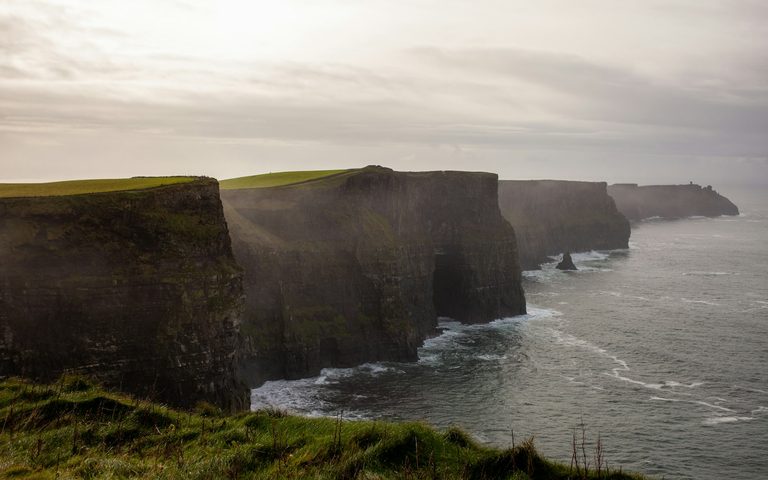
- The west and the Wild Atlantic Way: cliffs, islands and open Atlantic light. This is where weather changes within the hour, so we build slack into the days.
- Puffins and the islands: puffins nest on the coast from about April to early August, and late April to June is the best window. Island boat trips run in the warmer months only.
What changes with the season
Daylight is the big difference: about 17 hours in June against about 7.5 in December. Temperatures are mild all year; Dublin averages roughly 5°C in winter months and 15°C in July, and the national mean is about 9.8°C. Pack layers and a light waterproof whatever the month. Sunshine is highest in May and lowest in December, at about 44 hours for the month.
What we would plan, and when
For a first journey, we suggest 7 to 10 days across two or three regions: Dublin, then the south-west, then the west coast. Private guides who know the history, a driver who reads the weather each morning, small country houses, and tables and access that are not on a standard itinerary are what make the difference. As a reference, a private journey starts from about US$1,000 per person per night; your advisor confirms the cost for your dates. To compare Ireland with other destinations, see the best time to visit, by destination, the Iceland guide for another cool-climate journey, the 2027 luxury travel trends and how to choose an agency by trip type.
A luxury travel advisor at Forest Travel plans your trip in English or Spanish.
Questions, answered.
Late May, June and early September are the best months: long days of up to about 17 hours of light in June, mild temperatures, and May is the sunniest month nationally. July and August are warmest but busiest. No month is reliably dry, so plan for showers in all of them.
In Dublin, March is the driest month at about 51 mm, followed by February and April, which sits near 55 mm. The west and north are wetter than the east. Spring is the driest window; May and June add the longest and sunniest days.
Dublin in August is the warmest part of the year, with daytime highs near 19°C, long evenings and about 73 mm of rain in the month, a little more than June. The city is busy, so private guides, good tables and special access should be booked early.
Dublin in March is cool, with highs around 10°C, and it is the driest month of the year at about 51 mm. It is quiet until St Patrick's Festival, which in 2027 runs from 13 to 17 March, so book tables and guides early for those days.
Weather changes within the hour, especially on the west coast, so pack layers and a light waterproof in any month. Daylight runs from about 7.5 hours in December to about 17 in June. The best small country houses and island boat trips fill early, so book ahead.
Puffins nest on the Irish coast from about April to early August, and late April to June is the best window. Island boat trips run only in the warmer months and depend on the sea, so a good advisor keeps spare days for the weather.
For a first journey we recommend 7 to 10 days across two or three regions, for example Dublin, the south-west and the west coast. Fewer than five days keeps you in one corner, and Atlantic weather means the best itineraries leave some slack.
As a reference, a private journey to Ireland starts from about US$1,000 per person per night. The real figure depends on the season, the country houses, the guides and the access you want, and your advisor confirms the cost for your dates.
Tell a private advisor how you like to travel — no quotes, no obligation.
Speak With a Luxury Travel AdvisorA real person answers: an in-house luxury travel advisor, in English or Spanish. The first conversation is complimentary.