Winter Sun in Riviera Maya
December to April — the dry season when the cenotes are pellucid, the Caribbean current calm, and the jungle above Tulum accessible before the heat of February closes it. Whale-shark season off Isla Holbox comes later, from 15 June to 15 September, and the turtle nesting at Akumal begins in May. A private, tailored journey of 7 Days · 6 Nights in Riviera Maya, The Caribbean, designed end to end by a Forest Travel advisor — with Virtuoso privileges at the finest luxury hotels, from US$6,800 per traveler.
- Ideal length: 7 Days · 6 Nights
- Best time: December through April brings dry, sun-warmed days and calm seas, the ideal window before the summer humidity and hurricane months arrive.
- Private guiding, access and transfers throughout
- From US$6,800 per traveler — a starting point, tailored to you
- Designed one-to-one by a Forest Travel advisor
- Virtuoso privileges at the finest luxury hotels
December to April — the dry season when the cenotes are pellucid, the Caribbean current calm, and the jungle above Tulum accessible before the heat of February closes it. Whale-shark season off Isla Holbox comes later, from 15 June to 15 September, and the turtle nesting at Akumal begins in May. A private, tailored journey of 7 Days · 6 Nights in Riviera Maya, The Caribbean, designed end to end by a Forest Travel advisor — with Virtuoso privileges at the finest luxury hotels, from US$6,800 per traveler.
Few places pair such effortless turquoise beauty with the depth of privacy and service the islands quietly reserve for their most valued guests.
When to go
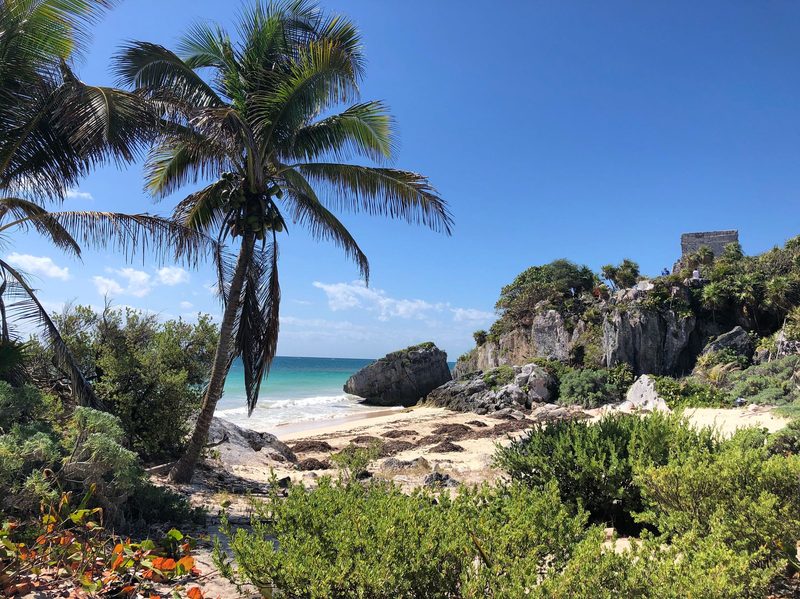
December through April brings dry, sun-warmed days and calm seas, the ideal window before the summer humidity and hurricane months arrive. Your advisor times it to the light, the crowds and your own calendar.
The experiences
A sense of what this journey can hold — each one arranged privately and shaped to you:
- On a summer return, a privately arranged dawn snorkel with whale sharks off Isla Holbox (the season runs 15 June to 15 September), led by a marine biologist guide who holds the operator permits that most visitors never access.
- A guided passage through the Gran Cenote system near Tulum at first light, when the halocline is sharpest and the cavern galleries are empty of day-trippers.
- A sunset charter along the Sian Ka'an Biosphere coast, moving from open Caribbean water into the shallow lagoon channels before darkness falls over the mangroves.
- A private cenote picnic arranged inside a semi-open cavern on a family-held property in the interior, reached by a short jungle track closed to the general public.
A sense of the rhythm
Mornings belong to the water — cenotes, reef, or open sea — before the midday heat settles over the jungle canopy. Afternoons slow into the shade of Tulum's clifftop terraces or a beachside palapa, and evenings arrive gently with dinner at places like Hartwood or Arca, where the kitchen runs on fire and local supply. The dry-season air keeps nights comfortable without the humidity that arrives after May.
Whether to base the week in Tulum or split time between Playa del Carmen and the Riviera corridor
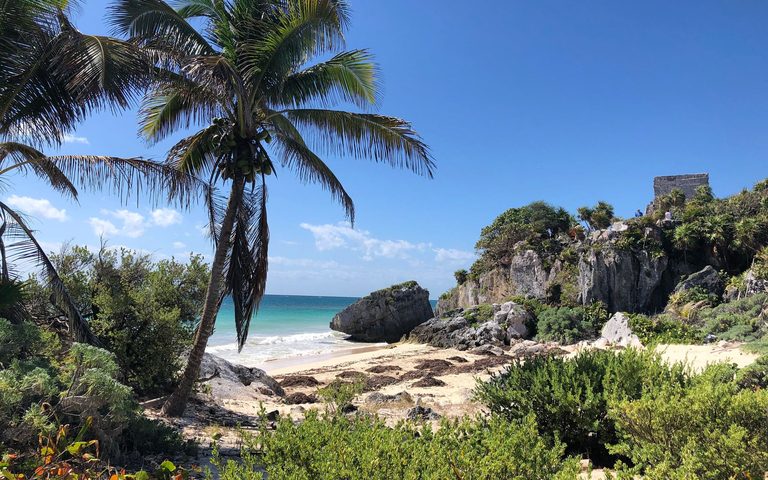
Tulum delivers immersion — the jungle backdrop, the archaeological site at dawn before coaches arrive, and direct proximity to the best cenote clusters — but its boutique character means fewer large-water amenities and a longer transfer to Holbox. Splitting the week, with two nights near Playa del Carmen and four in Tulum, gives access to the full cenote coast, and in whale-shark season the Holbox excursion, without feeling rushed at either end. The decision turns on whether total immersion in one atmosphere matters more than geographic range. We map the week around your answer.
How to do it well
The counsel our advisors give travelers planning this journey:
- For whale sharks, plan a summer trip: the Holbox season runs 15 June to 15 September, and the daily boat quota is set by the government and fills through licensed operators months ahead.
- The Gran Cenote and Dos Ojos are accessible all dry season, but the clearest halocline visibility occurs December through February before early-spring rain events disturb the fresh-water lens.
- Tulum's main archaeological zone opens at 8 a.m.; arrange private early-access entry through a site-licensed guide for the 7 a.m. slot, which disappears before the general queue forms.
- December school-holiday weeks and the last week of March require accommodation confirmation no later than nine months in advance — the finest luxury hotels in Tulum and Playa del Carmen fill those exact windows first.
What only your advisor can open
The difference between a good trip and an unrepeatable one is access — and access is a relationship, not a booking. Every guide, room and moment is chosen and sequenced for you.
Who it's for
Travelers who value privacy, time and doing it once — beautifully — and who would rather have one trusted advisor orchestrate every detail than assemble it themselves.
Estimated investment
From US$6,800 per traveler, based on double occupancy — scaled to your dates, party size and level of privacy. A starting point, not a final quote; confirmed once your advisor tailors the itinerary.
Designed entirely around you
Nothing here is a package. A Forest Travel advisor shapes the whole journey and stays one message away before and throughout your trip.
Your Virtuoso privileges
As a Virtuoso member, Forest Travel includes benefits reserved for Virtuoso guests at the finest luxury hotels, at no added cost: a room upgrade on arrival when available, daily breakfast for two, a property credit toward dining or spa, and early check-in with late check-out when the hotel allows.
Continue exploring Riviera Maya
Part of our Riviera Maya travel guide. Related private journeys:
Begin the conversation
Tell a Forest Travel advisor how you like to travel and they will design Winter Sun in Riviera Maya around you — privately, every Virtuoso privilege included. Request your private consultation →
Questions, answered.
Tulum delivers immersion — the jungle backdrop, the archaeological site at dawn before coaches arrive, and direct proximity to the best cenote clusters — but its boutique character means fewer large-water amenities and a longer transfer to Holbox. Splitting the week, with two nights near Playa del Carmen and four in Tulum, gives access to the full cenote coast, and in whale-shark season the Holbox excursion, without feeling rushed at either end. The decision turns on whether total immersion in one atmosphere matters more than geographic range. We map the week around your answer.
No. The whale-shark season off Isla Holbox runs from 15 June to 15 September, so it belongs to a summer return rather than the December-to-April winter sun journey. If you plan that summer trip, book early: the government sets a daily boat quota, and it fills through licensed operators months ahead. The swim is arranged privately at dawn with a marine biologist guide who holds operator permits most visitors never access.
December through February. Gran Cenote and Dos Ojos are accessible throughout the dry season, but the clearest halocline visibility comes in those months, before early-spring rain events disturb the fresh-water lens. For the best experience, go at first light, when the halocline is sharpest and the cavern galleries are still empty of day-trippers.
Arrange private early access through a site-licensed guide. Tulum's main archaeological zone opens at 8 a.m., but a 7 a.m. slot can be secured this way, and it disappears before the general queue forms. Seeing the site at dawn, before the coaches arrive, is one of the reasons many travelers choose to base their week in Tulum.
Plan on 7 Days · 6 Nights. Mornings belong to the water, whether cenotes, reef or open sea, before the midday heat settles over the jungle canopy. Afternoons slow into the shade of Tulum's clifftop terraces or a beachside palapa, and evenings bring dinner at places like Hartwood or Arca. You can spend the whole week in Tulum, or split it, with two nights near Playa del Carmen and four in Tulum, for the full cenote coast without feeling rushed.
As a private, tailored journey it starts from roughly US$6,800 per traveler (double occupancy) and scales with your dates, party and level of privacy — a starting point, never a fixed package price. Your advisor confirms the figure once the itinerary is tailored.
December to April, the dry season, is the window for this journey. The cenotes are pellucid, the Caribbean current is calm and the days are dry and sun-warmed, with comfortable nights before the humidity that arrives after May. For the sharpest halocline at Gran Cenote and Dos Ojos, aim for December through February. For December school-holiday weeks or the last week of March, confirm accommodation at least nine months ahead. Whale sharks off Holbox (15 June to 15 September) and turtle nesting at Akumal (from May) belong to a later trip.
A sunset charter along the Sian Ka'an Biosphere coast moves from open Caribbean water into the shallow lagoon channels before darkness falls over the mangroves. On the Winter Sun in Riviera Maya journey it is arranged privately and shaped to you. December to April suits it well, as the dry season keeps the Caribbean current calm and the seas settled, and the dry-season air keeps the evening that follows comfortable.
Yes. On the Winter Sun in Riviera Maya journey, a private picnic can be arranged inside a semi-open cenote cavern on a family-held property in the interior. It is reached by a short jungle track closed to the general public, so the setting stays quiet and yours alone. It fits the rhythm of the week, when mornings belong to the water before the midday heat settles over the jungle canopy.
Places like Hartwood or Arca in Tulum, where the kitchen runs on fire and local supply. On the Winter Sun in Riviera Maya journey, evenings arrive gently after mornings on the water and afternoons in the shade of Tulum's clifftop terraces or a beachside palapa. Between December and April, the dry-season air keeps nights comfortable, without the humidity that arrives after May.
Avoid late August to October if you can: it is the peak of the Atlantic hurricane season, which runs officially from 1 June to 30 November, and the heat and humidity are at their highest. Sargassum seaweed can also reach the beaches from May to September. December through April is the dry season this journey is built around; whale sharks off Isla Holbox, from 15 June to 15 September, are the reason to come in summer.
The Caribbean
See the collection →Tell a private advisor how you like to travel — no quotes, no obligation.
Speak With a Luxury Travel AdvisorA real person answers: an in-house luxury travel advisor, in English or Spanish. The first conversation is complimentary.